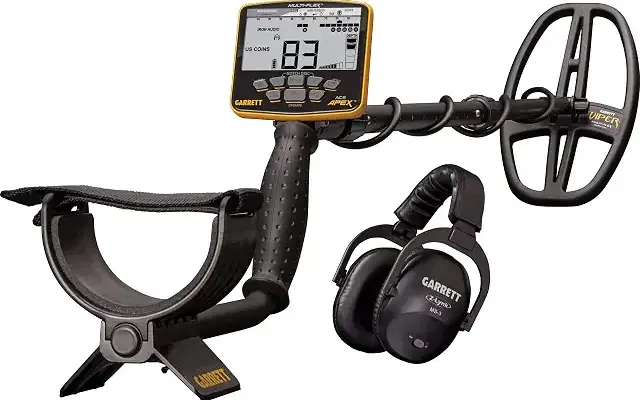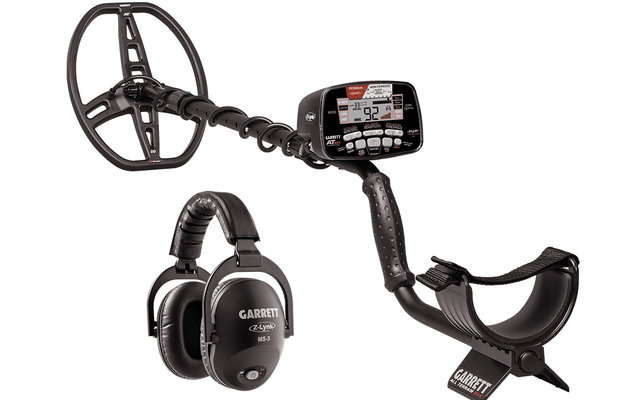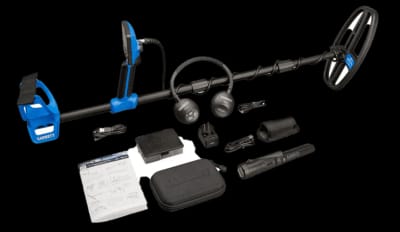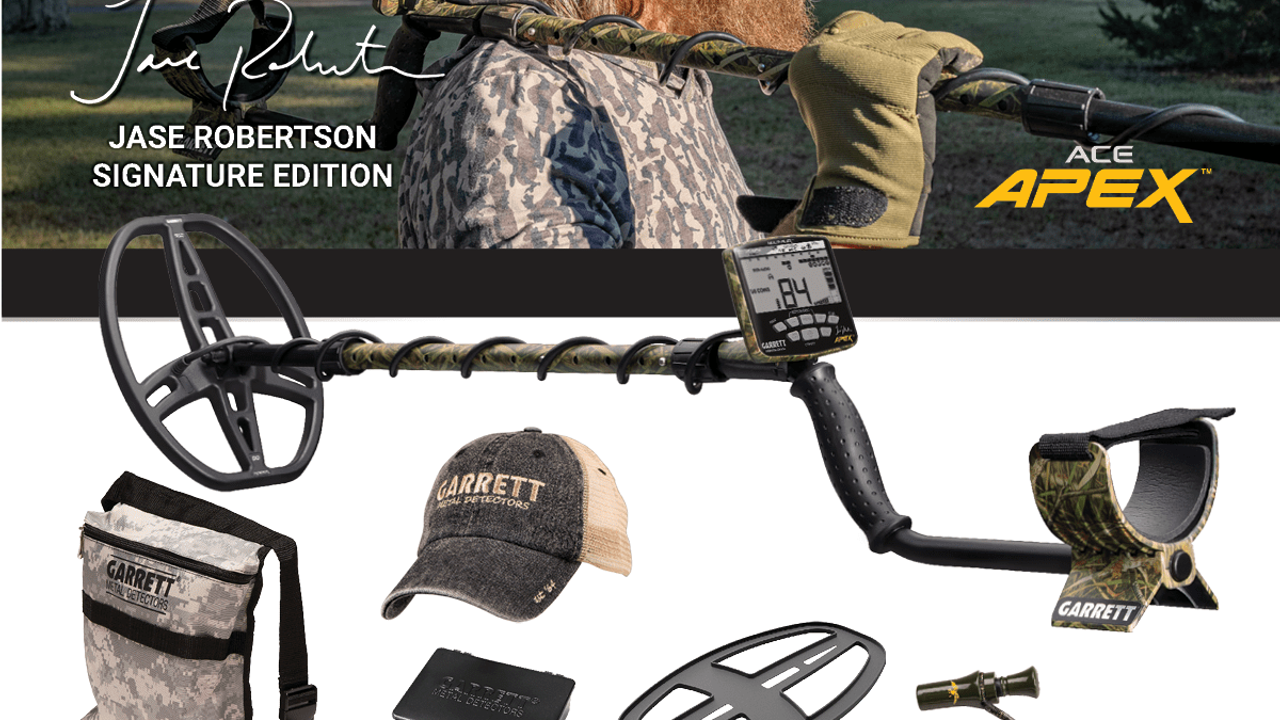
The Garrett ACE Apex is one of the most recent metal detectors in the Garrett range, aimed at the advanced hobbyist. In the configuration offered by the French blog France Detection, it is paired with the Raider coil, a coil designed specifically for this model. The product page presents the set as a versatile solution for enthusiasts and intermediate detectorists, with a stated price of 599.00.
At the heart of the Apex is Multi-Flex technology. It lets the user choose a single frequency among 5, 10, 15 and 20 kHz, or work in simultaneous multifrequency mode. Low frequencies generally favor large objects with good conductivity, while high frequencies are more sensitive to small targets or those with low conductivity. Being able to change approach on the same device is why the page presents it as a machine that adapts to different contexts.
The Raider coil is what distinguishes this version from the standard one. According to the source, it is designed to offer optimal coverage and greater detection depth, with better penetration in difficult soils and without losing sensitivity on small targets. The page claims this combination delivers superior performance compared with the base version, and presents it as the choice for those who want to maximize finds without complicating their use in the field. This is the source's own assessment, not an independent measurement.
One point the page stresses is the weight: 1.13 kg, which according to the listing remains unchanged despite the new coil. The coil balance should offset the greater power and keep the detector comfortable during long outings. Added to this are a modern interface with a high-resolution LCD display, designed to make it easier to navigate menus and adjustments.
On the connectivity side, the Apex integrates Z-Lynk wireless technology, which provides instant audio transmission to compatible headphones. It is powered by a rechargeable lithium battery, described as sufficient for intense sessions. The device is also splash-resistant and suitable for moderate humidity. The source does not present it as fully waterproof, so anyone looking to use it underwater should check the official specifications.
The scenarios in which the Raider and Multi-Flex pairing performs best are beaches, woodlands and heavily mineralized terrain. These environments test signal stability and ground balance, meaning the ability to compensate for soil mineralization. Here, again according to the source, the configuration would ensure stable and precise detection. The page also reports that users especially appreciate the improvement on difficult terrain and the greater depth compared with the standard coil.
From a market perspective, the offering targets those who have already moved past an entry-level model but do not want to step up to more demanding machines. A lightweight, wireless multifrequency detector with a dedicated coil for deeper searches is a combination that appeals to those who operate in very different environments. The source text has a promotional tone and does not provide technical data such as coil dimensions, battery life in hours or measured depth values. Anyone considering a purchase should compare this information with the manufacturer's specifications and with field tests.
Finally, the French page notes that in France the use of tools to search for objects of historical, artistic or archaeological interest requires prior administrative authorization. In Italy the regulatory framework is different and has its own rules on searching and on finds: before going out in the field, it is always advisable to check the rules in force.