Metal detecting is often considered just a hobby, practiced mostly by older people or retirees. The US blog Metal Detecting Life, in an article devoted to the topic, offers a different perspective: searching with a metal detector can also become a competition. This happens in so-called seeded hunts, the format we are looking at here.
According to the source, a seeded hunt is an event in which coins, tokens and other targets are deliberately planted, or hidden just below the surface, by an organizer called the hunt master. It is then up to the other enthusiasts to find them with their own metal detectors. In practice, the ground is "seeded" (hence the name) with objects to be recovered.
The rules may include a time limit. All participants search at the same time within the marked area, and the search continues until time runs out or all the targets have been found. It is precisely this simultaneous race that gives the event the character of a sporting challenge.
The blog stresses that it is an event suitable for the whole family and for all ages, since separate contests for adults and children are often held.
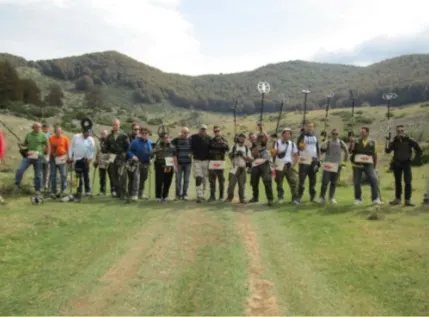
To take part, the main requirement is to join a local metal detecting club. According to the author, clubs usually organize at least one or two seeded hunts a year. Beyond the contest, these gatherings are presented as an opportunity for companionship: members compare notes on good searching practices and ways to locate new sites, try out new products and swap stories of finds.
Local club contests, the source adds, are suited to those approaching competition for the first time, because they usually involve fewer than 100 people per event. With such limited participation, the author says, it is likely that many targets will be found.
There are also larger events. The blog mentions seeded hunts held in various parts of the world at GoMinelabbing events, and the Charles Garrett Memorial Hunt, held every year thanks to Garrett Metal Detectors. To find these events, the advice is to search online: dedicated forums and Facebook groups often have a section on seeded hunts and group outings open to detectorists of every background. Manufacturers' websites may also have an events page listing the contests scheduled in different regions over the course of the year.
As for costs, a modest entry fee is usually required. The article gives a range of 10 to 100 dollars, noting that some events are free or covered by the club membership fee. The money is used to buy additional coins and targets to hide in the contest field. It may also fund raffles and prize drawings, awarded to lucky participants who recover a special token.
Some seeded hunts also include a lunch break. The source's advice is to read the event details carefully, to find out whether lunch or dinner is included in the fee or whether the meal will be organized with everyone contributing, potluck style.
It should be noted that the reference article is of North American origin, and the prices and initiatives it mentions refer to that context. The format, however, is easy to understand: hidden targets, a defined area, a limited time and a good dose of conviviality. For those who practice metal detecting on their own, it can be a different way to test their skills and meet other enthusiasts.