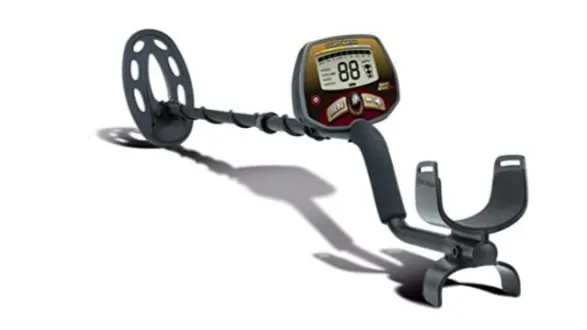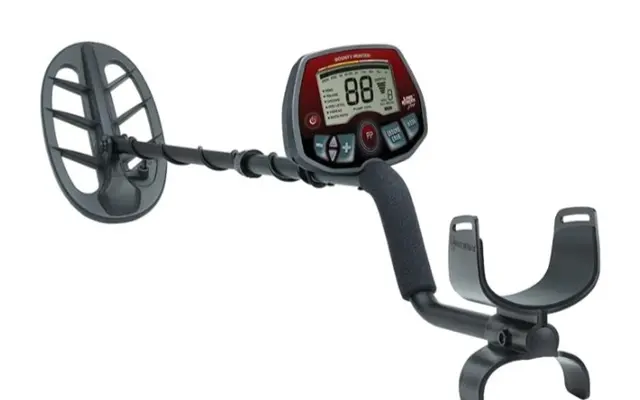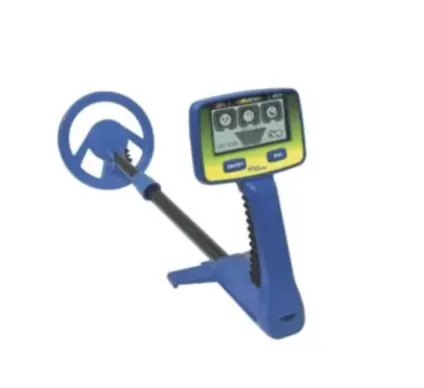
The children's metal detector is a niche with a clear question: offering a child a tool that actually works, without the complexity of an adult model. The Bounty Hunter Junior TID fits into this segment. It is aimed at the 6-to-12 age range and focuses on three things: lightness, ease of use and detection that, according to the manufacturer, is real rather than a toy. From a technical standpoint, it is a VLF detector operating at 6.6 kHz. The declared weight is just 500 g, a figure meant not to tire the arms and shoulders of younger users during outings. The shaft is adjustable, so the height can be matched to the user's stature, and the grip is designed for small hands. For a beginner of school age, ergonomics matter as much as sensitivity: an uncomfortable tool quickly discourages.
The search coil, i.e. the search head, measures 16 cm. It is a size that offers good ground coverage while remaining precise enough to pick out targets buried at shallow depth. It is therefore not designed for deep searching, but for first explorations in a garden, a park or on a beach, where the most interesting finds are often just a few centimeters below the surface.
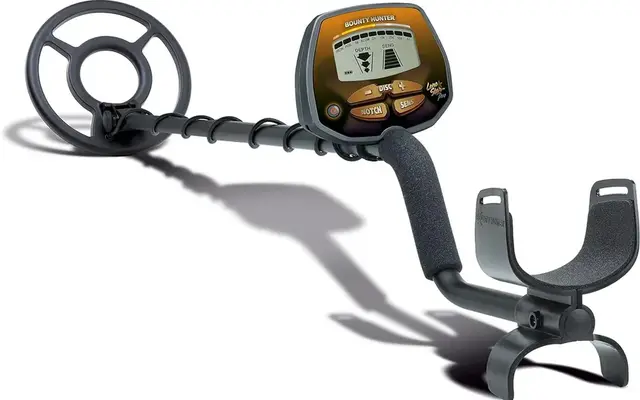
The educational core of the Junior TID is its simplified LCD display, which shows three target identification categories. The first covers ferrous metals, such as nails, screws and other iron objects. The second includes medium-value objects, for example bottle caps and some small metal items. The third is reserved for the most prized targets: coins, jewelry and non-ferrous metals. Compared with the numerical discrimination scales of more advanced models, this three-band division makes the reading immediate even for those with no experience at all.
Audio feedback complements the visual indication: each type of metal has its own distinct sound. The practical advantage is that the child can recognize the nature of a target without looking at the screen, focusing instead on the movement of the coil and the ground. A discrimination function also lets them skip metal waste, reducing empty digs and making the search more rewarding, an aspect that is not minor when working with very young users.
As for use in different environments, the coil is waterproof and allows searching in slightly damp areas, such as riverbanks or wet beach sand. One important limitation should be kept in mind, however: the control box is not submersible and must be protected from water during use. Anyone planning to use the detector near water should therefore be careful, and this is a point on which it is advisable for an adult to supervise the first outings.
Power comes from two AA batteries, which according to the spec sheet provide several hours of searching before replacement. It is a convenient choice, since AA batteries are available everywhere and no dedicated chargers are needed.
As for positioning, the price listed by the French retailer France Detection is 123.26 euros, an amount the shop describes as affordable as a first step into the hobby. Among entry-level metal detectors, the Junior TID targets families who want to introduce their children to searching with a genuine tool, capable of distinguishing at least the major metal families. It does not replace an adult detector nor match its depth performance, but as a starting tool and a way to teach the method, from searching to identification to recovery, it meets a real need for those taking their first steps in the hobby.