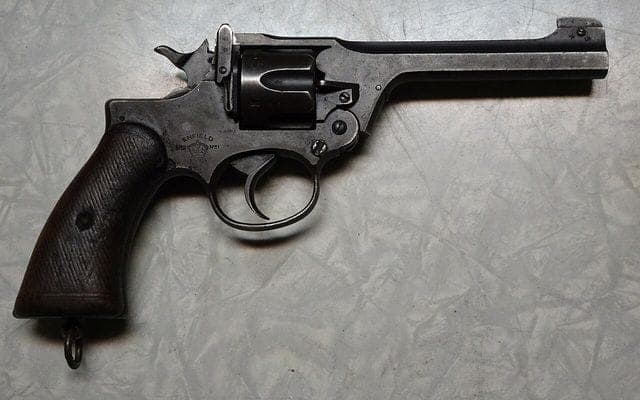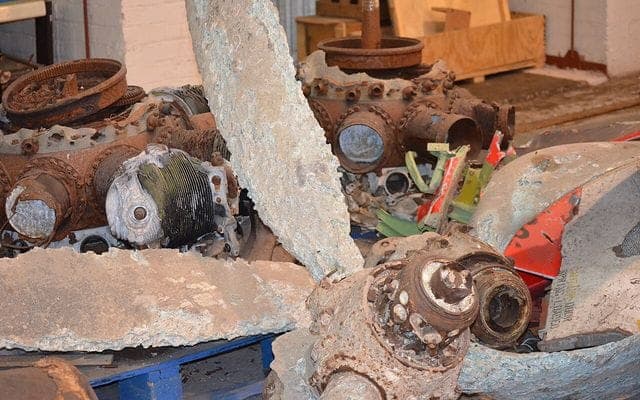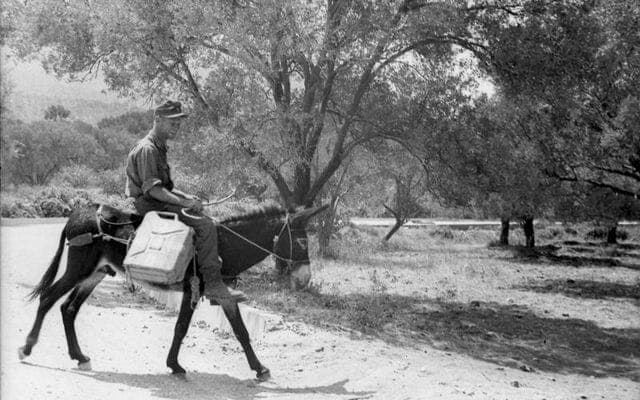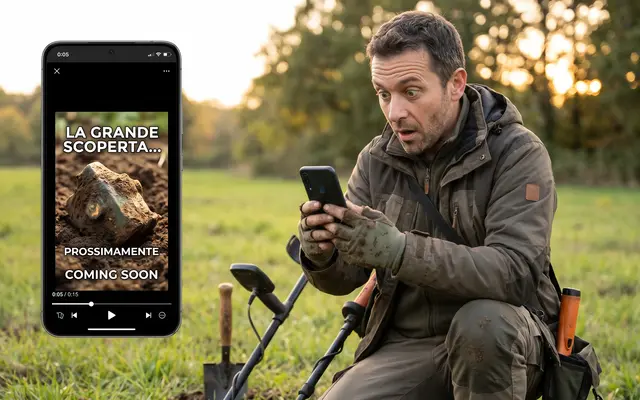
Metal detecting in Italy often intersects with twentieth-century history, and the YouTube channel Italy Hunters offers a new example with a short video in Shorts format. The clip is titled “Discovery in Italy, WW2” and is accompanied by the hashtags #metaldetecting, #italy, #ww2 and #history. The title and tags alone make the subject clear: a discovery made in Italy and connected to the Second World War.
It should be stated clearly what the source allows us to say. The available information consists only of the channel, the title and the hashtags chosen by the person who posted the video. The video does not state in text the location of the find, the date, the type of object recovered or any equipment used, such as a metal detector model, search coil or pinpointer. For this reason, we do not attribute to the person who filmed the video any statements, emotions or details that the source does not report. Anyone who wants to know the precise content can watch the Short directly on the Italy Hunters channel.
What the title suggests is nonetheless a theme closely followed by enthusiasts. Italian territory was the scene of military events between 1939 and 1945, and traces of that period can still surface in the ground. Short-form content, designed for platforms such as YouTube Shorts, has become one of the fastest ways for the community to share its finds and bring new audiences to the hobby.
Precisely because the subject is twentieth-century material, it is useful to recall some general rules that apply to anyone searching in Italy. The Cultural Heritage Code (Legislative Decree 42/2004) reserves archaeological research to the State or to those holding a concession, and requires that accidental discoveries of items of cultural interest be reported to the competent authorities promptly. Before taking a detector out, it is therefore advisable to inform yourself about the rules in your area and about any restrictions on the land, and always to ask permission from the landowner.
There is also the issue of safety, which is central when dealing with military remains. Projectiles, hand grenades and other unexploded or leftover ordnance can still be dangerous decades later. The rule shared by experienced searchers is not to touch, move or try to clean them, but to report the position immediately to the police, who will call in the competent units. Photographing the spot from a distance and noting its coordinates is far more useful than an improvised recovery.
For the community, videos like the one from Italy Hunters nonetheless have value: they keep attention focused on a historical period that left deep marks on the landscape and the memory of the country. The next step, for those who want the hobby to be recognized and respected, is to accompany the account of a discovery with documentation, respect for the rules and, when necessary, cooperation with the institutions.
If the channel publishes further details about the find, such as the historical context or the area, MD MANIACS may return to the topic with an in-depth piece. For now, one fact is established: Italy Hunters has shared a Short about a discovery in Italy linked to the Second World War, part of the metal detecting and history genre.