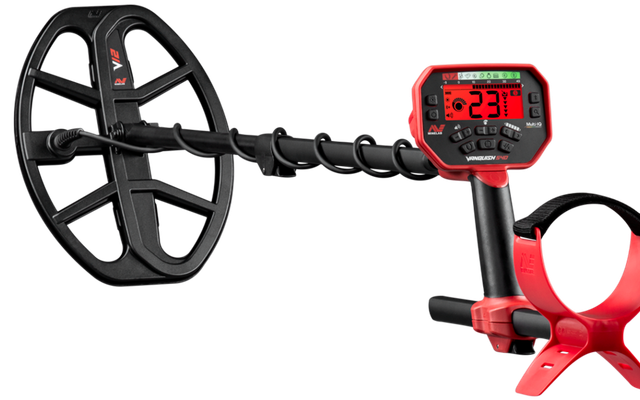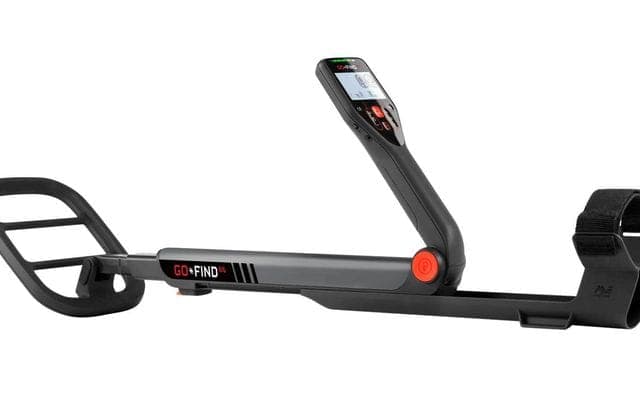
The Minelab GPX 6000 is a metal detector designed for native gold prospecting and sits in the upper range of the Minelab lineup. According to the listing published by French retailer France Detection, it is aimed at those who want to find even the smallest nuggets and often works in demanding environmental conditions, from heavily mineralized soils to remote areas rich in minerals.
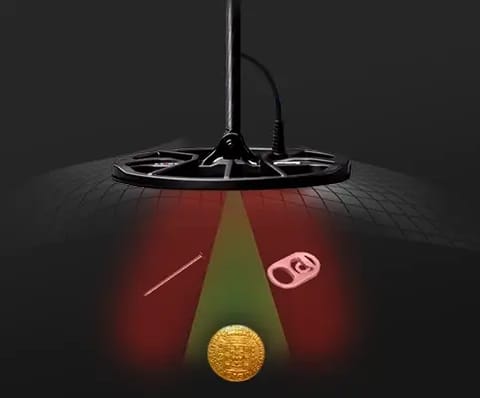
At the heart of the device is GeoSense-PI technology, which the listing presents as the system that analyzes and interprets signals to deliver reliable, fast detection even in the presence of strong mineralization. The name refers to the pulse induction principle (PI), the family of detectors traditionally associated with gold prospecting in difficult terrain. According to the listing, the technology makes it possible to detect nuggets both deep and near the surface.
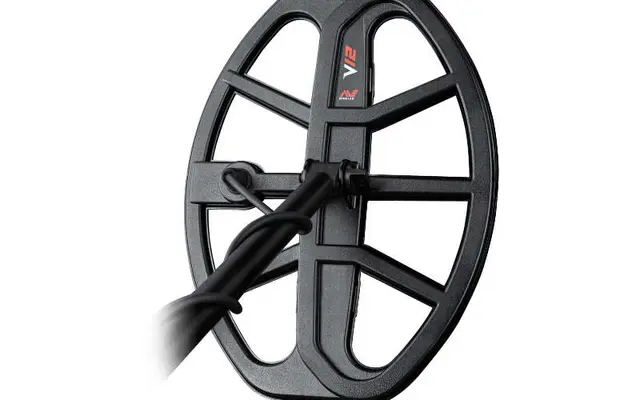
The package includes two coils. The first is a 14 Double-D, recommended for maximum ground coverage. The second is an 11-inch Mono, waterproof, which the retailer associates with greater precision. Having two coils of different sizes lets users adapt their approach to the area being searched: a larger one to cover ground, a more compact one to work with greater accuracy.
From an operational standpoint, the listing mentions three operating modes. The first, Normal, is for general-purpose searching. The second, Deep, prioritizes depth and is intended for those hunting targets located lower down. The third is a mode dedicated to interference, useful for reducing noise caused by environmental conditions. Automatic sensitivity adjustments are also available which, according to the retailer, make the device more accessible to less experienced users.
The stated weight is 2.1 kg. The ergonomic handle and balance should reduce fatigue during long sessions, an important factor for those who spend hours on rough terrain. Key information is displayed on an LCD screen described as highly visible.
In terms of durability, the coils are fully waterproof and can therefore be used in damp or dusty areas. The control box, by contrast, is described as splash-resistant but not designed for full immersion: a limit to keep in mind when working near water. Power comes from a rechargeable lithium battery which the listing says is suitable for long outings in remote areas, though it provides no numerical data on battery life.
As for the market, the GPX 6000 is offered as a high-end device aimed at both advanced amateur prospectors and professionals. On the France Detection website, the list price is 6,198.00. This places it among the most expensive detectors and should be weighed against the intended use: the investment makes most sense for those who regularly search for gold in environments where more general-purpose models struggle.
Finally, the retailer reports that user feedback highlights accuracy, ease of use and sturdiness, with particular praise for GeoSense-PI's sensitivity in finding nuggets in difficult conditions. This is a summary taken from the commercial listing and not an independent test. Anyone considering a purchase would do well to compare field test reviews, since the source provides no measured data on detection depth or operating frequency.
In short, the Minelab GPX 6000 rests on three elements: technology dedicated to native gold, a set of two coils already included, and a moderate weight for a device in this category. For those working in highly mineralized ground it is a benchmark worth considering, bearing in mind its high cost and the waterproofing limits of the control box.