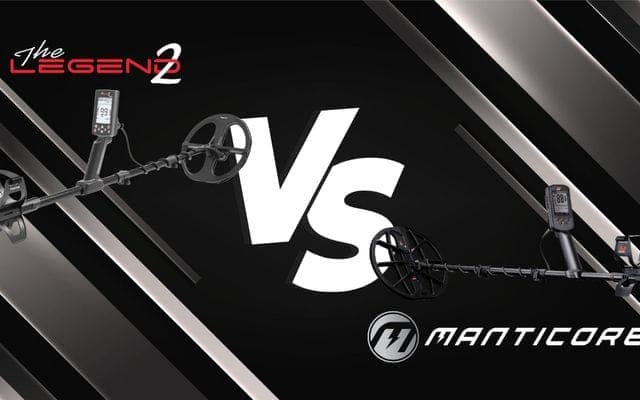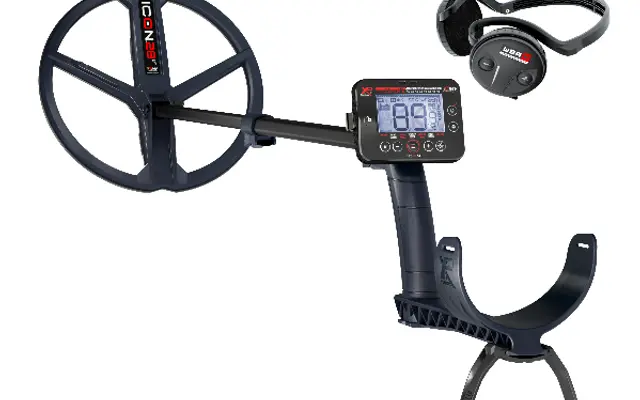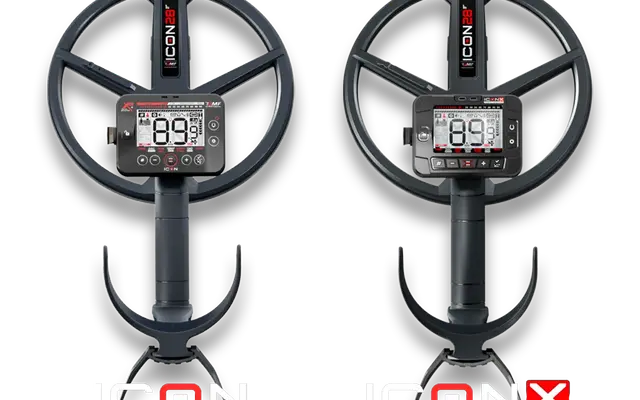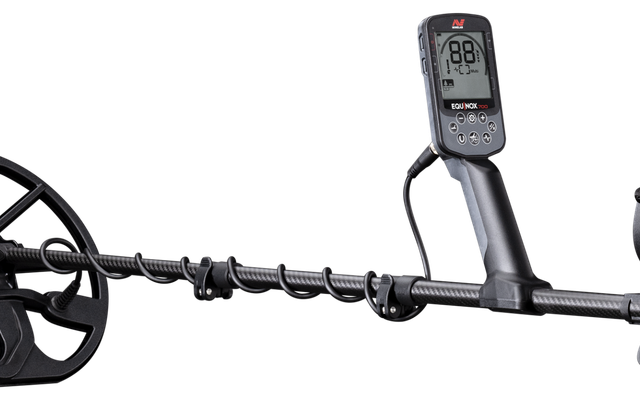
The Minelab MANTICORE and XP DEUS II are two multi-frequency detectors designed for use both on land and in water. According to the comparison published on November 10, 2026 by Serious Detecting, a specialist retailer, the choice depends less on the brand and more on how you prefer to read a signal, how much weight you carry for how many hours, and where you plan to submerge the machine. The choice of coil and settings also matters more than the name printed on the body.
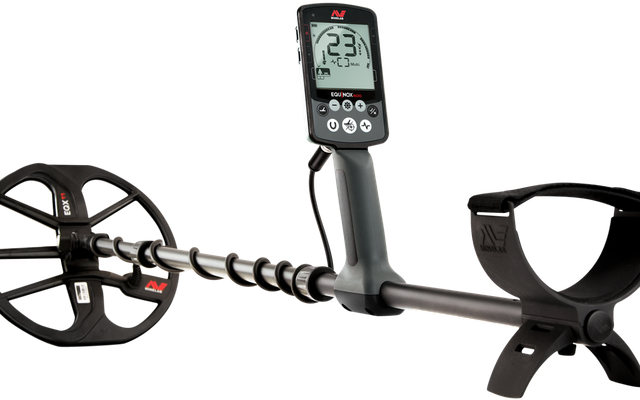
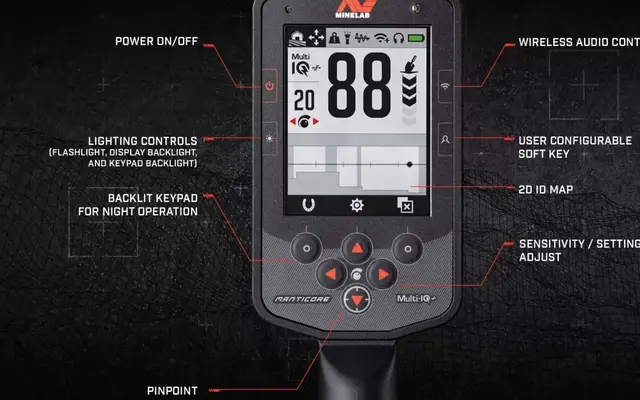
The MANTICORE is Minelab's flagship multipurpose detector and has a conventional architecture. It has a control box, an armrest and an integrated battery, mounted on a three-section carbon shaft, with the 11-inch M11 coil connected by cable. The color display revolves around the 2D ID Map, which shows for each target its conductive and ferrous values. Ferrous Limits let you decide which responses to accept. Minelab specifies that, when using a single frequency instead of Multi-IQ+, the map switches to a simplified linear scale.
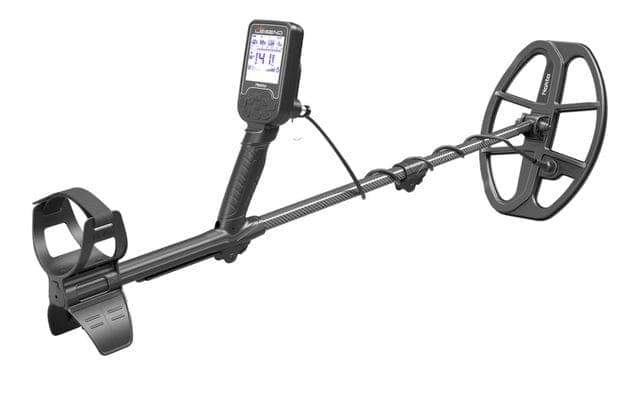
The XP DEUS II, by contrast, is a wireless system. The coil, remote control, headphones and the optional MI-6 pinpointer each have their own battery and communicate via XP's radio link, so there is no cable along the shaft. It can be used with the RC remote control or with the WS6 ST module attached to the headphones, in the configuration called WS6 ST Master.
In practical terms, weight is the most obvious difference. XP lists the DEUS II, in the WS6 ST Master configuration with a 9-inch coil, at 750 g. The S-shaped telescopic shaft carries no control box, because the remote control sits on the belt or the WS6 ST on the headphones. The MANTICORE weighs 1.3 kg. The adjustable armrest and carbon shaft make it comfortable nonetheless, but it feels like a traditional detector, while the DEUS II appears more essential. For sessions lasting four or five hours, Serious Detecting suggests considering the DEUS II carefully, while advising users to try both before deciding.
The second criterion is target reading. The MANTICORE suits those who enjoy studying how a signal behaves on screen before digging, for example people searching for coins and jewelry in parks, fields and beaches. The DEUS II offers a Target ID from 0 to 99 and an XY display on the remote control, but its strength is audio. It has Full Tones, Pitch, iron volume, audio response and a four-band equalizer. It is therefore better suited to those who interpret subtle sound differences.
Both machines allow a trade-off between depth and target separation. The MANTICORE's Recovery Speed ranges from 0 to 8, the DEUS II's Reactivity from 0 to 5. In an agricultural site full of square nails, according to the source, the DEUS II with the 9-inch FMF coil is one of the preferred setups for careful work among closely spaced ferrous targets. The same text, however, avoids saying that one machine always separates better than the other: coil size and settings change the result considerably.
Then there is underwater use. The MANTICORE and its coil are IP68 rated down to 5 m, suitable for wet sand, wading and snorkeling. The included ML 105 wireless headphones are not waterproof, so for immersion you need Minelab's waterproof headphones with a 3.5 mm jack. The DEUS II coil and RC remote control are rated to 20 m, but only with the appropriate setup.
As for price, both fall within the $1,000 to $3,000 range in Serious Detecting's price comparison. DEUS II WS6 ST Master configurations cost less than $1,000 and are the most affordable way to enter the XP system. Technical data comes from specifications and manuals published by Minelab and XP, updated to November 2026.