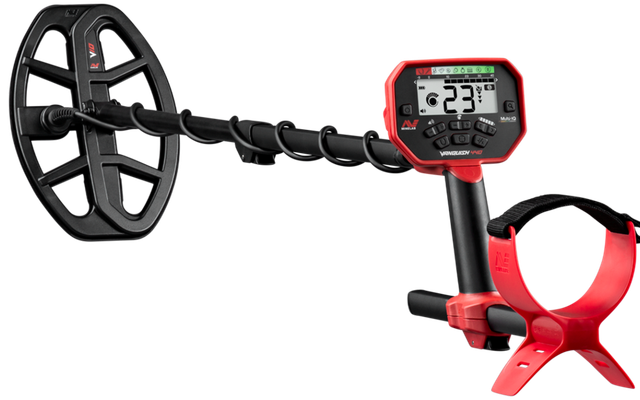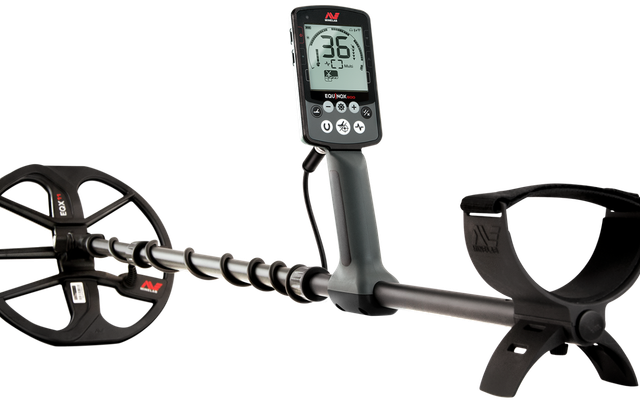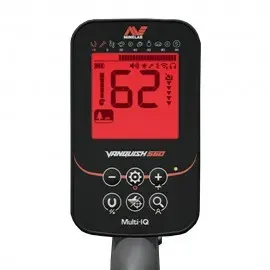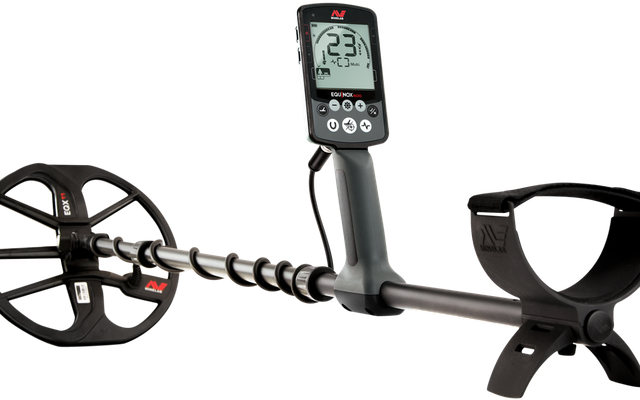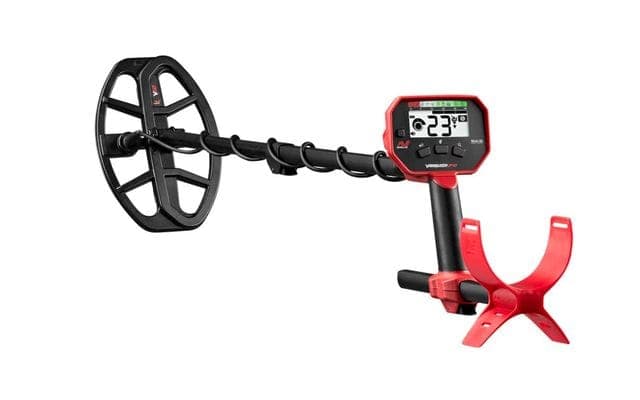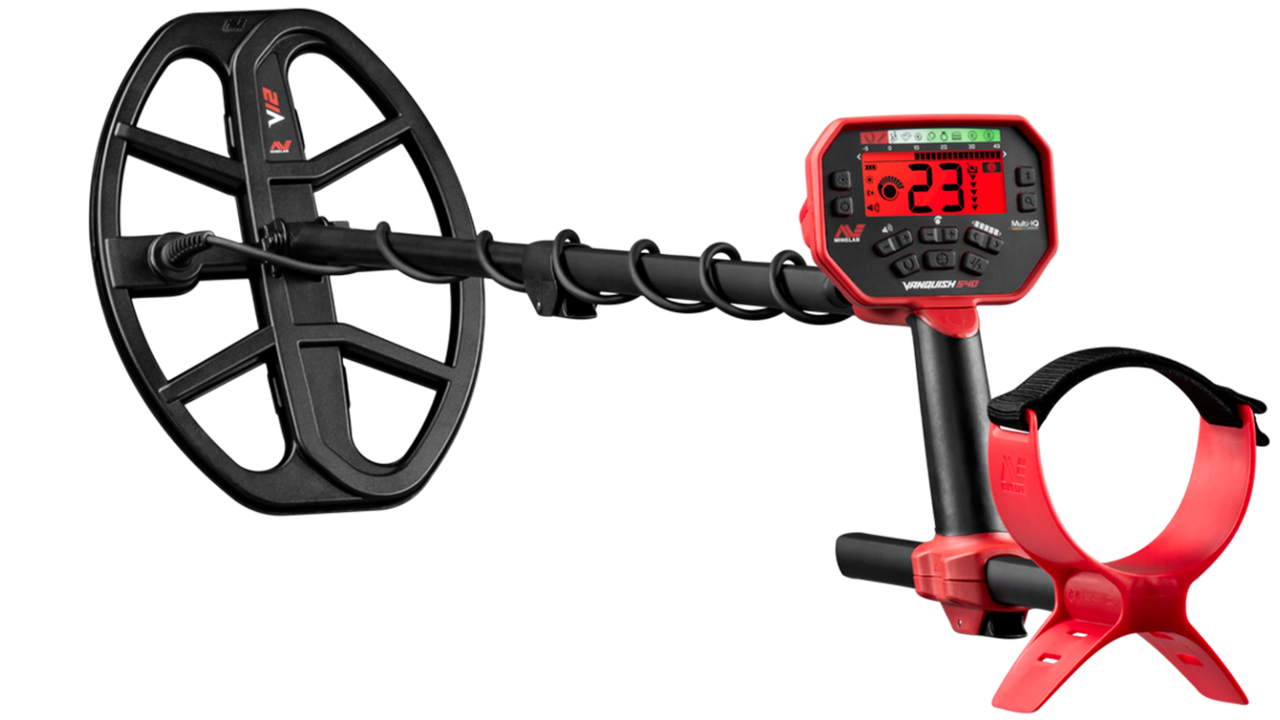
The Minelab Vanquish 540 is presented as the flagship model of the Vanquish series. It is a metal detector designed for users who want advanced features without giving up lightness and ease of use. The product sheet says it suits both beginners and more experienced detectorists. It rests on three elements: Multi-IQ technology, five search modes and a waterproof V12 DD coil.
At the core of the device is Multi-IQ technology, which transmits and analyses several frequencies at the same time instead of relying on a single frequency. According to the source, this makes it possible to work on very different ground, such as wet sand, mineralised soils or open fields. The claimed advantage is detecting a wide variety of metals, both deep and close to the surface. The difference between single-frequency and multi-frequency detectors is one of the most debated topics when choosing a first machine or upgrading to a higher-end model, and the same source points to a dedicated in-depth article.
The Vanquish 540 offers five detection modes. The sheet lists them as Coins, Relics, Jewellery, All Metal and Custom. Each mode caters to a type of search. Someone hunting coins has different needs from someone aiming at historical finds or precious objects. The customisable mode also leaves the user room to adapt the machine to their own way of searching.
The waterproof V12 DD coil is the other defining element. According to the sheet, it provides wider coverage and increased sensitivity, qualities that are useful for quickly exploring large surfaces. The coil's waterproofing is a practical advantage for those searching in damp areas or near water. The sheet indeed cites wet sand among the terrains the detector is designed for.
On the ergonomic side, the Vanquish 540 weighs 1.3 kg. This keeps it manageable even during long sessions, which are the norm for those who search in the field for hours. The backlit LCD screen allows information to be read both in daylight and at night, and the controls are easy to reach. The equipment includes Bluetooth wireless connectivity with headphones supplied, so users can work without cables, while power comes from a rechargeable lithium battery, described as guaranteeing extended battery life.
On the market side, the model is positioned in the high end of the range but with a value-for-money ratio that the seller considers favourable. On the website of the French shop France Detection, which is the source of this information, the price is listed as 425 euros, on promotion compared with the initial 438 euros. The same listing reports that users appreciate its versatility, the Multi-IQ technology and the accuracy of its results, along with the Bluetooth and the backlit screen. It should be noted that this is a commercial page and not an independent test, so these judgements should be read as starting points rather than field verifications.
The French source also reminds readers that using a metal detector is subject to precise rules designed to protect the historical heritage. The principle that local rules apply applies in every country. Anyone in Italy considering buying a detector, this one or any other model, should therefore check national legislation before starting to search.