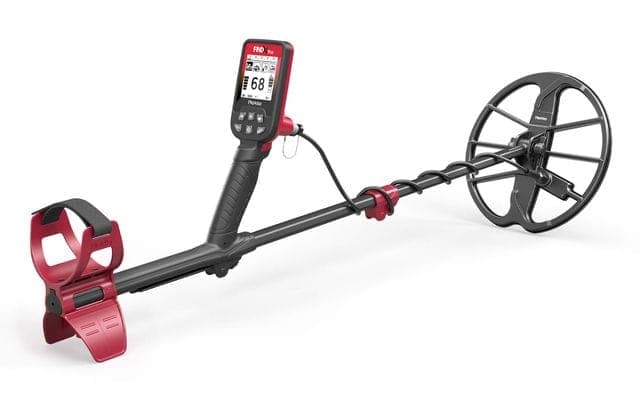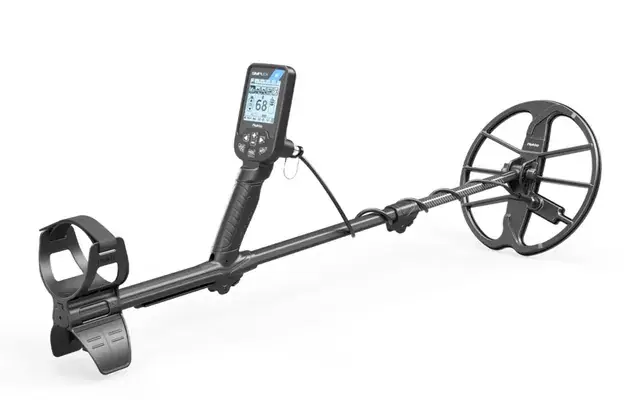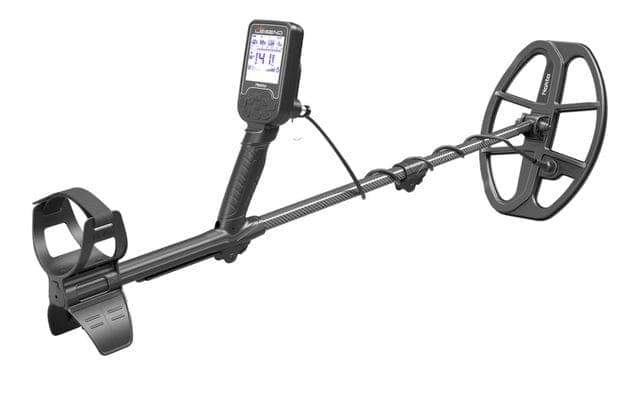
The US retailer Serious Detecting has published the results of six weeks of tests with the Nokta Simplex Ultra, conducted in three very different environments. A municipal park searched by detectorists since the 1970s, a freshwater lakeside beach and a plowed field behind a nineteenth-century farm. The authors specify that the aim was not to establish whether a single-frequency 15 kHz VLF can compete with a flagship model, because in their view it cannot. They wanted to understand what this device does well, where its limits lie and whether it still deserves the reputation built by the Simplex line. It is worth noting that the author of the test is a dealer in the sector.
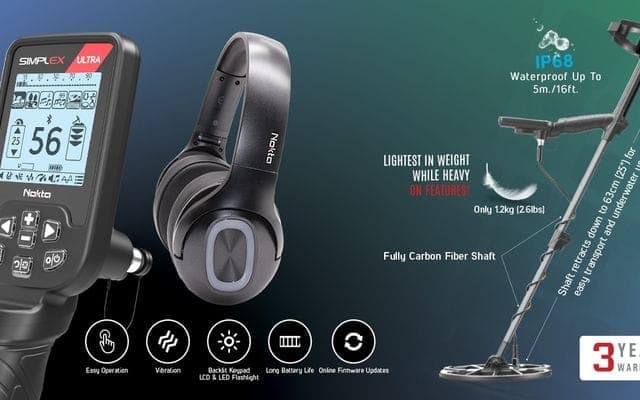
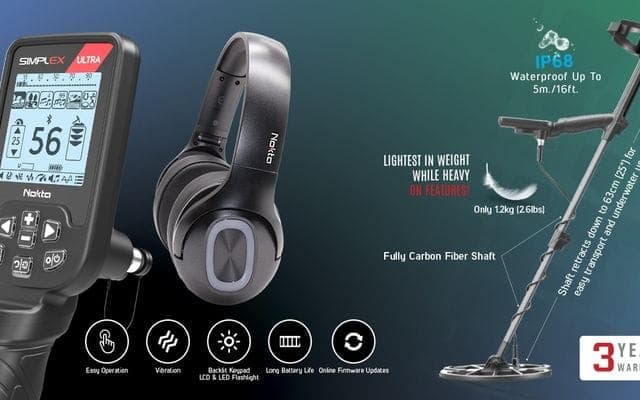
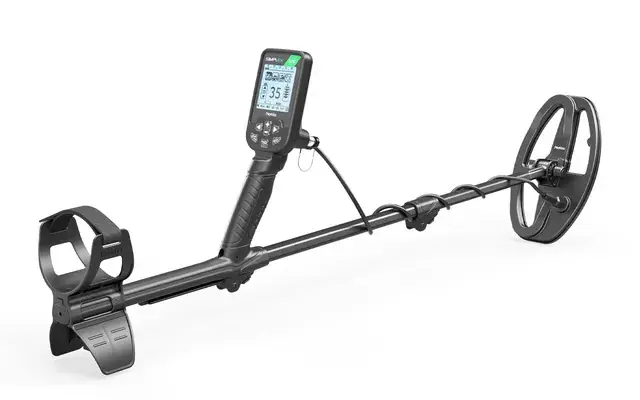
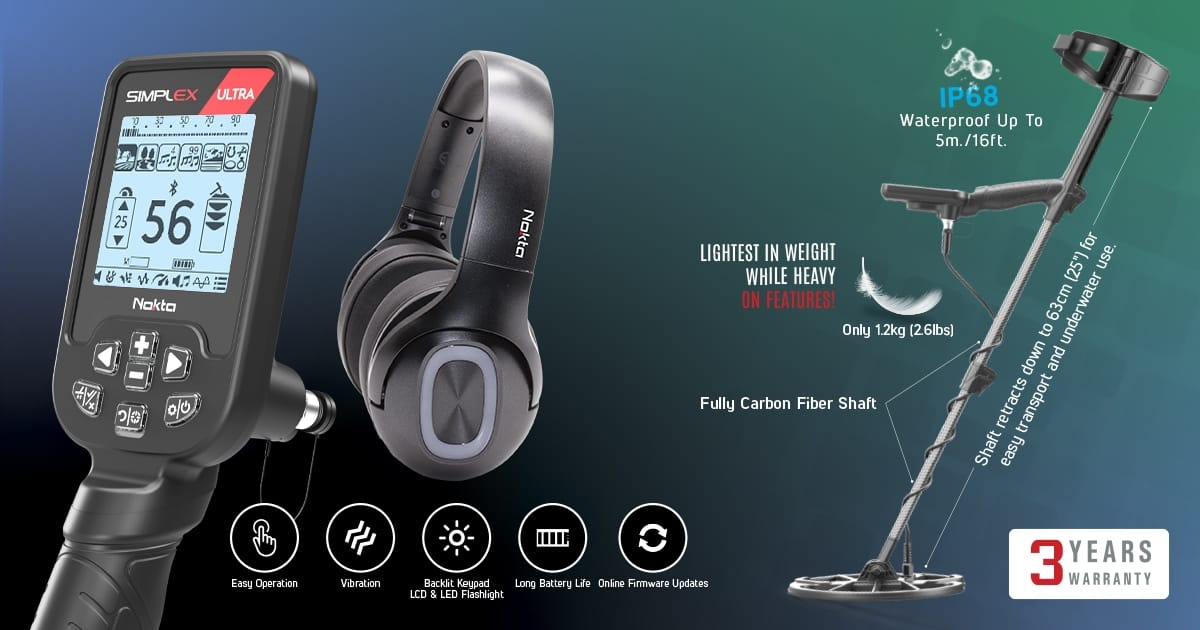
The machine was used in standard configuration, with the 11-inch (about 28 cm) SX28 DD coil and no alternative shafts. For the first two weeks the authors listened through the built-in speaker, then they switched to Bluetooth headphones. The spec sheet lists a single frequency of 15 kHz, Target ID from 01 to 99, 30 sensitivity levels, automatic and manual ground balance, notch discrimination, frequency shift for electromagnetic interference and six search modes. The detector is waterproof to IP68 down to 16 feet (about 5 meters), weighs 2.6 pounds (about 1.2 kg), folds down to 25 inches (about 63 cm) and is covered by a three-year warranty. According to the testers, the specifications change little compared with the original Simplex: what changes is the overall finish.
The park was the toughest test bench, because the easy targets were recovered long ago and what remains is whatever lies under or next to iron, or too deep. The settings were Park mode, sensitivity 22 out of 30, iron volume low, medium recovery speed and automatic ground balance, then locked manually. Starting from a sensitivity of 28, the machine went into constant noise near a power line. Dropping to 22 and repeating the frequency shift twice solved the problem, and the testers advise those who search urban parks to learn this function right away. In six hours across three outings, 40 modern coins, four “wheat” pennies, a 1943 steel penny, two brass buttons and a silver Roosevelt dime at about 7 inches (about 18 cm) depth came up. The latter gave readings between 78 and 81 with fluctuations, a reading that the 01–99 scale makes it possible to interpret. Two coins that ended up inside iron “halos” turned out to be nails: for the authors this is a limit of single-frequency detectors in this price range, and no adjustment removes it.
In water the device showed its strengths. Using Beach mode, sensitivity 24, automatic ground balance and active vibration, the testers worked chest-deep in the area where bathers stop, remaining fully submerged for ten to fifteen minutes at a stretch without problems. In four hours more than 60 modern coins, a stainless steel chain, three bottle caps and a men's ring with a school seal came up, at about 5 inches (about 13 cm), with a stable signal at 62 from every sweep angle. Freshwater is less demanding than saltwater: on brackish wet sand, they warn, sensitivity must be reduced considerably, a typical limit of any single-frequency VLF. The vibration was also appreciated, useful when searching with a snorkel and no headphones, a feature many models in this range do not offer.
For the plowed field the setup was 99 Tone mode, sensitivity 25, manual ground balance and recovery speed one step faster than the default. The text available at this point breaks off, but it emerges that on open ground the light weight really matters: the authors say they covered more ground in one morning than they would have with a three-pound top-of-the-range model.
The picture that emerges is that of an inexpensive, lightweight detector, with good identification resolution, effective frequency shift and genuine underwater use, but with the expected limits when iron and salty sand are present. The authors place it in the affordable part of a category, that of waterproof detectors, which is already very crowded.