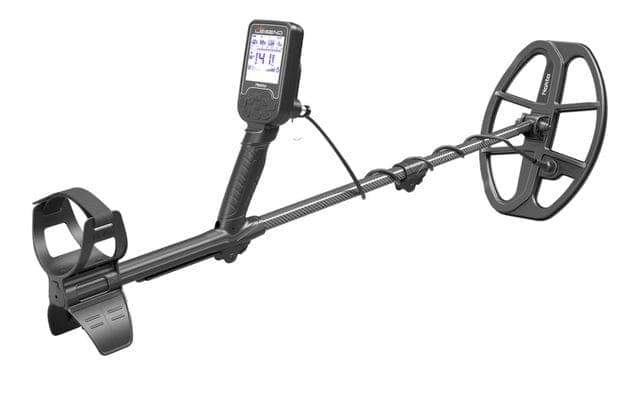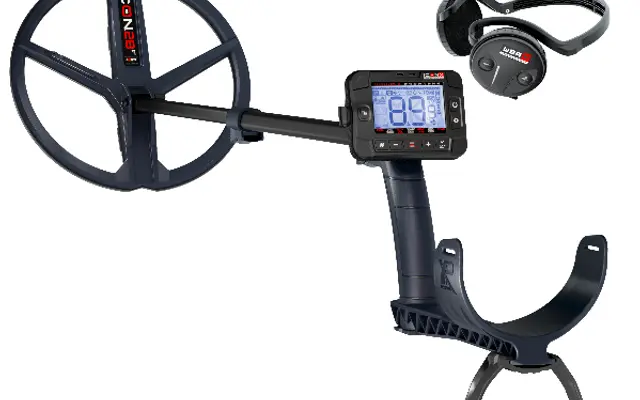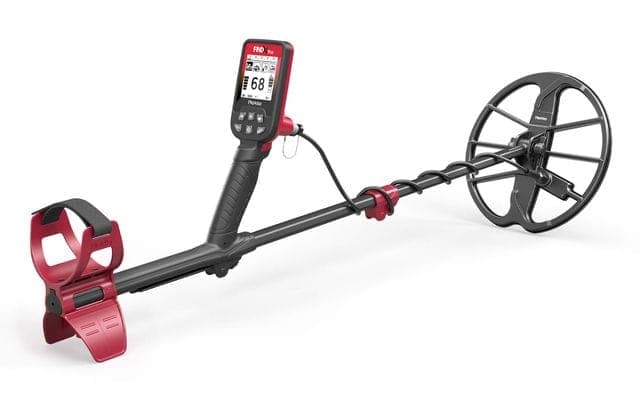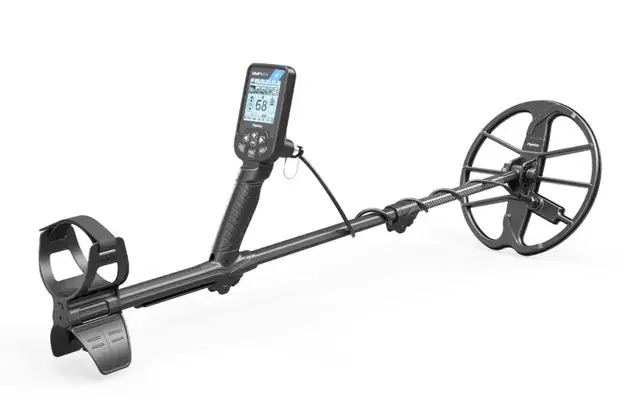
That manufacturers send machines to YouTubers, reviewers, testers and social media group administrators is a common and understandable practice. These are expensive and fairly specialized products: buyers want to know more before spending several hundred pounds, sometimes well over a thousand. Manufacturers need someone to showcase their equipment, and reviewers cannot afford to buy every new product that reaches the market. So the machines are supplied free of charge, sometimes together with accessories, previews and a direct line to people at the company.
According to the author of an editorial published in Treasure Hunting World, none of this is wrong in itself, and he says so from direct experience: he too has accepted free detectors. After many years of dealings with manufacturers, however, he has learned that sometimes a "free" product turns out to have strings attached, and these only become apparent when you try to pull on them.
The story begins with a close collaboration with a manufacturer. The author moderated the company's official forum, ran a British Facebook group dedicated to its products, and devoted a great deal of time to assisting customers, eventually handling warranty claims from around the world. He was not an employee and was not paid: he was an experienced detectorist who appreciated the machines and had a good relationship with the people who made them. In return he received detectors and accessories, including a new model at its launch.
The breaking point came when a customer reported a problem. As often happens in detectorist groups, the typical reaction is to blame incorrect settings, ground conditions, electromagnetic interference (EMI), scan speed or ground balance, or a user who does not know the machine well. These explanations are often correct, and many alleged faults are in fact user errors. The author, rather than taking anything for granted, tried to reproduce the fault, and he succeeded. He therefore had good reason to believe the customer had identified a real problem.
In his view, the British distributor was reluctant to accept the return and tended to put the responsibility on the customer. The author challenged this position, and a discussion followed. Contacting the manufacturer directly, he discovered that it expected him to support its distributor. On one side was someone who saw him as a figure supporting the company and its sales network; on the other was an independent person with a good relationship with the company. The two views did not match, and the relationship came to an end.
The episode, the author explains, prompted him to reconsider the entire arrangement. No contract required him to defend the company in exchange for equipment, and nobody had told him explicitly that a free detector came with an obligation toward the distributor. Yet the two sides' expectations were evidently different.
This is where, he observes, these relationships become delicate: usually nobody says "here is a free detector, and in return you must never criticize us". It happens in a much more subtle way. You receive one machine, then another, you get advance information on future products, someone at the company answers your emails, and you may even try a model before it is released. You become a "tester", an "ambassador" or simply someone with inside contacts. This can bring a certain visibility, but above all it means there is something to lose.
The available text breaks off just as the author is about to develop this line of reasoning. The message that emerges so far is nonetheless clear for anyone who reads detector reviews and tests: the fact that a unit was free does not automatically make a judgment unreliable, but it is worth remembering that, between those who test and those who make, there are unwritten dynamics that can weigh on independence.