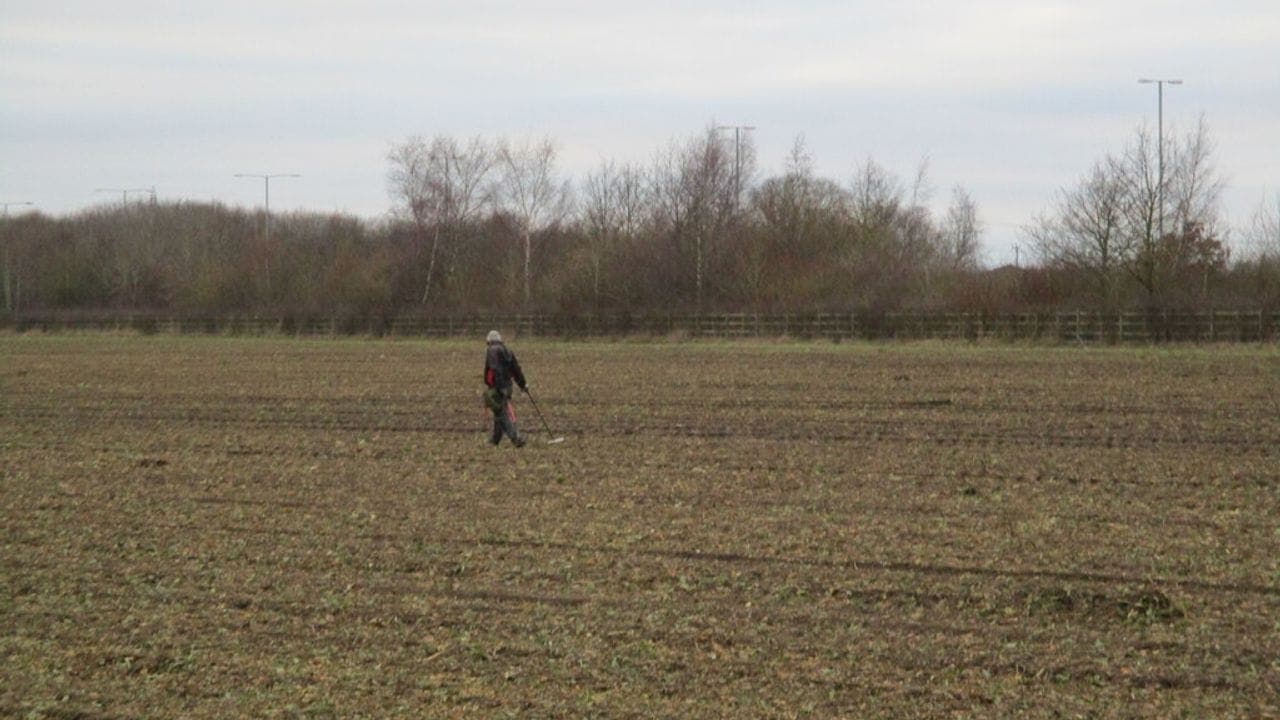
Metal detecting, for those who practice it seriously, is not reduced to finding coins, relics or treasure. According to the interview published by Focus Speed, for detectorists like Joe Cannon it is a combination of research, permits, patience, reading the terrain, responsible recovery and understanding the history behind every signal.
Cannon is a well-known name in the community and the creator of the YouTube channel Get That Treasure; he has also been a guest on Relics Radio. He currently uses both the Minelab Manticore and the XP Deus II, two of the most widely used metal detectors at the moment, and has searched not only in the United States but also in the United Kingdom. In the interview he is asked how he got started, how he finds new sites, which finds motivate him, how he chooses between the Manticore and the Deus II, and what advice he would give to those who want to improve while respecting landowners, local rules and historical resources.
His story begins in a difficult period. In January 2020 his father died, and Cannon was helping his mother sort through his personal belongings. Among his father's things he found a Garrett Ace 150, a detector his father had years earlier traded and given to him. A couple of months later, with COVID lockdowns beginning in March, he decided to put batteries in it and try it out.
According to his account, he began finding coins almost immediately, one after another, and became hooked. Within a short time he was searching every day, often for hours, wherever he could obtain permission or search legally. He later moved on to a Garrett AT Max but, as he explains himself, by then it was no longer a question of the equipment: he had fallen in love with the hobby, the history and the community around it. Cannon describes metal detecting as something that arrived at the right moment, giving him a positive goal during a phase of loss and uncertainty.
A central theme of the interview is the role of clubs. Cannon is a member of the Golden Triangle Explorers Society, the Lone Star Treasure Hunters Club, the Cowtown Treasure Hunters Club and the South Carolina Metal Detecting & Relic Association. He has also had the opportunity to search with groups such as Digging History U.K., experiencing the community from both sides of the Atlantic.
The most underrated benefit of joining a club, in his view, is the people. Competitions, giveaways and educational programs are useful, but the real value lies in friendships and shared knowledge: you can spend years figuring everything out on your own, or spend an afternoon with experienced detectorists and learn lessons that would otherwise take years.
Cannon adds that clubs also help preserve the history of the hobby, by teaching proper recovery techniques, researching finds and encouraging responsible detecting. In his experience, experienced members really want to help newcomers, and this generosity is something special. For this reason, his first piece of advice to beginners is always the same: join a local club, which makes you a better detectorist, opens up opportunities you would not find on your own and will likely lead to lifelong friends.
The interview then turns to the relationship between the age of a site, the history of the landscape and the choice of where to search. The text available to us breaks off right at the start of his answer, when Cannon observes that these factors are less important than many people think, at least in the way site selection is usually approached, so it is not possible to report the rest of his reasoning here. To read more, the full version published by Focus Speed remains available.