Every detectorist, sooner or later, wonders how to behave in the field. The British retailer LP Metal Detecting has published a ten-point code of conduct on its blog. It is designed for the United Kingdom and cites British bodies and institutions, but many of its principles apply to anyone who practises the hobby. In this article we summarise it, following the source.
The first point concerns private property: one must not enter land without permission. Anyone who has identified the ideal site must make sure they have full permission to detect. Unless it is a public area (the source cites beaches, local parks or one's own garden), the landowner must be contacted. To avoid disputes, the guide suggests obtaining permission in writing.
The second point urges readers to avoid protected areas. According to the source, in the United Kingdom it is technically illegal to use a metal detector on a protected site without the permission of the competent authority. The examples given are scheduled archaeological sites, Sites of Special Scientific Interest (SSSIs) and Ministry of Defence property.
Two further guidelines concern conduct. The first is to learn how to handle, store and care for archaeological objects that may be encountered, with a reference to the finds.org.uk website. The second is to respect the Country Code, the code of behaviour for life in the outdoors, which the source says is important to refresh as the years go by.
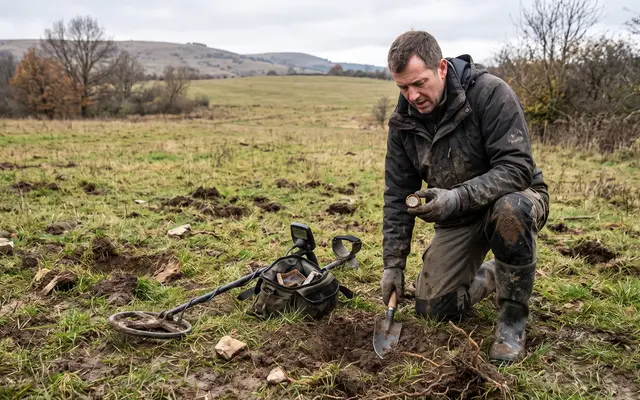
On how to dig, the text is concrete: with the right equipment and a little care, recovering small objects a few centimetres below the surface is a simple and clean task. Since many other people will pass after us, holes must be refilled with the utmost care. The technique indicated is to cut a clean edge into the soil, lift out the object and put the turf back in place. In this way, no uneven or dangerous surfaces remain.
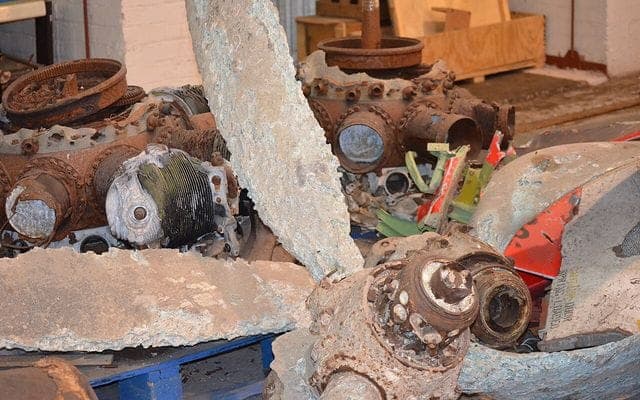
Then there is the safety chapter. If unexploded ordnance or lethal objects, such as a bomb or a mine, are found, they must not be touched or moved. The spot must be carefully marked and the discovery reported to the landowner or local authorities.
For archaeological finds, the source recommends recording the find location with the greatest possible precision. The practical advice is to place each object in a separate bag and write on it the National Grid Reference, the British system of map references. This helps archaeologists interested in that find.
The text also reminds readers that, as soon as one goes out searching, one becomes an ambassador for the hobby. For this reason, any behaviour that could give it a bad reputation must be avoided. The source adds that safely disposing of any rubbish encountered, whether one's own or someone else's, is always a good idea.
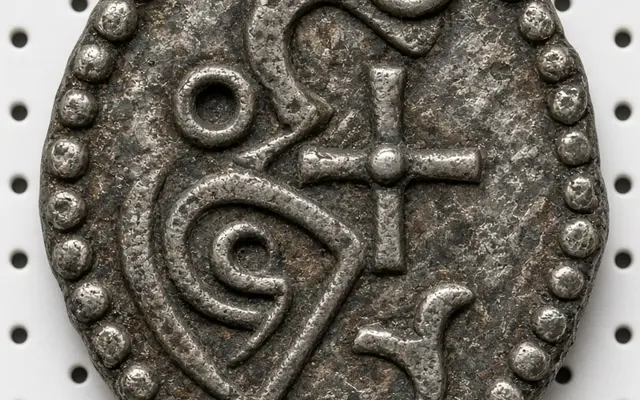
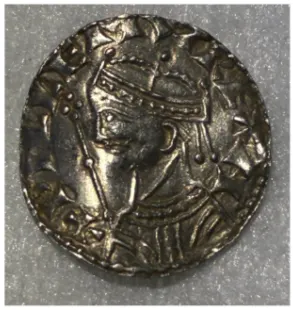
For unusual historic finds, the guide advises notifying the landowner and, with their consent, reporting them to the Portable Antiquities Scheme. The scheme then passes the information on to the Local Historic Environment Record. If something significant is discovered, such as an unusual material, a concentration of objects or shipwreck remains, the guide recommends seeking expert advice. A local finds liaison officer will indicate whom to contact. If something suspicious is found, such as human remains, the police must be contacted immediately.
LP Metal Detecting points out that these guidelines are not laws, but they exist for an important reason. They serve to keep the hobby alive for everyone, today and in the future, and they allow people to learn more and respect their surroundings. For those practising in Italy, the regulatory framework and reference bodies are different from those cited, and the source does not discuss them. The spirit of the code nonetheless remains a good reminder: permission, care of the land, safety and collaboration with experts. The source closes with an invitation: involve friends and spread the passion for metal detecting.