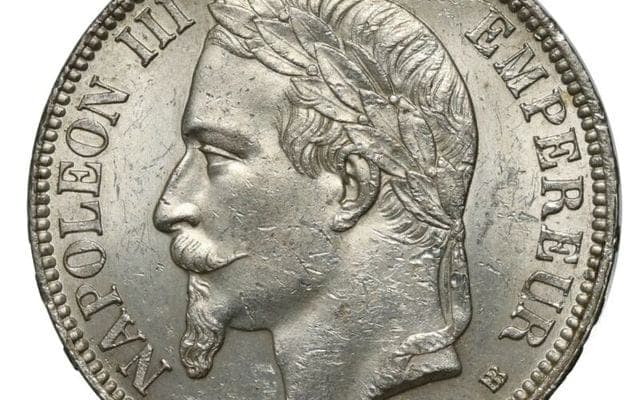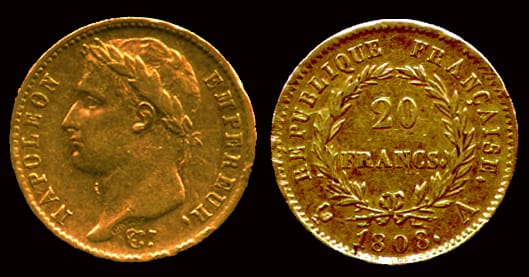
The French blog Le Fouilleur, in its in-depth article on the coins of Napoleon Bonaparte, starts from a key fact: Napoleon I stabilizes the French economy by creating the Franc Germinal. The monnayage (coin production) of this period is struck in gold, silver and billon, the base alloy used for smaller denominations. The coins bear the imperial effigy and are produced by a network of mints, tools through which political power asserts itself and exchanges are standardized across Europe.
According to the source, the reorganization of the financial system under the Consulate and the Empire aims to stabilize an economy devastated by the excesses of the revolutionary period. Collectors and historians often ask how Napoleon imposed a strong currency, the Franc Germinal, while using his own effigy to consolidate political authority. This monnayage reflects the main stages of his life, from his Corsican roots to his military victories and his coronation, and offers a rich iconography that evolves alongside his official titles.
To understand that iconography, it helps to retrace his biography. Napoleon Bonaparte was born in Ajaccio on 15 August 1769. His family belonged to the small Corsican nobility of Tuscan origin, the House of Bonaparte. Just a year before his birth, France had acquired the island of Corsica from the Republic of Genoa. His father, Carlo Maria Buonaparte, was a lawyer at the island's Superior Council; his mother, Maria Letizia Ramolino, raised a large family with him in a proud but not wealthy environment. Later Napoleon would describe himself as a turbulent child, who did not hesitate to assert himself over his older brother Joseph.
Monsignor de Marbeuf's intervention allowed Carlo Bonaparte to obtain a scholarship for his son. Napoleon left the island for the mainland in 1778, passed through the college of Autun and entered the École royale militaire of Brienne-le-Château in April 1779, where he spent five years of study. His classmates mocked him for his accent and his fervent Corsican patriotism: trials that, according to the source, forged his republican character. In military games he already showed a talent for organization and command.
In 1784 the death of his father plunged the family into financial difficulties, and Napoleon had to speed up his own path to support his relatives. He entered the École militaire in Paris as a gentleman cadet and completed his training in just ten months. In September 1785 he joined the La Fère Regiment as a second lieutenant. His career then took him to Valence and back to Corsica, where he opposed the supporters of the monarchy.
In Le Fouilleur's account, 1793 is the definitive turning point for the young artillery captain. The family is driven out of Corsica by Paoli's partisans and takes refuge in Toulon. During the siege of the city, occupied by the English, Napoleon presents General Dugommier with a bold plan. Its swift success earns him immediate promotion to brigadier general, while his closeness to Augustin Robespierre favors his rise within the Jacobin networks of the time.
His 1796 marriage to Joséphine de Beauharnais opens the doors of Parisian high society to him. Thanks to Barras's influence, he takes command of the Army of Italy, and his victories galvanize the troops. He returns to France covered in glory after the Treaty of Campo Formio. The Directory then sends him to Egypt to weaken British interests: despite the destruction of the fleet, Napoleon returns home and takes advantage of political instability to seize power.
The coup of 18 Brumaire of Year VIII brings the Directory to an end. Napoleon establishes the Consulate and becomes First Consul, asserting that the Revolution is now fixed on the principles that had launched it. The victory at Marengo in 1800 consolidates his position and paves the way for the proclamation of the Empire in 1804. According to the source, this change of regime calls for a profound monetary reform, to mark a break with the financial chaos that preceded it.
Napoleon I's monnayage, Le Fouilleur also notes, adapts to the daily needs of the population with modest denominations. A representative example is the 10-centime coin in billon, alongside the silver and gold issues. The picture that emerges is that of a system in which every coin, from the smallest change to the highest-value piece, carries the image and title of whoever governs. For this reason, collectors and historians read Napoleonic coins as a visual account of his rise.