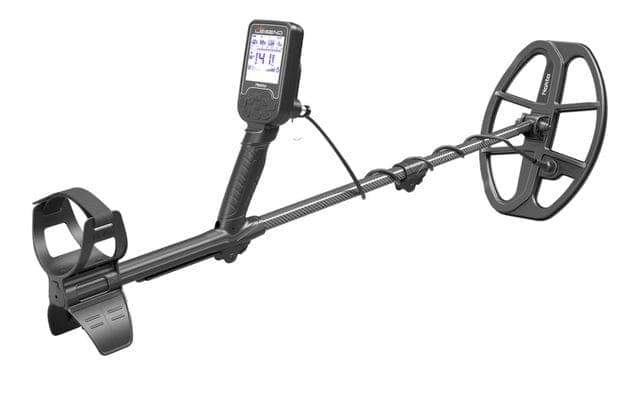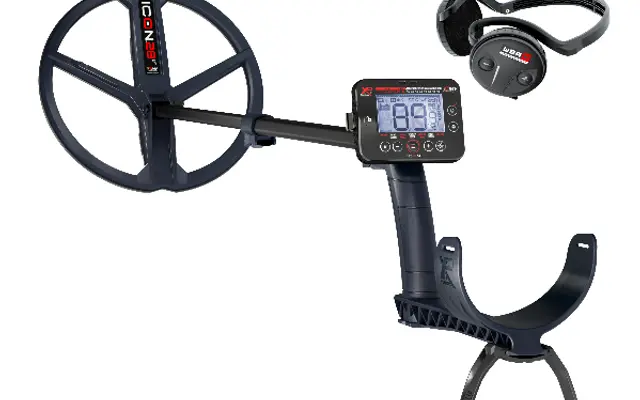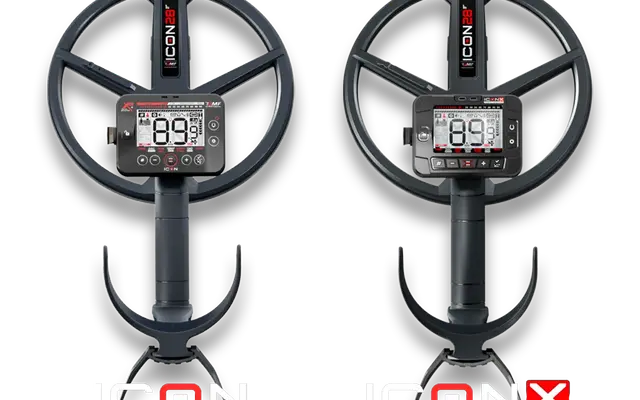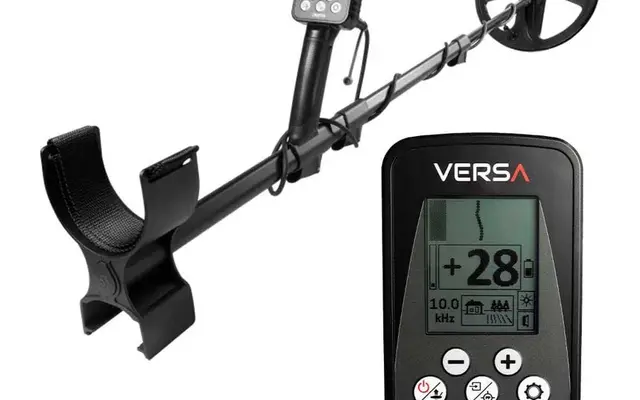
Those choosing between the Garrett ACE 300 and ACE 400 face two machines that on paper look almost identical. According to the comparison published at the end of August 2026 by US retailer Serious Detecting, which carries both models and has tested them in the field, the choice comes down to three concrete differences: the Iron Audio function, the coil supplied as standard and the operating frequency.
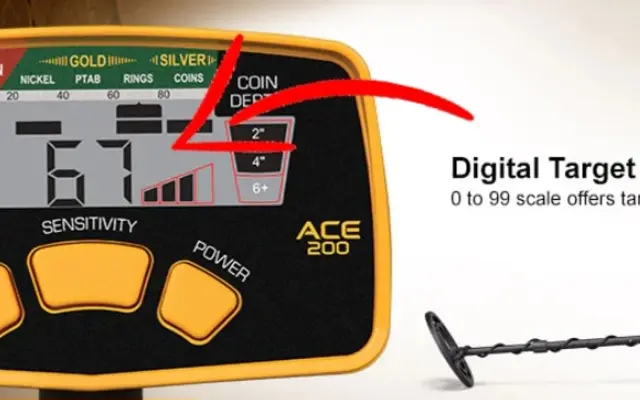
Everything else is identical. The two models share the same display, the same Target ID scale from 0 to 99, four iron segments, eight sensitivity levels, three audio tones, five search modes, the same shaft, the same batteries and the same warranty. In practice, Garrett did not build two different detectors: it gave the higher-end model a better coil, a higher frequency and a feature the lower-end version does not offer in any way.
The difference that most affects the ratio of useful to useless digs is Iron Audio. On the ACE 300, when iron is discriminated, that material goes silent. The problem arises with flattened bottle caps: a flattened steel cap behaves like a medium conductor and reads around 60-70 on Target ID, in the range of the zinc penny. The signal therefore comes through clean, with a high tone and a credible number, and you end up digging up junk.
On the ACE 400, Iron Audio lets discriminated iron come through the audio as a low rumble beneath the good tone. A real coin sounds clean, while a cap sounds clean but with a “grunt” in the background. After a few outings the ear learns to tell the two cases apart, and you stop digging up caps for nothing. On clean ground with almost no iron, the function is of little use. In a city park, in the yard of an old school, at a fairground or on a heavily frequented farm field, however, it justifies the move to the higher model on its own.
On the technical side, people often look at frequency, 8 kHz versus 10 kHz, but what stands out most in the hole is the coil. The ACE 300 uses a 7" x 10" concentric coil, which projects a cone-shaped field. Pinpointing is intuitive, because the target sits where the signal is strongest, and it is a good starting point for beginners, especially on lightly mineralized ground.
The ACE 400 instead uses an 8.5" x 11" DD coil, which is waterproof and submersible. Its blade-shaped field, extended from front to back, covers more ground with each sweep, handles mineralization better because there is less soil under the plate at any moment, and separates closely spaced targets instead of merging them into a single signal.
On pure depth, for example on a quarter in mild ground, the two machines are close. The source cites about an inch, perhaps less, due partly to the larger coil more than the frequency. The gap becomes clear in mineralized soils, at iron-rich sites and on small, low-conductivity targets such as thin gold, lead and small silver, where 10 kHz enhances a response that 8 kHz leaves weak.
The overall picture is straightforward. Those who hunt well-kept lawns and clean ground will see the gap shrink to almost zero, and can keep the price difference by choosing the ACE 300. Those working red clay, black sand or old farmhouses full of nails, or areas that are heavily frequented and littered with metal waste, have concrete reasons to prefer the ACE 400.
It should be noted that the comparison comes from a retailer and therefore carries a commercial interest, even though the conclusions are presented in a very practical way. For beginners, the rule that emerges is to look first at the terrain where they will search, and only then at the spec sheet.