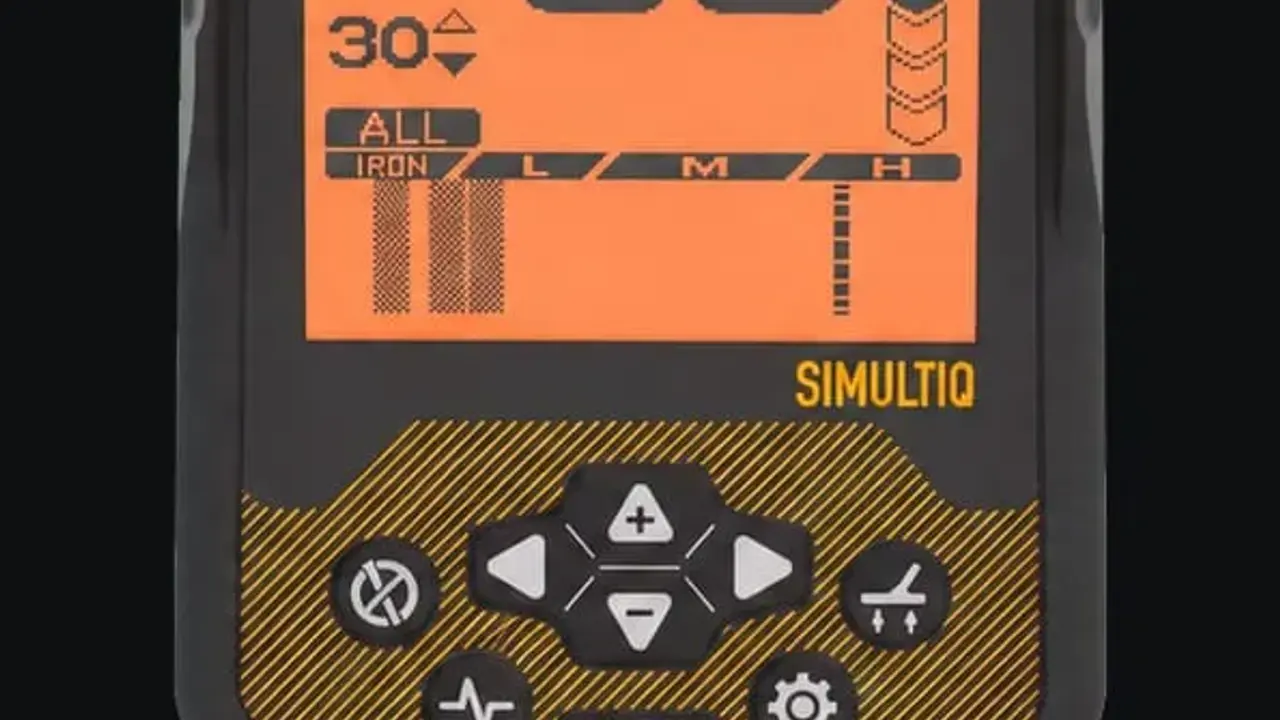
Just over a year after the first previews of Quest's S Series, the manufacturer has quietly updated its website. As of March 2026, the range consists of three models: the S30 SimultiQ Scout, an entry-level model, the S50 SimultiQ Select, a mid-range model, and the S-Pro SimultiQ Supreme, the flagship. All of them are built on the SimultiQ multi-frequency platform and are designed to compete with Minelab, Nokta and XP. The most obvious change is the disappearance of the S40, which featured in the original presentation. Quest has offered no explanation: it is unclear whether the model has been absorbed into another or simply dropped to streamline the range. The three remaining detectors now carry a subtitle (Scout, Select, Supreme) that makes the structure easier to read: the S-Pro Supreme offers the full SimultiQ feature set, the S50 Select occupies the middle position, and the S30 Scout is the entry point.
The timing is arguably more striking than the naming. At Detectival 2024, launches had been promised first for Christmas and then for spring 2025. We are now in March 2026, roughly 18 months after the first presentation, and those who expressed interest are still waiting for machines that have only now appeared on product pages. Quest has not publicly acknowledged the delay.
The commercial picture remains uncertain. As of March 2026, neither the British distributor nor Kooistra Detectors, for the European Union, had listed the new S Series models. In the UK, the distributor has instead cleared its remaining V Series stock on eBay at steep discounts rather than moving to the new range. According to the information reported, the cause is not a failing on its part, but the lack of clear indications about what will arrive and when. Kooistra, for its part, continues to offer the V Series, a surprising choice given the well-documented problems with those machines.
The result is a range that exists on the manufacturer's website but not in any distributor's catalogue, in a grey area between announcement and actual availability. This would not be an isolated case: in the past, the brand's British distributors have often received little information about products and timelines before stepping back. The cause is probably differences in communication style rather than deliberate neglect, but for buyers the practical effect is the same: the people who should answer questions about stock and availability are often the least informed.
The more serious problem concerns specifications. Quest's website gives conflicting data for the same machines, particularly on frequency options. For a detector costing several hundred pounds, clarity on this point is essential, and a simple note or comparison table would resolve it. The pages that remain inconsistent suggest the update was published before all the details had been aligned.
Finally, one curiosity concerns the S-Pro Supreme, which lists a mode called 'Hard'. This is not a program type recognised in metal detecting, and Quest does not explain what it means. The V Series offered Park, Field, Beach, Gold and Cache (Deep): the latter is a classic mode for large targets, which could evolve into a Hoard mode on a high-end multi-frequency machine, alongside Coin and Relic. 'Hard' fits neither Quest's conventions nor the industry's, and given the brand's previous English-language errors, including the slogan 'Find Impossible', a simple typo is plausible. Pending official clarification, it remains a hypothesis.