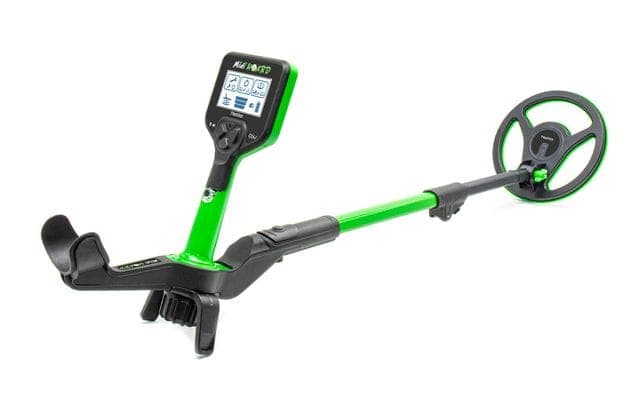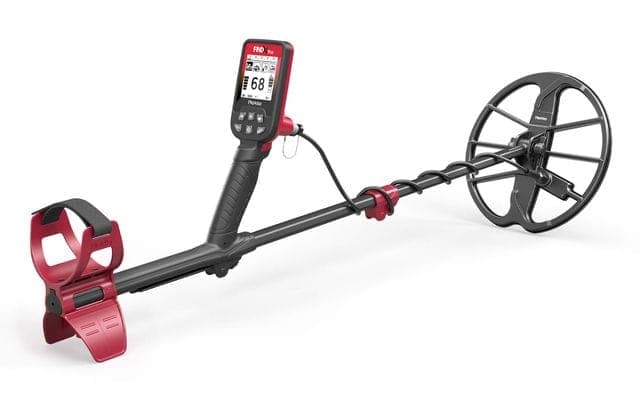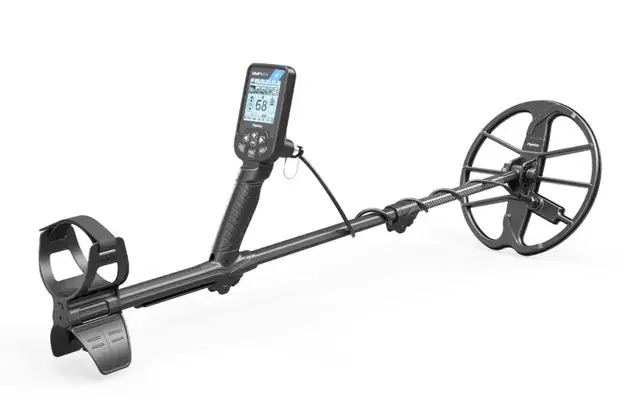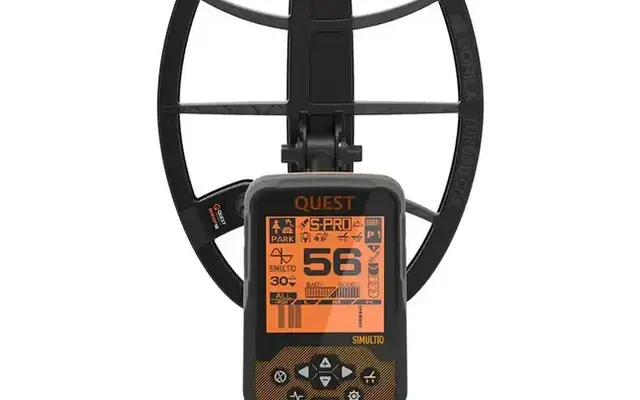
The Quest S series, which appeared on the manufacturer's website without much fanfare, with contradictory specifications and without support from distributors in the UK and EU, is starting to move. In recent weeks three developments have emerged: the series has been listed by a European distributor, a British detectorist is testing it, and the first detailed account from an S-Pro owner has surfaced.
Kooistra Detectors, Quest's distributor for the EU area, based in the Netherlands, has added the S series to its catalogue. However, only two of the three models are listed, and without Quest's official names: instead of S30 SimultiQ Scout and S-Pro SimultiQ Supreme, there are simply S-30 and S-Pro. It is unclear whether this is a commercial choice or a preference for shorter names, but the detail suggests that the Scout and Supreme subtitles have not caught on among those selling the machines.
The S50 SimultiQ Select is missing entirely. It is not known whether it will arrive later, has been shelved, or has not yet been added to the website. The question is not unreasonable, considering that the S40 had already disappeared from the initial range without any explanation. The two models in the catalogue were initially available only for pre-order, but as of 3 August they were listed as available in stock.
In the UK, however, the situation has not changed. It is known, without further details, that Gary Blackwell, a respected figure in British metal detecting, is field-testing one or more models in the series. The models, the conditions and the status of the tests are not known, so no assessment can be attributed to him. It is nonetheless a positive sign that someone with experience on British terrain is putting the machines to the test.
Asked about availability, SpinADisc, Quest's distributor for the UK, confirmed that it is awaiting independent feedback from field tests before placing an order. Until then, stock in the country is not imminent.
The most substantial information comes from a Malaysian user who has been using the S-Pro for about six weeks. The context is relevant: the country's soil is predominantly tropical laterite, a heavily mineralized red clay, among the most demanding terrains for any VLF metal detector. If the S-Pro shows depth limitations in these conditions, that is a significant finding, although it comes from a single user.
His main observation concerns depth in mineralized ground. In his view the S-Pro does not penetrate the soil well and, if it struggles to detect targets near the surface, it becomes difficult to trust when iron is mixed with mineralization. The second critical point is iron discrimination: in soil rich in small iron fragments, the combination of limited depth and ineffective discrimination makes target identification less reliable than it should be.
There is also the question of audio. According to the user, tones 1, 2, 4, 6 and 60 are too low and unclear. The Tone Pitch, on the other hand, is strong and clean, but when hunting in parks, where a tone such as 6 is needed to distinguish good targets from scrap metal, the reduced volume forces the use of headphones.
The overall picture is still partial: a single account, from particularly difficult terrain, is not enough to judge the machine. But it is exactly the kind of feedback the UK distributor says it is waiting for, and the next independent tests will show whether the problems that emerged are specific to those conditions or concern the model in general.