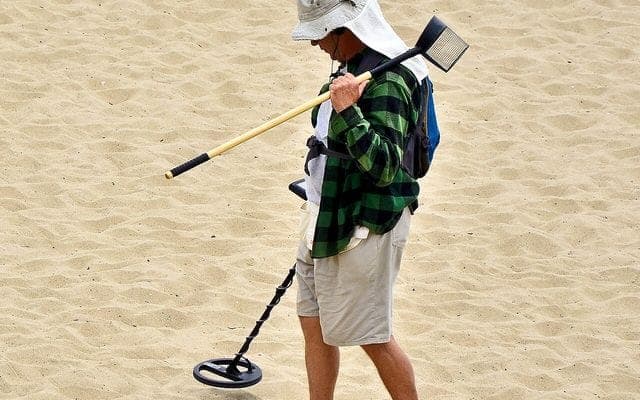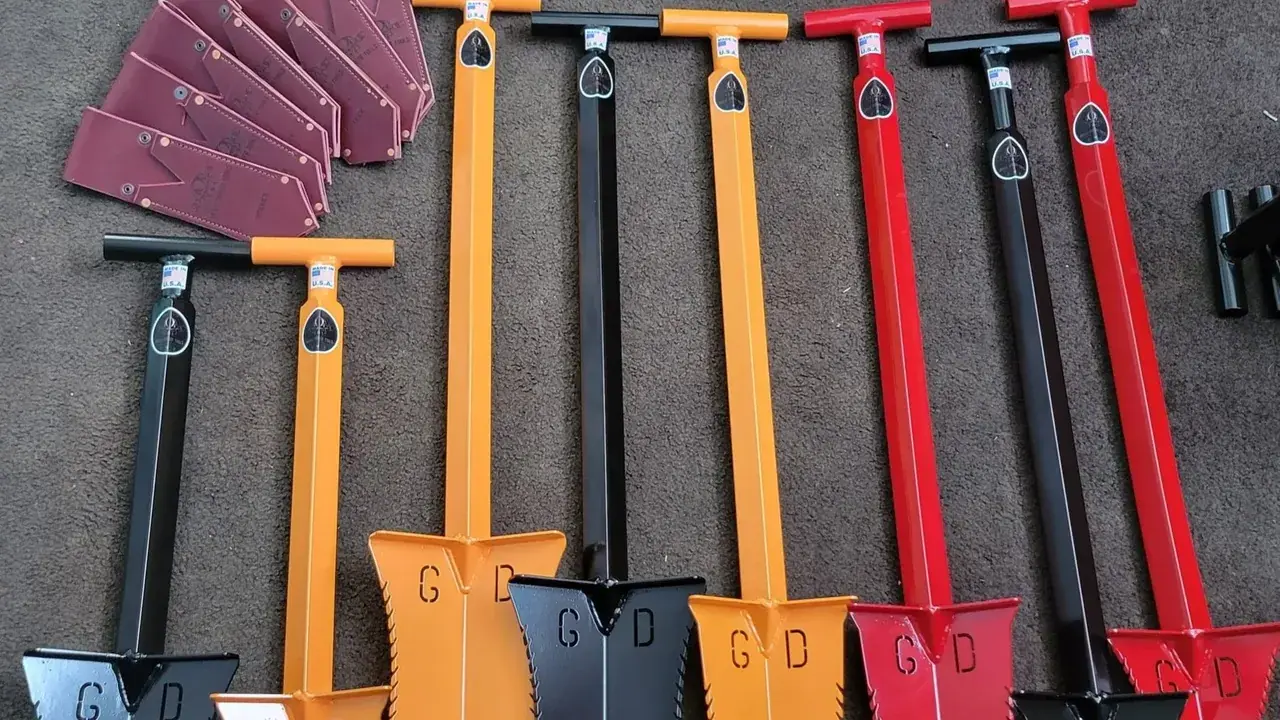
In metal detecting the shovel is often treated as a secondary accessory, yet it is the tool that decides whether a signal becomes a clean recovery or wasted effort. Among the American brands most often cited by enthusiasts is Grave Digger Tools, a family-run company that makes shovels designed specifically for people who search with a detector. A review published by the blog Metal Detecting Life, based on two years of use, describes their construction and how they perform in the field.
The starting point is manufacturing. According to the review, the shovels are laser-cut from American-made steel, hand-welded and finished with powder coating, a treatment that limits rust and wear and is offered in several colors. The owner, Eric, personally welds every unit before it ships. It is a company run by a husband and wife, and it keeps all production in the United States.
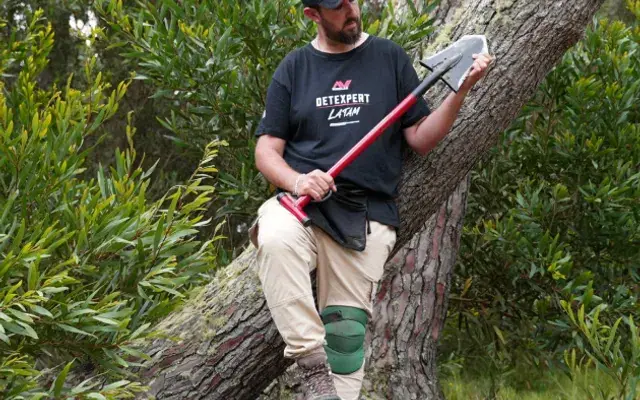
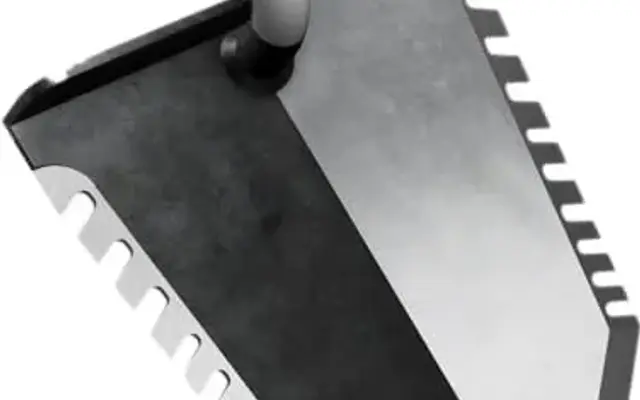
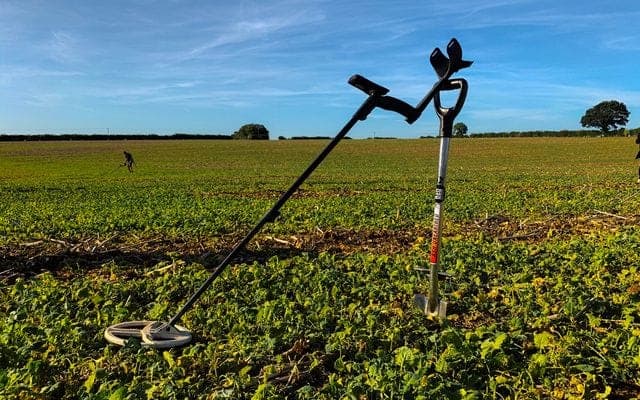
The reviewer tested the 36-inch Nemesis T-Handle, about 91 centimeters long, with a T-shaped grip. The blade has serrated, sharp edges designed to cut through roots. The author used it in an agricultural field right after the snow melted, with the ground still partly frozen, and reports having no trouble digging. Even in root-dense soil the welds did not bend or deform, unlike his old shovel, whose shaft he had bent by levering it between roots.
From a design standpoint, the difference from a generic garden tool lies in the details. Grave Digger shovels are described as tools built for the detectorist: serrated edges, ergonomic handles and compact dimensions make it easier to recover a target precisely without unnecessarily widening the hole. Anyone who searches in cultivated fields, meadows or clay soils knows this well, because a clean dig matters as much as the choice of tool.
On the market side, the review argues that many shovels from major brands show their limits in clay or among dense roots, and that some competitors outsource production to contain costs. The author's reasoning is that a cheaper shovel risks being replaced after one or two seasons, while a sturdy tool is a purchase made only once. It should be noted that this is a personal assessment: the sources consulted report no prices and no direct comparisons with other models.
For those searching in Italy, the practical lesson concerns the criteria for choosing rather than the brand itself. A good detectorist's shovel should have strong steel, solid welds, a blade capable of cutting roots and a comfortable handle for repeated digging, especially in compact or partly frozen soil. The experience described, limited to a single model and a single user, offers a useful reference but does not replace direct testing on your usual ground.
Finally, there is the value of a short supply chain. A product made by a small family business, with direct control over the welding of every piece, is something many enthusiasts see as a sign of reliability, in a sector where digging equipment is often overlooked until the first failure.