Two ancient religious books that, in the summer of 2023, someone was trying to take out of Ukraine into Moldova have been entrusted to the Mykolaiv (Nikolaev) Regional Museum of Local History. The news was released by the museum itself on Facebook and picked up by the agency Ukrinform, the source of this article. The case concerns the protection of cultural heritage rather than a find in the field, but it is of direct interest to anyone involved in history and research.
According to reports, in the summer of 2023 at the Vinogradivka crossing, on the border between Ukraine and Moldova, border guards and customs officers jointly spotted two old volumes written in Church Slavonic. The books were in the luggage compartment of a Mercedes car, among the personal effects of a passenger travelling from Ukraine to Moldova. Sources give no further details of the episode and report no legal outcome or sanctions, so no hypothesis is made here.
Today the two volumes were handed over by the Odesa customs office to the Mykolaiv museum. The transfer took place under an order of the Ukrainian Ministry of Culture on the free transfer to cultural institutions of seized or confiscated property. The museum stresses that in-depth scholarly work will now begin: study of the books' history, identification of their owners, and restoration.
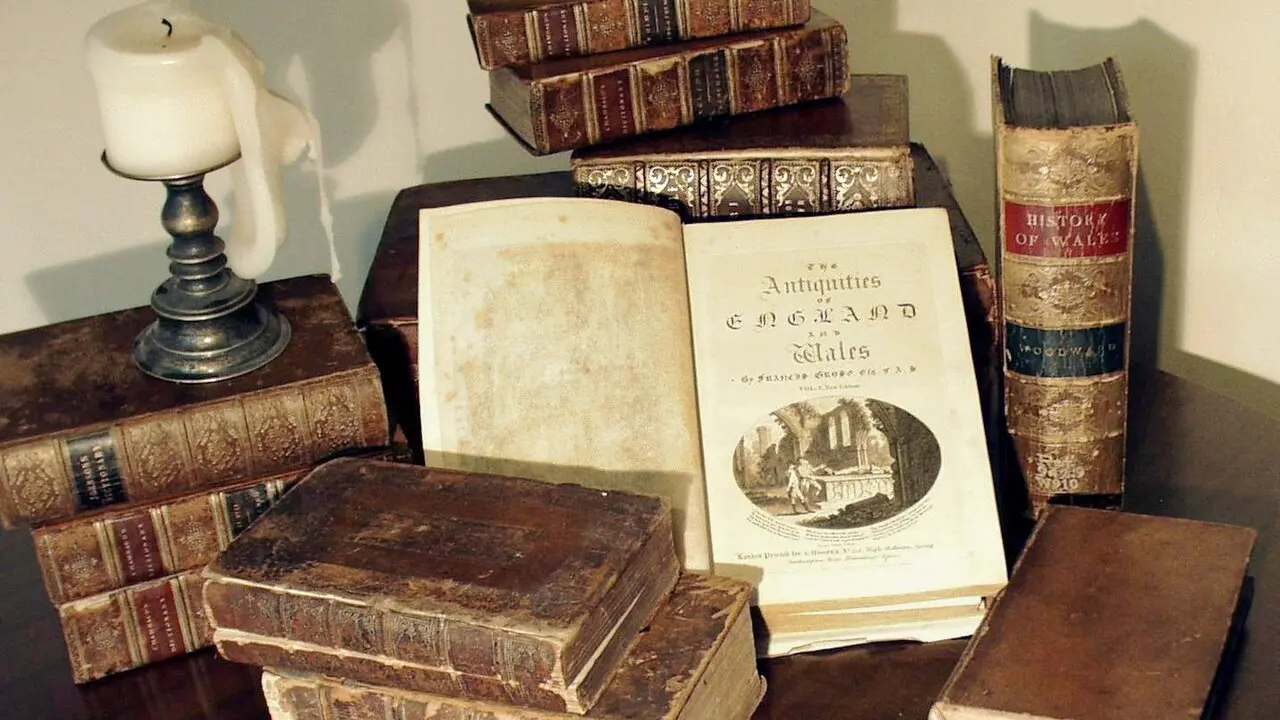
The first volume is a Bible, with Old and New Testaments, printed in 1820 in Saint Petersburg. On the title page, next to the title, there is a printed ownership inscription, together with an ex libris bearing the owner's surname and coat of arms. Some pages still carry handwritten notes that were covered in the past with pasted paper. The text is printed in black ink in two columns.
The second volume has no title page, but experts have identified it as a Psalter with «vosliduvannja», that is, with the attached liturgical office, published in 1764 in Moscow. It is a liturgical book that combines the Psalter, the collection of David's psalms, with other prayers. It is arranged so that the faithful can follow the daily prayers in sequence, in church or at home. The museum recalls that in Ukraine, in the past, children learned to read precisely from this text.
The copy shows signs of frequent use. There are traces of restorations from different periods, drops of wax, and the lower corners of the pages, where the leaves were turned, are very dirty. One page bears the inscription «Church of the village of Prechistenskoe», which may indicate that the book was kept in a church. In the margins are handwritten notes left by clergy to aid reading during services at various times of the year. During the fast, for example, the Psalter is read in full twice a week, while on feast days it is read once a week.
The museum's managers hope that future research will make it possible to better tell the story of these two copies. The same source notes that the museum had recently also received as a gift an embroidered wedding shirt from the tragic years of the Holodomor, the famine of 1932–1933.
For those who practise metal detecting, or simply follow the world of historical research, the case is a reminder: finds and objects of cultural interest are subject to precise rules on movement, especially across borders. The article is limited to reporting the facts given by the agency and does not describe Ukrainian or Italian regulations, which are not covered here. Before carrying out searches, moving or exporting antique objects, it is therefore necessary to check the current local legislation and contact the competent authorities.