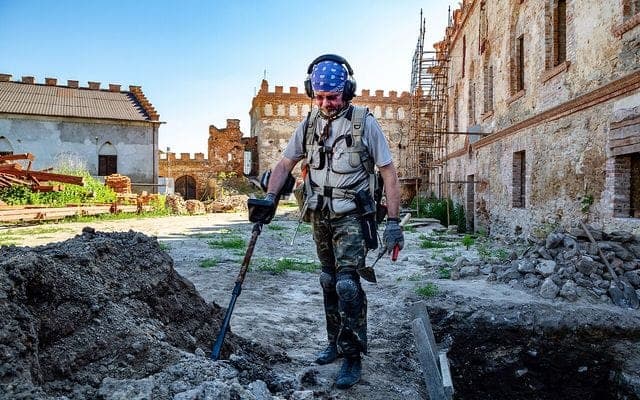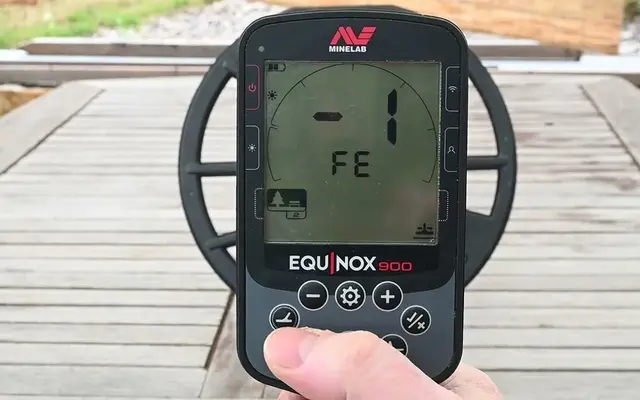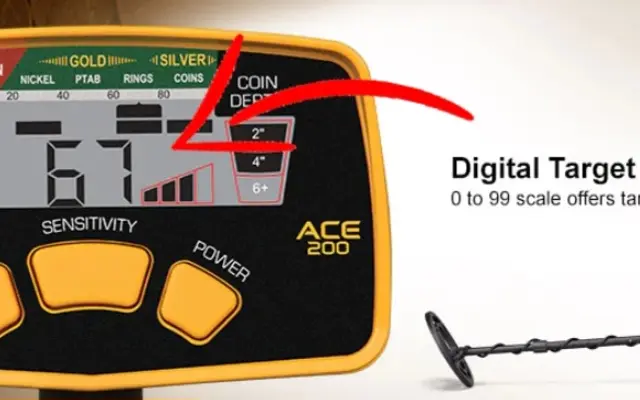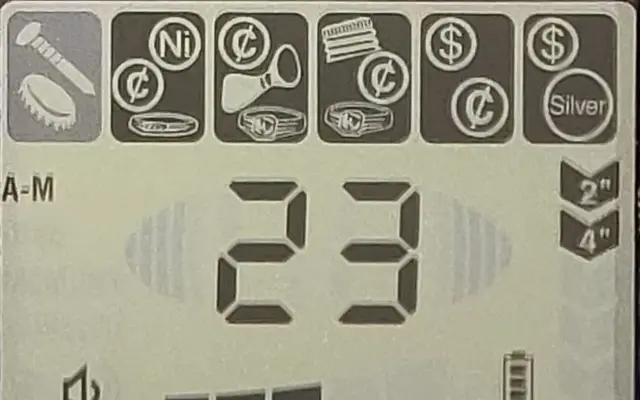
Anyone who practises metal detecting knows the moment well: the signal is promising, the hole is dug carefully, and among the soil a small round object appears. For an instant you think it is a coin. Then you discover it is a button. Among the most frequent finds of all, buttons are often pocketed without much attention, but they deserve a closer look.
The reason is simple: they are everyday objects which, depending on shape, material and decoration, can offer clues about the fashion of an era, the social standing of the person who wore them, their trade and sometimes the people who lived or worked on that ground. A button is not a spectacular find, but it is a small material document.
To grasp their value, it helps to remember that buttons have existed for thousands of years, but their use as the regular fastening of clothes established itself gradually. In the medieval period, in Europe, they became increasingly important with the arrival of more fitted garments. Previously, clothes were often fastened with brooches, pins, laces or belts; the pairing of buttons and buttonholes instead made it possible for fabric to fit more closely to the arms and torso.
Medieval buttons were made of different materials, including copper alloys, pewter and precious metals. Some were simple and functional, others had decorative motifs. Between the sixteenth and seventeenth centuries they were by then a stable element of clothing, and their design followed changes in taste. In the eighteenth century they became more elaborate, especially among the wealthier classes, with engraved decoration, metalwork or surfaces covered in fabric. In the nineteenth century industrial production made them cheaper and more widespread: factories could make them in large quantities for ordinary clothing, military uniforms and work clothes. It is this long history, combined with the enormous numbers produced, that makes them so common in fields.
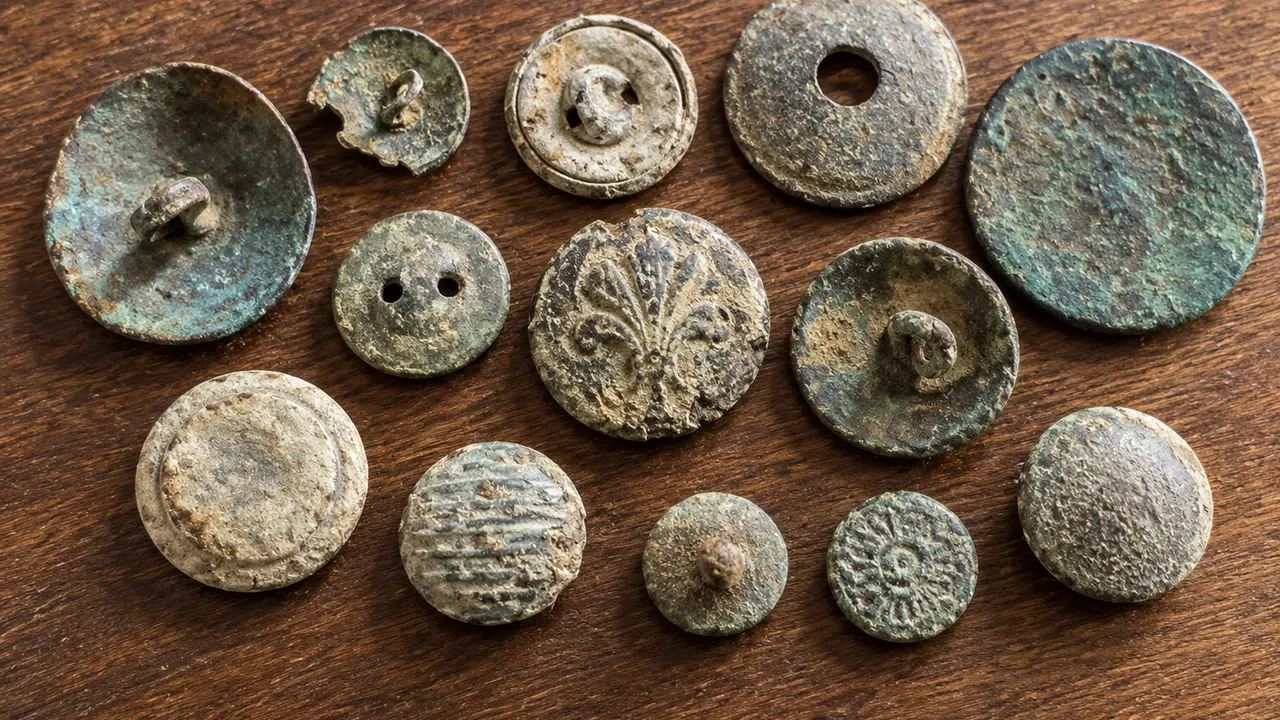
Recognising some categories helps you find your way. Pewter buttons are among the most interesting, because some specimens may date back to the Middle Ages, although they were also produced much later. Pewter is an alloy based on tin, widely used for everyday objects. Many antique examples were cast in a mould and have a shank on the back made in one piece with the body. The faces may be smooth and domed, or decorated with geometric, floral or religious images.
After centuries in the ground, pewter tends to take on a dull grey appearance and can become brittle, especially where the metal has degraded. For this reason, once recovered, a pewter button may look unremarkable; yet its age could make it one of the most significant finds of the day. It is therefore best to handle it gently, avoiding vigorous cleaning that could damage it.
Those searching sites from the Georgian period in Britain have a good chance of coming across tombac buttons. This is a copper-based alloy containing zinc, associated with buttons of the seventeenth and eighteenth centuries. These specimens can be fairly flat or slightly domed and sometimes show a characteristic grey-silver appearance. Many have engraved decoration, such as flowers, stars and geometric motifs; others are completely plain. A useful detail: the fixing loop was often applied separately on the back, rather than being cast together with the button. Finding one is valuable for interpreting a site, particularly when other finds indicate occupation in the same period.
Military buttons are among the most recognisable and, potentially, among the most identifiable. Unlike many civilian buttons, they often bear distinctive insignia, numbers, crowns, symbols or inscriptions. In some cases these elements can help trace the regiment or military organisation to which the button belonged. The same applies, more generally, to livery buttons and other uniform buttons, which point to specific occupations and affiliations.
In practical terms, the best approach is to observe methodically: the material and colour of the surface, the shape of the face, the presence or absence of decoration, the type of attachment on the back (cast or applied) and any maker's mark. Recording the find spot, or logging it with a GPS, then makes it possible to compare buttons with other finds from the same field and to understand which periods of occupation emerge.
In short, a button is never just a button. Whether it is a modest pewter specimen, an elegant engraved tombac or a button bearing military insignia, each is linked to people, clothing and work from another time. The next time one comes out of the hole, it is worth pausing for a moment before putting it in the finds bag.