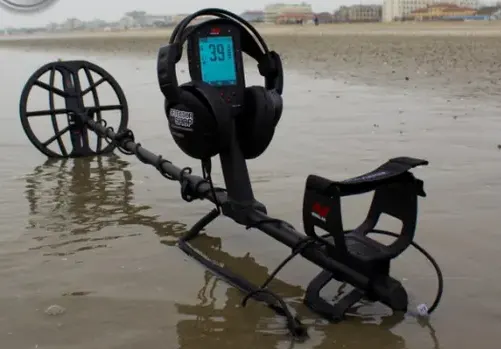
On the American technical forum Metal Detecting Forum, run by Tom Dankowski, a user named stateguy posted a simple question at the end of September 2026: can the Manticore be used on wet sand rich in black sand, and with which settings can excessive false signals be avoided? The thread has only one reply and around 1,378 views. The text of the reply is not included in the source available to us. For this reason, we cannot attribute specific advice on settings to anyone. Below, we offer a general overview of the problem, useful for anyone asking the same question.
The starting point is the interest. The discussion shows that people who frequent beaches often face stretches of dark sand, and that this condition concerns even those who already own a high-end detector. The fact that the question was asked about a specific model suggests that many users do not assume an advanced detector can solve every difficulty of the terrain on its own.
Black sand usually means a deposit rich in iron-bearing minerals, particularly magnetite, which accumulates in bands and patches along the shoreline, often after storms. For an induction detector, these minerals are a problem because the ground itself responds to the coil's electromagnetic field. The ground signal adds to or overlaps with that of the objects, and if the machine does not compensate for it properly, it produces unstable responses, a threshold that rises and falls, and false targets.
To this is added the effect of wet sand. Salt water makes the ground conductive and amplifies the ground's response. Black sand and seawater together are therefore one of the most demanding combinations for any detector. The wet sand zone is also an environment that changes quickly: every wave can alter the composition of the bottom within a few meters.
In general terms, the tools for handling the situation are always the same. The first is ground balance, that is, compensating for the terrain, which must be performed on the exact spot where you are detecting and repeated when the ground changes. The second is sensitivity: lowering it reduces false signals, at the cost of reduced depth. The third is discrimination, to be used with care, because in highly mineralized ground an excessive cut can cause even good targets to be lost. Finally, sweep speed and coil height matter, as they affect stability.
Many detectors offer dedicated modes for beaches or saline ground, designed precisely to limit the response of wet sand. Which modes and which values are recommended for the Manticore on black sand is not stated in our source, and we do not intend to invent it. Those who own the machine would do well to consult the manufacturer's manual and test it themselves on a stretch of black sand, noting the results.
A cautious method is to start from a stable configuration, with moderate sensitivity, and increase it gradually until the threshold stays clean. It is also advisable to check with a known target, for example a test coin, at different depths. Compare the behavior on dark sand with that on the adjacent light sand: if the difference is very marked, repeat the ground balance before adjusting other parameters.
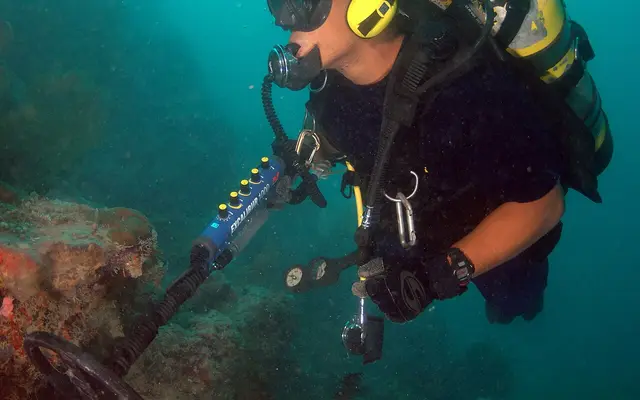
A final point concerns recovery. On black sand, the pinpointer can be affected by mineralization and give imprecise indications, so it may help to reduce its sensitivity. In the water and on the wet sand zone, it is also advisable to use a suitable sand scoop and to respect local rules on digging and removing finds, which vary from place to place.
In short, the question posed on the American forum highlights a real and common problem, but the source does not provide a verifiable answer. Those looking for precise guidance can follow the original discussion on Dankowski's forum. In the meantime, the combination of accurate ground balance, gradually adjusted sensitivity and tests on known targets remains the most reliable starting point.