Anyone approaching metal detecting almost always starts with the same question: what does a machine actually find? The short answer, drawn from a guide on the US site Serious Detecting, is that a metal detector picks up every metal, because every metal conducts electricity. The useful answer is more nuanced: between what is detectable in theory and what is heard in practice lies a gap that depends on size, alloy, depth and the type of machine.
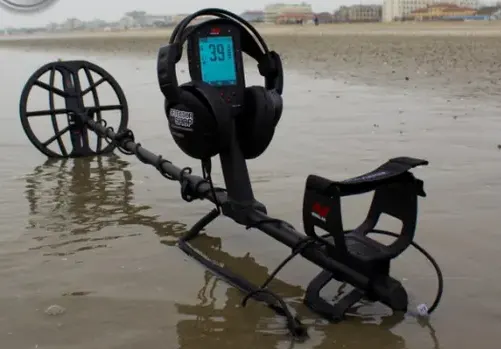
The operating principle is the same for nearly all devices. The coil emits an alternating magnetic field. A conductive object that enters that field develops small circular currents, which in turn generate a field that the coil itself picks up. From this return signal the machine derives two pieces of information: how strong the signal is and where the target sits on a scale running from iron at one end to high-conductivity silver at the other. This is the basis of discrimination, that is, the ability to roughly indicate what type of metal is underground.
This leads to a point that dispels a common misconception: a detector does not only pick up magnetic metals, nor only precious ones. It detects conductivity. That is why the nature of the metal matters as much as size, shape and depth. The same silver can give a clear signal at thirty centimeters if it is a large coin, or a faint whisper at a few centimeters if it is the tiny clasp of an earring. It is the same metal, but two very different targets for the machine.
If metals are ordered by how they behave under a hobby detector, at the sizes in which they are actually found, the source indicates that silver, copper, brass and aluminum give the strongest and cleanest signals. Iron and steel are easy to detect, but they fall in a zone of their own on the scale, which is why the machine can be set to ignore them. Among the weakest are stainless steel, titanium and small pieces of gold. This is a practical ranking rather than a pure conductivity ranking, and even numerical target ID values should be taken as indicative, since each manufacturer scales them differently and ground, depth and size shift them.
Two results often puzzle beginners. The first is aluminum: it is cheap, yet it gives a strong signal. That is why a day in a park is largely spent digging up pull tabs and bits of foil. The second is gold, which many expect to be at the top but which falls in the same range as that scrap aluminum, so the sound alone is not enough to tell them apart.
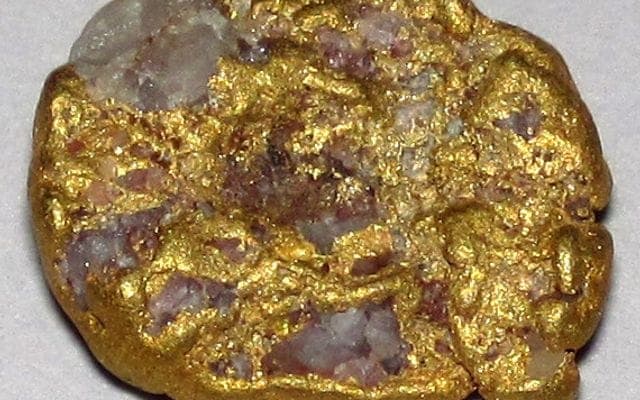
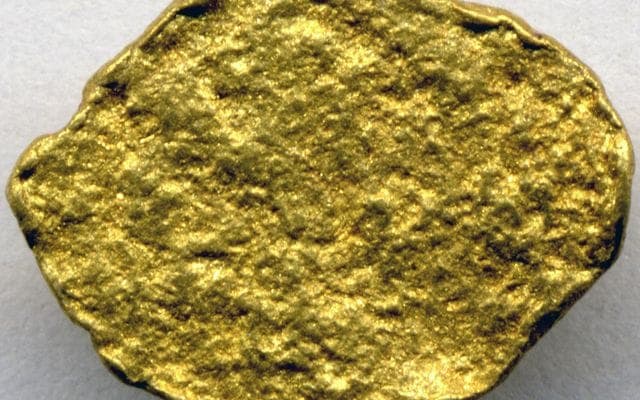
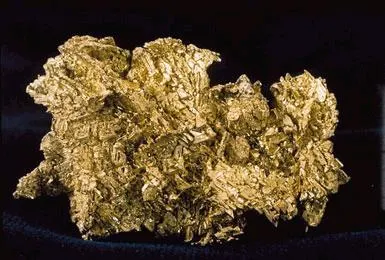
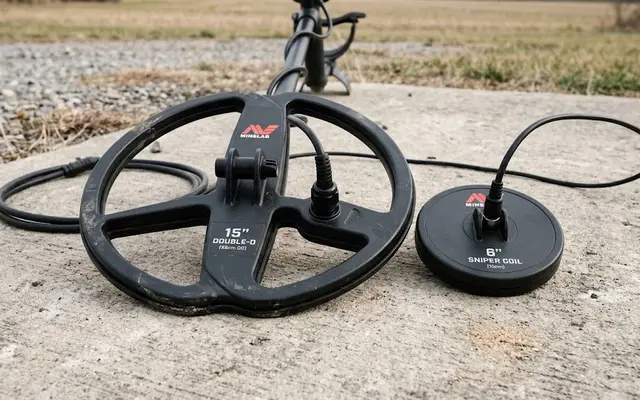
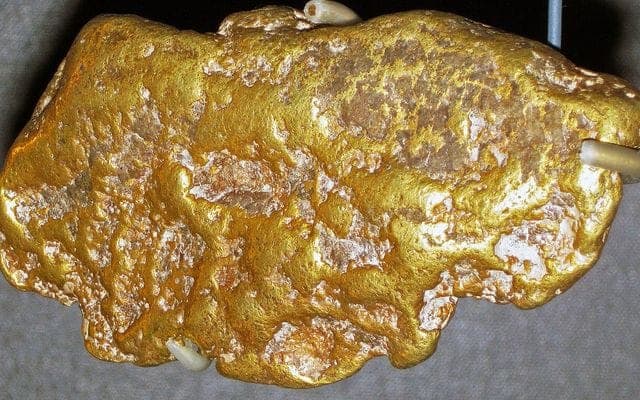
Yet gold conducts well, better than brass and zinc. What holds it back in practice is size and alloy. Natural gold almost always occurs in tiny pieces: a nugget the size of a matchstick head is already a good find in most US soils. A small target produces a small signal, whatever material it is made of, and a general-purpose coin detector, which works at low frequency, may not respond at all. Jewelry, moreover, is an alloy: 10 or 14 karat gold reads lower than pure gold. Dedicated machines compensate by working at higher frequencies, typically from 18 kHz upward and above 40 kHz for finer gold, or by using pulse induction when depth is needed in mineralized ground.
Then there is what a detector will never see. Anything that does not conduct electricity is invisible to the coil: gemstones and diamonds, glass, pearls, ceramics, plastic, paper, wood, bone and stone artifacts. A loose diamond produces no signal at all, while one set in a ring is found thanks to the ring. Arrowheads and sherds stay silent unless a nail happens to be nearby. The same goes for hiding places: a glass jar full of silver coins is a strong target, the same jar full of banknotes is not. What counts is what is metallic, not what has value.
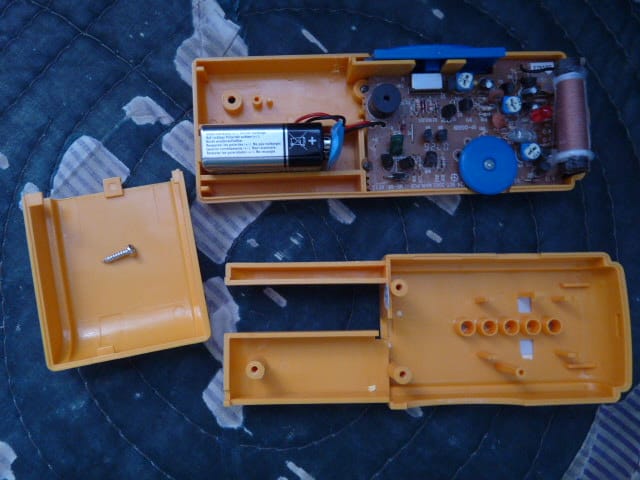
The physics is the same as in the walk-through metal detectors at airports and courthouses, but the task is different: those are calibrated to respond to a certain mass of metal. A belt buckle, keys or a phone will trigger them, while a single earring usually will not. They share the same blind spots as hobby detectors, which is why checkpoints add body scanners and X-ray machines.
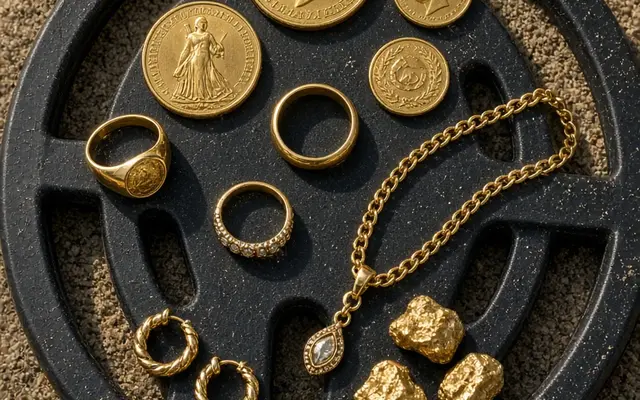
So what does a detector actually find? Coins, both modern and ancient; lost jewelry, mostly on beaches, bathing areas and in parks; and artifacts such as buttons, buckles, musket balls, shell casings, tools and hardware from old houses. With the right machine and gold-bearing ground, even gold nuggets. And meteorites, at least iron-nickel ones, which give a strong signal of a ferrous or mixed type.
In short, choosing the machine and its settings means deciding which targets you want to hear and which to discard. Knowing that the signal comes from conductivity, but also depends on size and depth, helps you read what the coil is telling you more accurately and not trust a single number on the display blindly. A weak response can hide a small treasure, and a strong one can be nothing more than a pull tab of aluminum.