Asked whether a metal detector can find gold, the answer is yes. But there is a considerable gap between “it can be done” and “I will surely find it on my first outing.” The result depends on three factors: the choice of terrain, the machine’s equipment, and the ability to read the signals the coil returns.
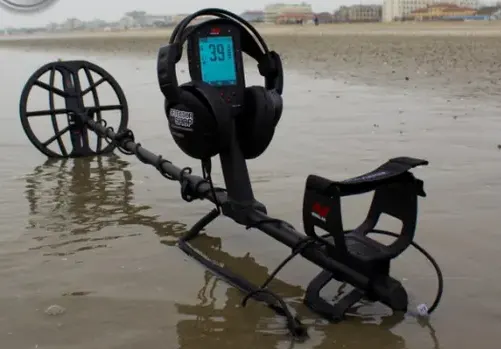
The first point concerns the equipment. Gold is a metal with low conductivity, so a generic device is often not enough. What is needed is either a detector designed for gold or a machine with excellent sensitivity to small targets, such as tiny nuggets and jewelry. Dedicated models are built to detect small nuggets even in mineralized soils, where other devices struggle to return usable signals.
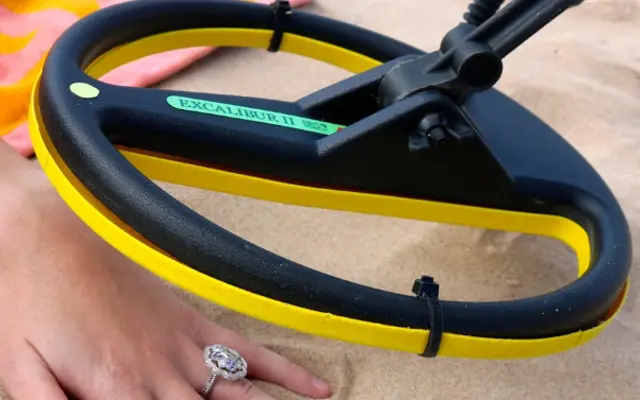
The second point is the location. Gold is searched for where it naturally occurs or where history has made it likely: riverbeds and streams, areas with a mining past, old mines, and places where prospectors once worked. Here, preliminary research is as important as the machine’s sensitivity. Studying maps and old mining concessions makes it possible to narrow the field before setting foot on the ground. A different case is that of lost jewelry, such as gold rings dropped along a riverbank, where the choice is guided by where people have gone rather than by the natural deposit.
The third point is adjustment. Sensitivity and ground balance are the two settings that make the difference. Mineralized ground generates interference that overlaps with target signals, and a properly set ground balance serves precisely to filter out that background “noise.” For gold, this is a step not to be skipped. It is worth taking time over fine-tuning and rechecking the settings whenever the ground changes, practicing in different conditions.
Then there is reading the signal. According to the source, gold produces a clear, sharp, steady tone, a “medium tone” on detectors that distinguish targets by tone ranges based on the metal’s composition. This sound is usually distinguishable from the weaker, scattered signals of metals such as aluminum, for example bottle caps, or iron, such as nails. Added to this is the numerical reading of the VDI, the visual discrimination indicator shown on the display: gold tends to appear at specific values, and learning to recognize them is part of the experience.
There is, however, a trap well known to all detectorists. The pull tab from a can sounds very similar to gold and has VDI values close to those of a ring. Tone and number therefore indicate a probability, not a certainty, and the only way to resolve the doubt is to dig. One should expect that many recovered targets will be metal junk before something valuable appears.
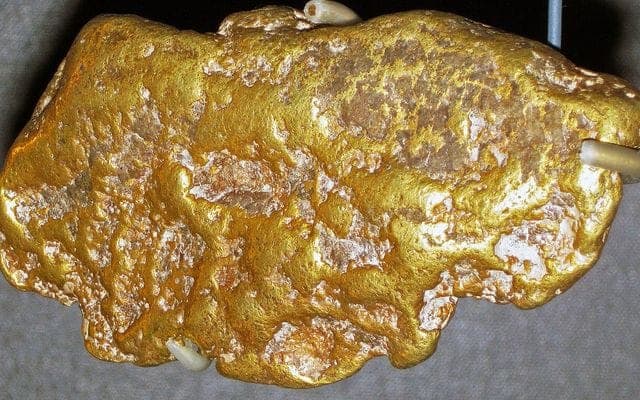
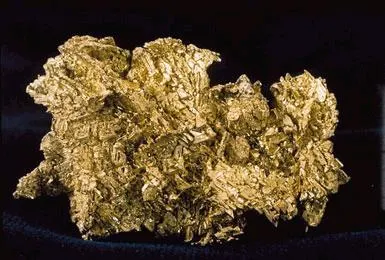
As for difficulty, the source is frank: finding gold is not easy. Deposits are rare and often buried deep within heavily mineralized ground. Gold is rarer than many other metals, so it is normal to dig a large number of other targets before reaching the right one. Expecting a nugget on the first outing means facing an almost certain disappointment.
So what can be done to improve the odds? It can be summed up as a sequence of practical steps. First, study the area and identify the most promising spots. Then choose a detector suited to small nuggets and mineralized ground. Carefully adjust sensitivity and ground balance, and learn to listen to the tone and read the VDI. Finally, build experience with consistency, and it is advisable to train in areas with small nuggets before tackling isolated and demanding sites. Patience is as much a part of the equipment as the coil.
One last aspect, never to be overlooked, concerns the rules. Before searching, local regulations must be checked and the necessary permits obtained. Knowing where and how detecting is permitted is an integral part of preparation, especially when working on historically mining areas or on land with particular restrictions.
In short, gold is not “found” by chance: it is prepared for. Those who combine documentary research, suitable tools, accurate adjustments and a good dose of perseverance have real chances of success. And that clear tone in the headphones, when it comes, makes up for much of the effort.