Gold Hunting with a Metal Detector: VLF or PI, How to Choose
Frequency, ground mineralization and nugget type: the factors that decide whether a high-frequency VLF or a pulse induction machine is worth it.
September 21, 2026
ShareLink copied!
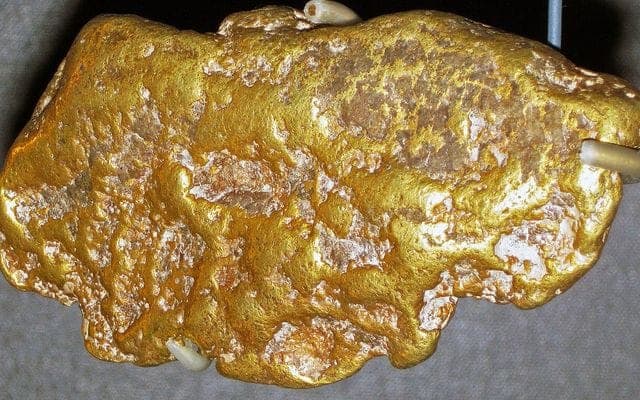
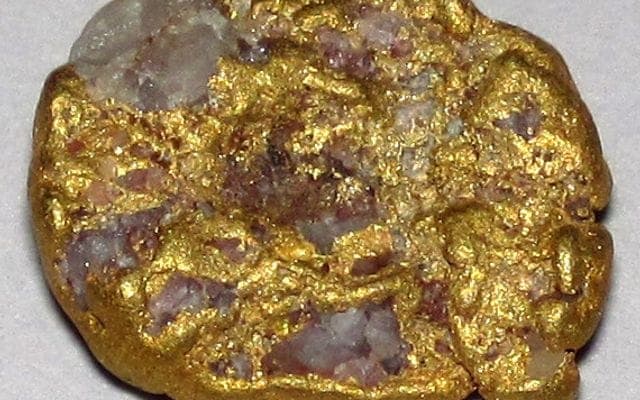
David Hawgood — CC BY-SA 2.0, via Wikimedia Commons
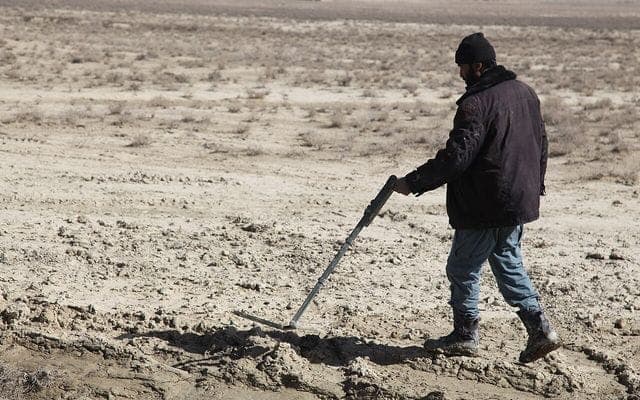
The question that comes up most often among those approaching prospecting is whether a metal detector can really find gold nuggets or whether it is just marketing. According to the US specialist shop Serious Detecting, which says it field-tests machines with its own prospectors before recommending them, the answer is yes. Three conditions are needed, however: the right machine, the right ground and the right sweeping technique. Gold hunting is a different discipline from coins and relics: the targets are smaller, the soil is trickier and the margin for error is narrower.
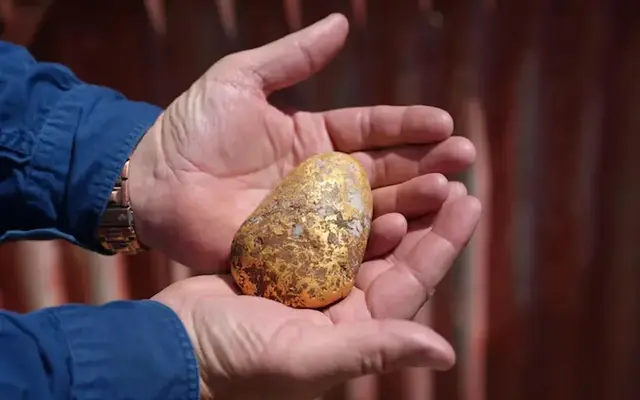
In theory any detector responds to gold, since it is a conductive metal. The problem is size. Most natural gold is small: sub-gram nuggets and "pickers" are the daily bread of nugget hunters, and these are precisely among the hardest targets to pick up. The coil emits an electromagnetic field that induces tiny eddy currents in the metal, and the machine reads the return signal. A large, highly conductive silver coin generates intense currents that are easy to detect. A single-grain gold flake generates barely any.
The lever on which the game turns is the operating frequency. Higher frequencies excite small, poorly conductive targets much better than lower ones. This is why general-purpose coin detectors, which work between 5 and 15 kHz, can miss tiny gold that a dedicated machine at 45, 61 or 71 kHz signals clearly. Physics offers no shortcuts: as frequency rises, depth on larger targets is lost and reaction to mineralized ground increases. Every gold detector is therefore an engineering compromise between sensitivity to fine gold, depth on coarser gold and stability in "hot" ground. The right question, the source notes, is not whether a detector finds gold, but which compromise suits the gold present in your own ground.
The fundamental choice is between two technologies. VLF (Very Low Frequency) machines transmit a continuous sine wave and read the phase shift of the return signal. Used at high frequency they are very sensitive to small gold, the sub-gram nuggets that make up most finds. They also offer discrimination, that is, the ability to tell that a target is probably iron before digging. Their weak point is mineralized ground: iron oxides and black sands typical of gold areas produce background noise that can mask signals and force sensitivity to be reduced more than one would like.
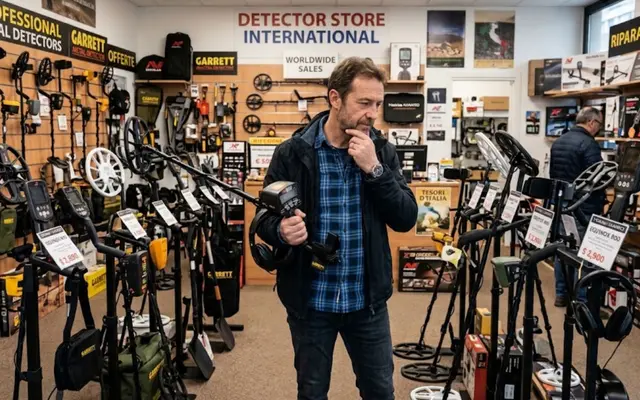
PI (Pulse Induction) machines work differently: they send powerful current pulses into the ground and listen to the decay of the target's signal in the intervals between pulses. Because they sample after the transmit pulse has ended, they largely ignore mineralization, precisely the condition that undermines VLFs. They go deeper on large nuggets and remain stable on ground that would drive a VLF crazy. In exchange they have lower sensitivity to the tiniest gold. Modern PIs have considerably narrowed the gap, but they offer little or no discrimination and they are expensive: according to the source, prices start at around $2,500 and exceed $6,000.
Hence the practical advice from the Serious Detecting staff. If the ground is lightly to moderately mineralized and the district's gold is small, a high-frequency VLF finds more gold per dollar spent. If instead you search heavily mineralized ground, or aim for larger and deeper nuggets, the PI is worth the outlay. The source cites much of Arizona, ironstone-rich ground in the Western Australia style and deep desert placers as examples.
An interesting point concerns the advantages over other methods: according to the authors, the detector finds gold that panning and sluicing, that is, sieving in a sluice box, do not intercept, including nuggets in dry ground far from water, where no other system reaches.
For those working in Italy the general picture remains useful, with one caveat: the guide is written for the North American and Australian context, with its ground and its prices in dollars. Anyone wanting to search for gold in Italy will also need to check the rules on prospecting and possession of metals and on access to sites, since the source does not cover them. The available text breaks off before the indications by budget bracket and the section on field technique, so no details on these aspects can be reported. The principle, however, is clear: before buying, it is worth asking what kind of gold, and in what kind of ground, you intend to search for.
ADV
The AI assistant for metal detecting
Custom programs, restricted-area checks, ground recognition and much more.Try it free →Get the app