Every season, people who visit gold-bearing areas bring home rocks convinced they have hit the jackpot. According to the US specialist shop Serious Detecting, nine times out of ten it is pyrite, mica or a piece of stained quartz with nothing inside. The good news is that real gold gives itself away: no similar mineral can imitate its colour, weight, softness and chemical stability all together. Pyrite, the so-called 'fool's gold', can copy the colour, but not the density, the streak and the malleability all at once.
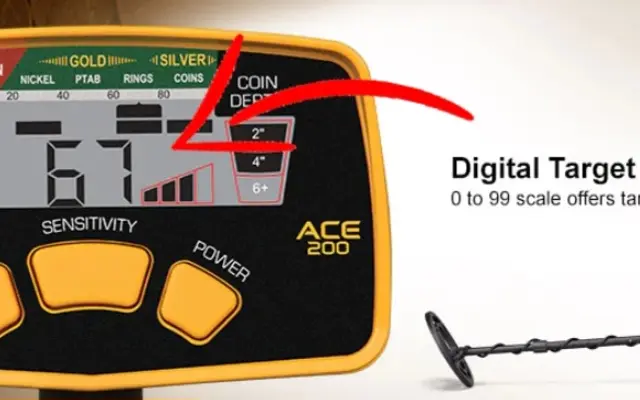
Before getting into the tests, a clarification of the term 'gold ore'. It does not refer to a rock full of visible yellow metal, but simply to a rock that contains enough gold to justify extracting it. In active mines, grade is measured in grams per tonne, often as little as 1 to 5 grams of gold spread through a tonne of rock. High-grade material, with gold clearly visible, is rare and the exception. Those who look only for rocks studded with yellow, the source warns, will walk past 99% of the material that contains gold. That is why a trained eye matters most for primary gold, still locked in the parent rock, while for placer gold the heavy work is done by the gold pan and the metal detector.
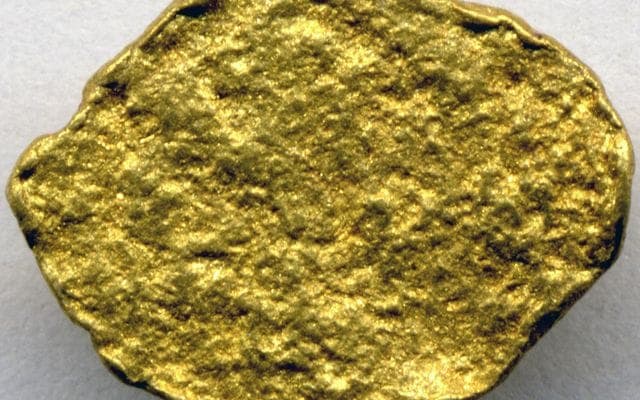
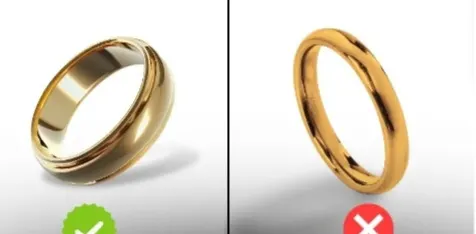
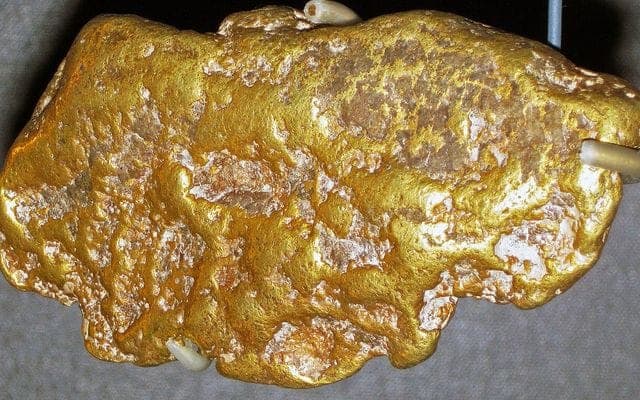
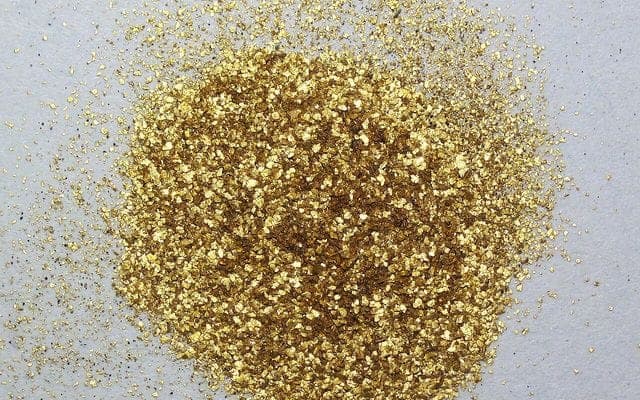
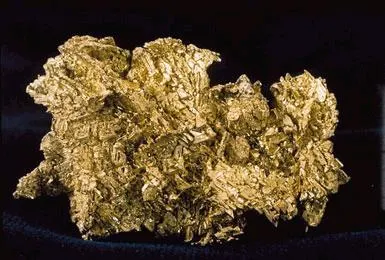
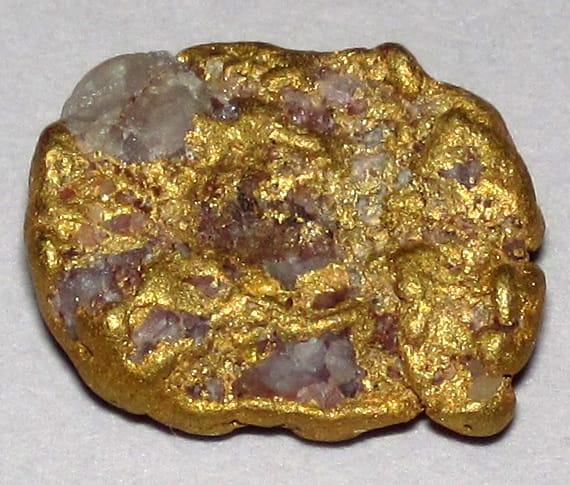
The first check is visual, using a 10x magnifier. Real gold has a full, metallic, 'buttery' yellow that it keeps in any light: turning the sample in shade, in direct sun and at different angles, the colour stays the same, because the metal does not oxidize or tarnish. In rock it usually appears as tiny specks, fine wires, flakes along fractures or irregular blobs, not as perfect crystals. This is a useful clue: natural gold in the field almost never shows crystal faces, so a neat, geometric little cube is pyrite. Pyrite also has a harder, glassier sheen and forms cubes, striated faces and clusters of crystals with flat facets. Gold, by contrast, has a soft, even lustre, more wedding ring than disco ball.
A simple trick is to compare sun and shade: gold stays bright even in shade, while pyrite and mica lose much of their sparkle as soon as direct light is gone. Just cover the stone with your hand for ten seconds. Naturally, no single test is conclusive on its own: the source recommends combining two or three before drawing conclusions.
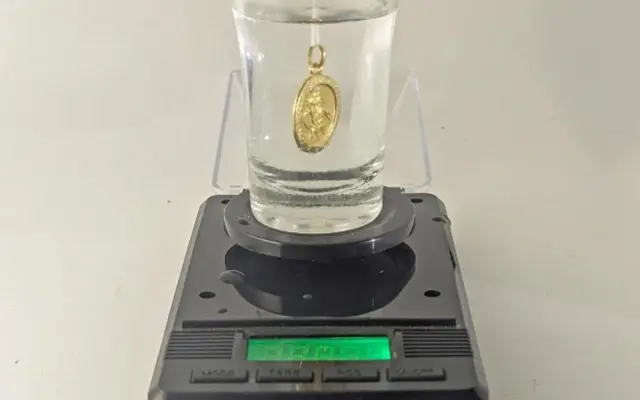
The second group of checks is physical. The first is weight. Pure gold has a specific gravity of about 19.3, meaning it weighs about 19 times as much as water and about 4 times as much as pyrite (around 5) or chalcopyrite (about 4.2). Natural gold alloyed with silver also falls between 15 and 19. A sample that contains gold should therefore feel noticeably heavier than an ordinary stone of the same size: holding one in each hand, if the suspect sample does not feel unusually dense, it is best to temper your expectations. It is the same property that lets gold settle on the bottom of the gold pan while the rest is washed away by the water.
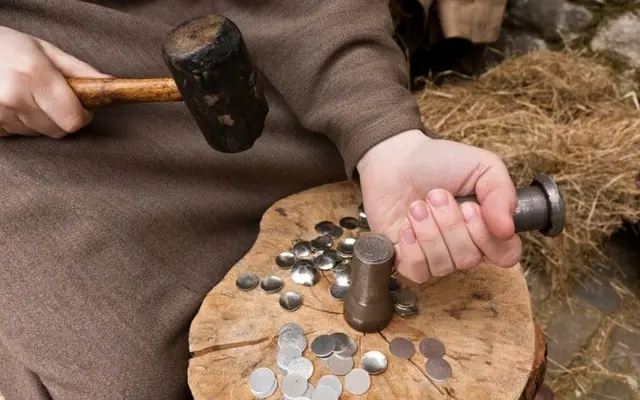
Then there is hardness. Gold is soft, between 2.5 and 3 on the Mohs scale, roughly like a copper coin, and therefore softer than a steel blade or glass (both around 5.5). The logic can be reversed: gold does not scratch glass, so if your sample leaves a mark on a glass bottle, it is not gold. Linked to softness is the last characteristic, which the source calls gold's real ace up its sleeve: malleability. Gold is the most malleable metal in existence. It bends, flattens and dents without breaking, whereas the minerals that imitate it tend to crumble.
Finally there is the streak test, described as the most reliable and quickest field check: firmly rub the mineral across an unglazed porcelain surface, such as the back of a ceramic tile, and observe the mark it leaves. Combined with the other tests, the result is hard to misread.
The practical value of these checks is to avoid illusions and, above all, to avoid discarding an interesting find out of carelessness. However, no home test replaces laboratory analysis when a real value is at stake. In the field, these checks help decide whether it is worth investigating further with a gold pan or detector, not whether a find is certified.