The question sounds simple: does titanium set off a metal detector? The short answer is “sometimes, depending on the machine.” A search detector will easily pick up a titanium object in the ground, while airport security gates often let titanium prostheses and small titanium items pass without any alarm. The difference lies in how each device is built and in what it has been calibrated to ignore. The topic is mentioned in the guide published by Serious Detecting in mid-September 2026, and it is also useful for treasure hunters, because it helps them understand what to expect from an uncommon target.
To understand the phenomenon, it helps to remember that a detector does not “sense” metal as such. It reacts to two physical properties: electrical conductivity and magnetic response. Titanium is unusual in scoring low on both. As a result, the coil can detect it only thanks to the weak eddy currents the object generates when it is struck by the detector’s field. A small piece produces a signal so faint that many security machines never trigger at all. These machines are deliberately calibrated to ignore watch clasps, zippers and underwire bras.
Now to airport checks. According to the source, most travelers with titanium hip or knee prostheses, bone plates or dental implants pass older gates without setting off an alarm. Larger implants, such as a complete femoral stem, can instead trigger the more sensitive units. Body scanners, finally, may flag the affected area and lead to a quick manual search. In practice, there is no single answer valid for all checkpoints: the size of the object and the sensitivity at which the device is set both matter.
Handheld wands, the ones staff pass a few centimeters from the body, sit somewhere between these two extremes. A good model will detect a pocketknife or a larger titanium object. Tiny pieces, such as stud earrings or small dental work, may instead remain silent at normal screening sensitivity. The principle is always the same: if the signal produced by the object is weaker than the threshold chosen for the instrument, there is no alarm.
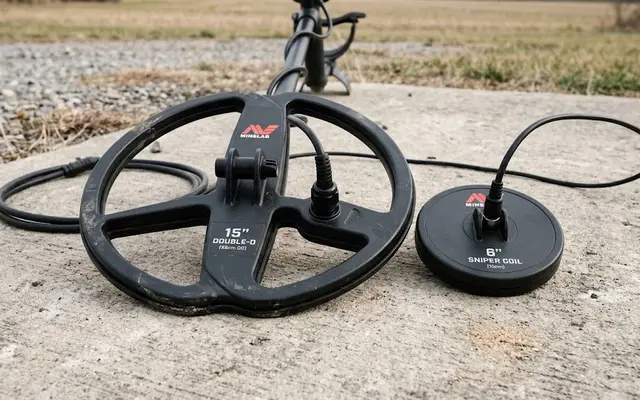
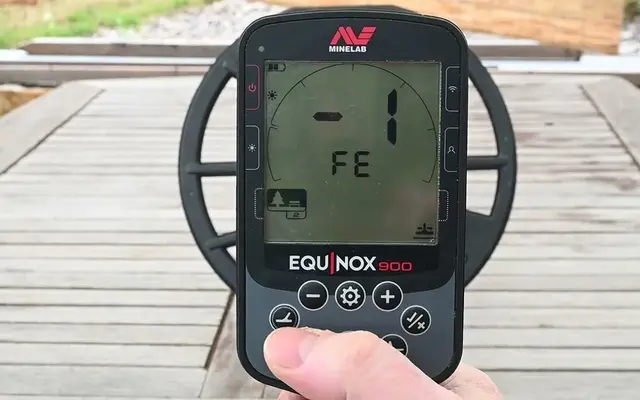
In the ground, the situation changes. Search detectors operate at a higher sensitivity than security units and return titanium as a target of medium-low conductivity. On most Target ID scales, it falls into a range similar to small gold objects or foil. It is therefore no surprise that titanium camping gear, watch parts and jewelry are regularly recovered by people searching parks, fields and beaches.
This has a practical consequence for those setting discrimination. If titanium reads in the same range as small valuable targets, rejecting all low and medium-low tones to avoid trash means giving up signals that could prove worthwhile. Serious Detecting, which is also a dealer and therefore has a commercial interest, suggests a modern multi-frequency detector for weak, poorly conductive targets. It adds that a pinpointer makes recovering small titanium and gold items much quicker. These are recommendations to weigh with due caution, but they are consistent with the logic of the instrument: the weaker the target, the more sensitivity and precision are needed to locate it.
It is also worth dispelling a widespread idea, namely that titanium is “invisible” to metal detectors. The source is clear: it is harder to detect than steel or aluminum, but no commonly used metal is truly invisible to a well-tuned detector at close range. A small titanium piece of jewelry rarely sets off a security scanner, but a hobby detector passing close to it will find it.
In summary, titanium can set off a metal detector; it only requires a sensitivity higher than that normally used in security checks. For the treasure hunter, this is reassuring, because their instrument sees what airport checkpoints let through. For travelers with titanium prostheses or small titanium items, by contrast, passing through a checkpoint usually happens without problems, with the exception of larger implants and the additional checks that may follow a body scanner.