Finding a hammered coin is one of the most anticipated moments for anyone who practices metal detecting. These pieces are small, often thin, rarely perfectly round and sometimes extremely hard to read, yet they represent a direct link to the people, places and trade of the past. Faced with a worn specimen, the temptation is to give up: the portrait is barely suggested, the legend is incomplete and the edge may have been clipped. With a little patience and a method, however, it is almost always possible to narrow down the field.
The method starts from three questions: who issued the coin, what denomination it is and where it was minted. There is no need to answer them all at once. Every clue, even a partial one, eliminates some possibilities and points the search toward a specific ruler, period or coin type. It is a process of elimination, closer to an investigation than to a reading.
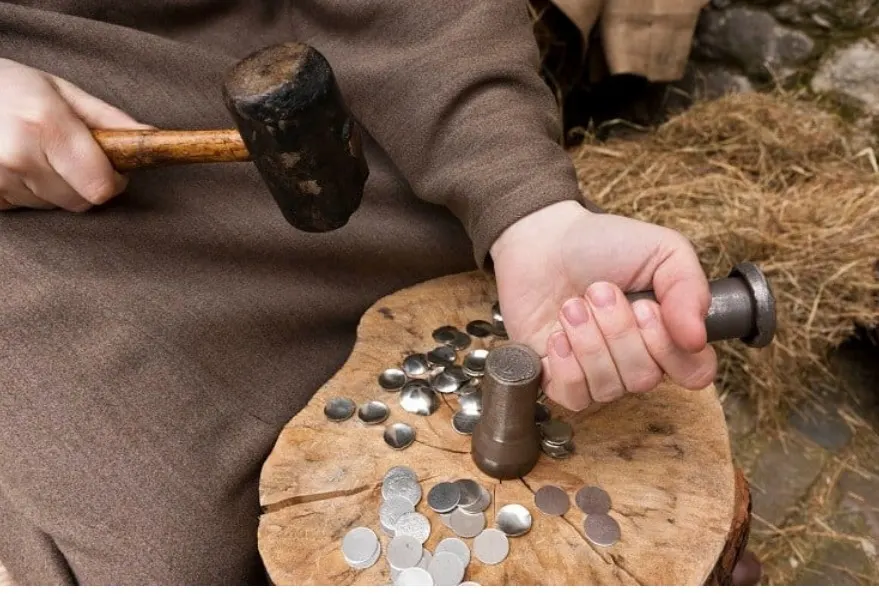
To interpret the marks, it helps to remember how a hammered coin was made. A blank disc of metal with no design, known as a flan, was placed between two engraved dies. The upper die was struck by hand with a hammer, impressing the design on both faces. Precisely because the process was manual, irregularity is the norm: off-centre images, slightly oval shape, weak striking and uneven edges. These flaws do not necessarily indicate damage suffered in the ground; very often they are the direct result of the manufacturing process. Some coins, moreover, were struck quickly or on poor-quality flans, which is why certain types look crude even when they have survived in good condition.
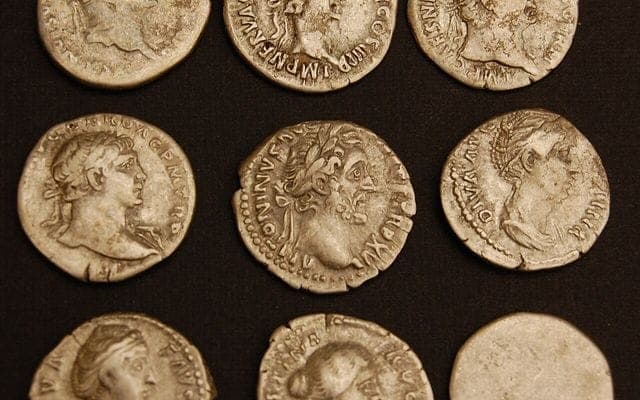
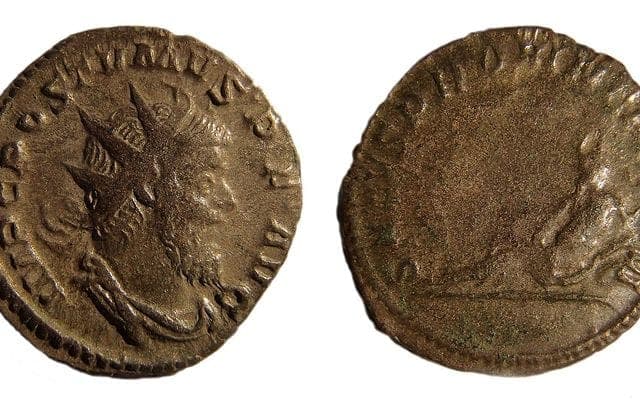
The most useful element is usually the inscription, or legend. It can reveal the ruler, the mint, the moneyer and, at times, the denomination. The problem is that it is rarely legible in full: the letters may be faint, worn, cut off by the edge or lying outside the flan. Medieval letters, moreover, differ from modern ones, and certain pairs are joined in ligature, so that two characters look like a single bizarre symbol. The advice is not to try to read everything at once, but to look for small, recognisable sections.
On English coins, certain sequences recur often: HENRIC for Henry, EDWARD for Edward, RICARD for Richard, CAROLUS for Charles, ELIZABETH for Elizabeth. REX means «king», REGINA «queen», while ANGL or ANGLO refer to England or the English. Even two or three clear letters can be enough to direct the search.
The example offered by the source, the LP Metal Detecting website, is instructive. On a coin whose letters are so faded that they can only be deciphered by knowing what to expect, the obverse reads CNUT REX ANGLO. This is Latin and simply means «Cnut, king of England»: the issuer is therefore Cnut, an Anglo-Saxon ruler who reigned from 1017 to 1035. A single successful reading has thus closed the first of the three questions.
If the legend does not help, the image remains. On most English hammered coins the ruler appears on the obverse, generally the front side. The portrait can be very simple, especially in the oldest medieval issues, but it still offers clues: the shape of the crown, the frontal or profile bust, the shape of the face, the details of hair and beard, clothing or armour, and the overall style of the engraving. In general, frontal busts are more typical of the earliest medieval coins, while later ones may show more elaborate portraits and shields. Even without reading a single letter, style can place the specimen in an approximate period.
The reverse deserves the same attention. Crosses, shields and symbols often make it possible to narrow down the identification. The medieval penny, for example, frequently has a cross on the reverse, sometimes with pellets in the quarters, and the form of the cross can be a decisive clue.
The case of Short Cross pennies shows why one cannot blindly trust the name of the king. They were introduced under Henry II and continued through the reigns of Richard I, John and Henry III, always keeping the legend HENRICVS REX even when the actual ruler was Richard or John. A coin that says «Henry» may therefore belong to a different reign. To tell them apart, collectors use classes, defined by small differences in the portrait, letters and design. On the reverse, the short cross, which does not reach the edge of the coin, is recognisable.
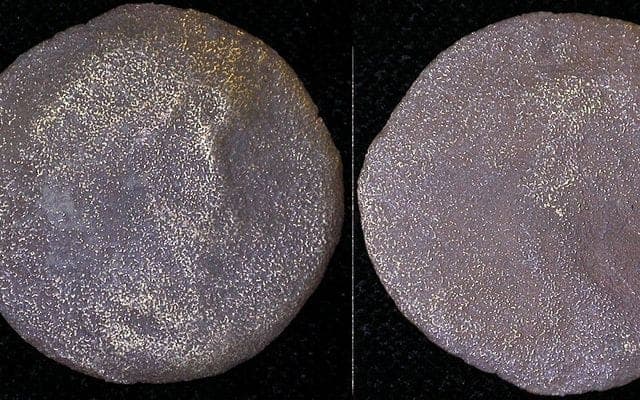
In practice, when faced with an illegible specimen, it is best to proceed as follows: examine it in good light, look for fragments of the legend rather than whole words, note the style of the bust and the structure of the reverse, and only then compare these elements with the available documentation. Irregularities in striking should be read as characteristics of the process rather than necessarily as defects, while clipping of the edge, which can make letters disappear, is a limitation to be taken into account. Complete identification is not always possible, but every piece of information gathered, from the ruler to the denomination, makes the find more meaningful and more valuable.