How to Identify Historic Campsites Where No Water Is Visible Today
Before searching for where an object was lost, it helps to understand why someone stopped right there: the land preserves the memory of those choices.
October 21, 2026
ShareLink copied!
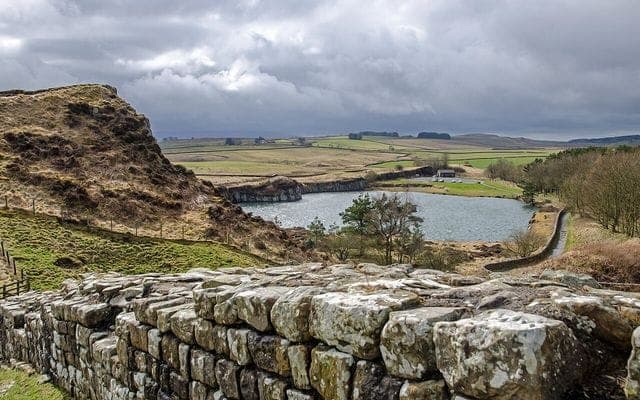
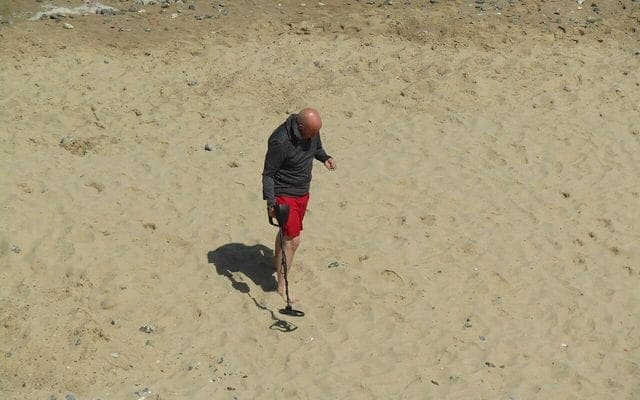
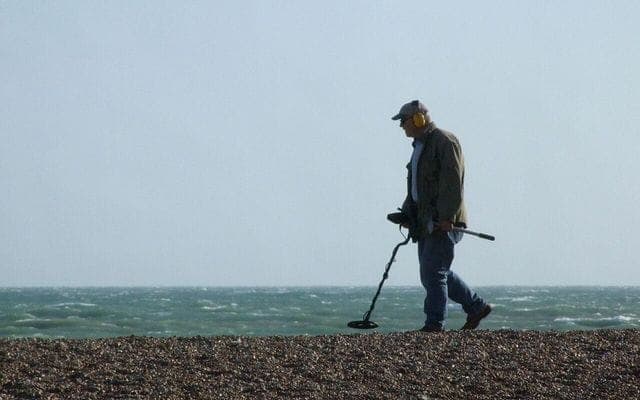
Andrew Curtis — CC BY-SA 2.0, via Wikimedia Commons
Anyone who studies an old site to search it with a metal detector almost always starts from a destination: a ford, an abandoned house, a military camp, a road that appears on a nineteenth-century map. The instinct is to reach the spot, get permission if needed, and start sweeping the ground. It works, and many discoveries have come about this way. According to the author of an article published in Focus Speed, however, the most important finds are rarely the product of random searching. They arise from understanding why people were drawn to one precise point, while ignoring hundreds of others that appear identical.
This is the difference between someone who searches for where something was lost and someone who asks why a person was there. People rarely moved at random: they stopped where practical needs found an answer, they camped where the terrain solved a problem, they built where water, lines of communication, fertile soil and safety came together. Even temporary camps reflected considered choices, based on experience and on the shape of the land. Long before an object ended up underground, someone had decided to be there. Reconstructing that decision is the real beginning of historical research.
This also applies to campsites that no one recognizes today because there is no longer any water in sight. The absence of a visible watercourse does not cancel the reasoning: the factors that attracted those who camped were tied to the territory and do not depend on the present appearance of the landscape. The author recalls that a document may mention a spring, for example in a military report describing a bivouac near a spring before dawn. But the spring existed before someone wrote it down, and the ground preserves the physical conditions that made that choice sensible.
A notion that needs correcting is that history simply disappears. Buildings collapse, roads are abandoned, rivers change course, woodland reclaims open fields and settlements vanish beneath later development, but the landscape, the author writes, retains a remarkable memory of how it was used. The signs are rarely spectacular. They are rather subtle contradictions, visible only to careful observation: a slight rise above a stream where nothing stands today, an isolated line of mature trees crossing an open pasture, a terrace above a river too regular to be accidental, a road that bends for no apparent reason before running straight again. Taken individually they mean little; together they tell of human decisions made generations ago.
The methodological point is the difference in role between documents and terrain. A county history may say that a settlement prospered for twenty years before disappearing; a diary may describe crossing a river after heavy rain. These are valuable sources because they fix an observation at a precise moment. The terrain, by contrast, records the physical circumstances that produced those observations. The terrace above the river directed movement long before surveyors drew contour lines, and the easiest approach to a ford influenced generations of travelers, even when their names were never recorded. In this sense the landscape is a witness that has come through time remarkably well.
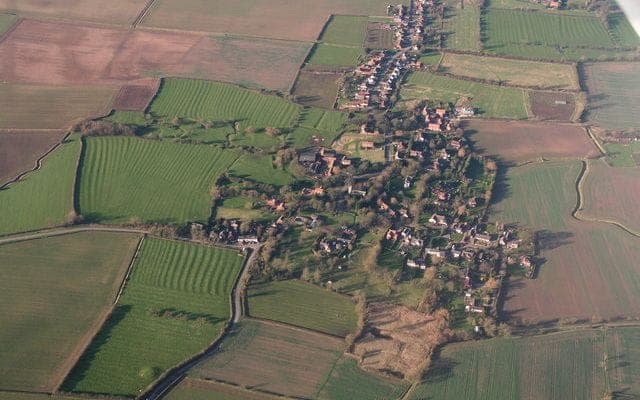
To listen to that testimony more closely, the author recommends spending a great deal of time with topographic maps, aerial photographs and LiDAR. These tools remove much of the distraction caused by modern urbanization and bring attention back to the shape of the ground. Roads and fences may have been moved and houses may have disappeared entirely, but the broad terrace above the river often remains where it has always been, the shallow depression continues to guide passage, and the natural crossing point still occupies the same stretch of the watercourse.
In practice, the suggested method can be summarized as follows. First, read the context: what the place offered to those who had to stop, shelter, move or defend themselves. Then look in the terrain for what time has not erased: gentle rises, terraces, hollows, alignments of vegetation, anomalies in the course of a road. Only afterward, with a reasonable hypothesis about why the site mattered, should you go into the field with a coil and pinpointer. It should be said that the article, in the portion available, does not go into detail on how to trace vanished water, nor does it provide a list of case studies: it mainly offers an approach. It is a useful approach, because it shifts the search from luck to reasoning and can save many hours spent on ground that, at first glance, seemed as promising as any other.
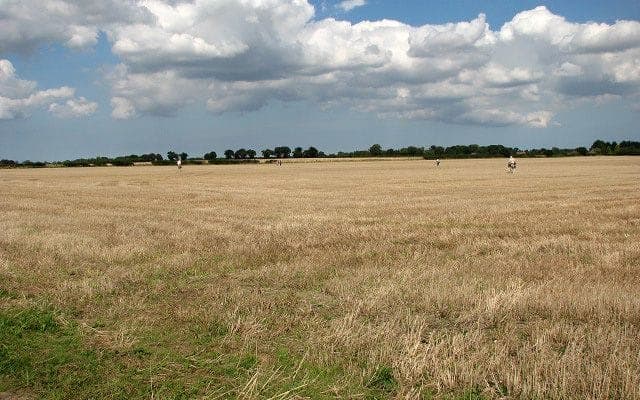
The lesson for the researcher, then, is patience. Looking at an open field and asking what problems it solved for those who rested there, rather than asking how large it is and where to start scanning, is what separates the student of the territory from the simple searcher. The landscape still has much to say, provided you know how to question it before switching on the detector.
ADV
The AI assistant for metal detecting
Custom programs, restricted-area checks, ground recognition and much more.Try it free →Get the app