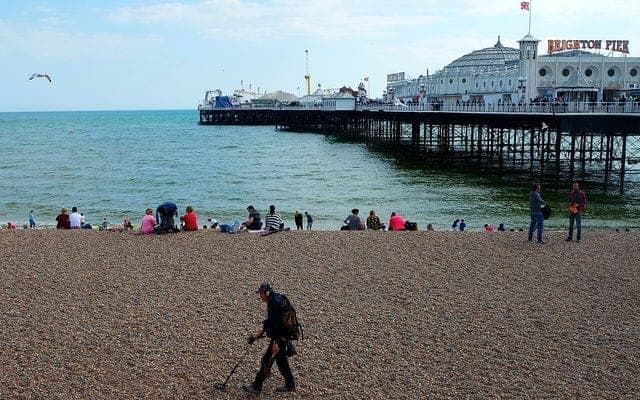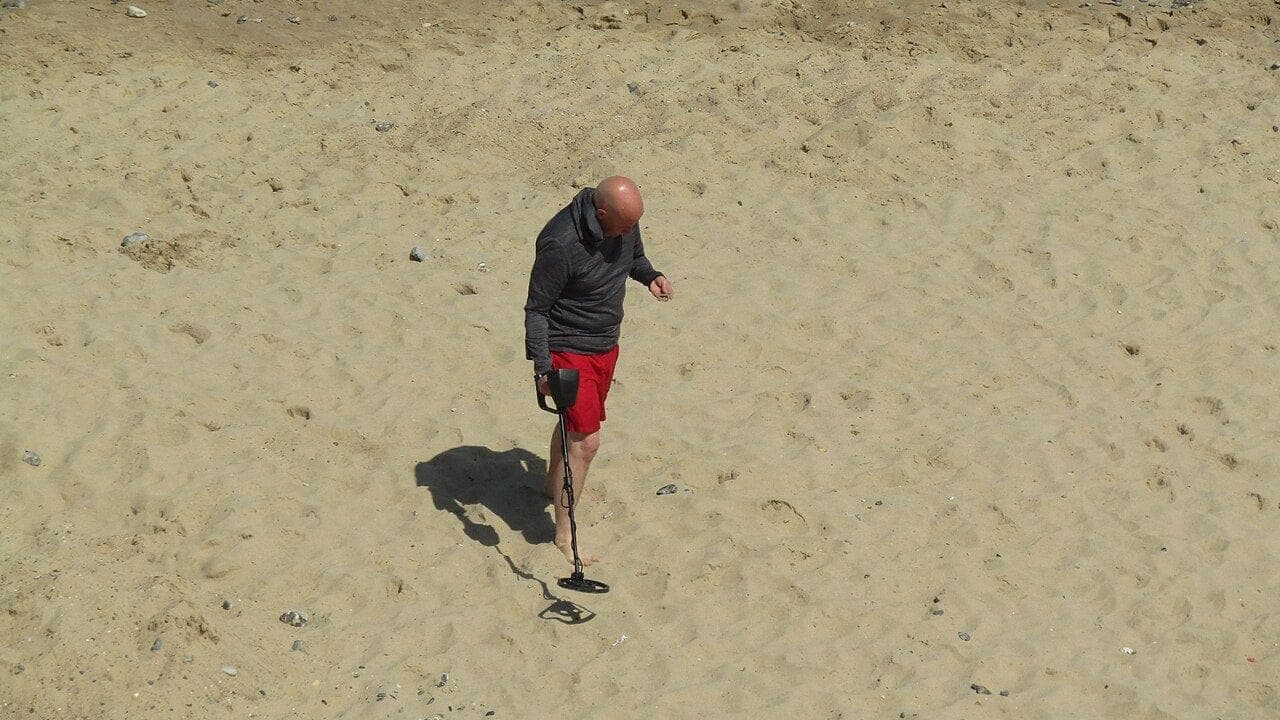
The beach is one of the most changeable environments for metal detectorists. A stretch of sand that looks almost empty on a weekend can appear completely different after a storm surge, a very crowded holiday or a particularly high tide. The sand shifts, the targets shift with it, and thousands of bathers constantly add new losses. We take our cue from a guide by the British shop LP Metal Detecting to reason about timing, locations and equipment in general terms.
To understand the beach, it helps to compare it with a field. In a field, many targets can remain in the ground for centuries or even millennia. A popular beach, by contrast, receives new objects every day, because it concentrates a great many people in a small space. Those who swim, sunbathe, play, change, apply sunscreen or go back and forth with bags can lose keys, watches, jewellery and coins. Alongside modern losses, the shifting sand can also bring older finds to the surface.
As for when to search, the beach can be explored at almost any time, but certain conditions offer more opportunities than others. After a hot, sunny day with thousands of visitors, the same evening or the early morning of the following day can be very productive. The principle is simple: recent losses should be searched for before they sink deeper or are redistributed by the tide. It is worth focusing on the areas where people have sat, changed and played.
If you decide to work near the water, the rule is always to check tide times before heading out and to stay alert to the incoming tide. The sea is also a great ally: powerful waves can strip away large amounts of sand and expose layers that have been covered for years. A zone that usually yields little can then start giving up coins, jewellery, fishing lead and older objects. For this reason, the guide notes, experienced detectorists keep an eye on their favourite beaches after periods of bad weather.
The most common mistake is thinking that every square metre of sand has the same potential. Learning to recognise where objects tend to accumulate greatly reduces the amount of barren sand you have to sweep. On a crowded beach, the most obvious starting point is the area where people spread out towels, deckchairs and bags: here people constantly get up and lie down, shake out towels and rummage through backpacks, so the chances of losing something are numerous.
The same goes for meeting points. Beach huts, benches, picnic areas, lifeguard stations, bars, promenades and beach entrances are places where objects are handled repeatedly and where foot traffic is heavy. They therefore produce many signals, and for that very reason they require a strategy: these areas often yield bottle caps, aluminium foil, can pull-tabs and other modern rubbish, so the choice of coil becomes important.
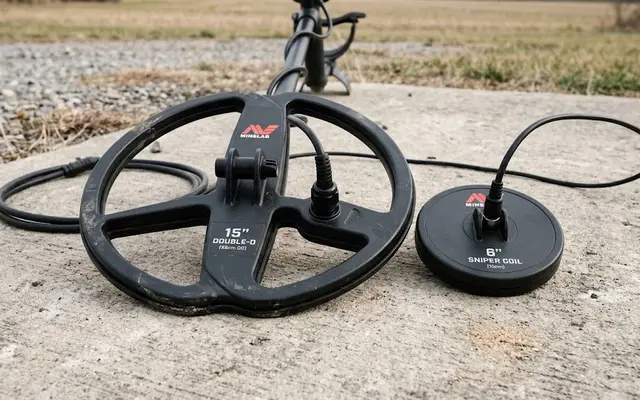
Facing a large expanse of clean sand, a standard or larger coil makes sense, because it allows you to cover more ground with each pass. In areas dense with rubbish, on the other hand, a large coil may be sitting over several pieces of metal at once, and the resulting signal makes it harder to isolate the useful target. A smaller coil searches a narrower area with each sweep and helps separate targets that lie close together, especially when a potentially interesting find lies beside a piece of rubbish. It is also easier to manoeuvre around benches, rocks and huts.
The trade-off is well known: with a small coil you cover less surface and, compared with a larger one, may lose some maximum depth. There is therefore no choice that is always right; the decision should be made according to the stretch of beach in front of you. In practice, it is worth observing the beach before switching on the device: where people have been, what the sea has done in the preceding days, how dirty the sand is. Much of the day's search depends on these three questions.