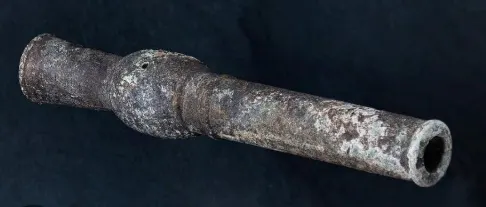
A video published in the Shorts format on the Italy Hunters YouTube channel draws attention to a World War II item: a grenade launcher for the Springfield Model 1903 rifle, linked in the title to Italy in 1944. The footage is accompanied by the hashtags #ww2, #history, #usa, #combat and #museum.
According to Italy Hunters, the piece is of American origin and refers to the period when US troops were fighting on Italian soil. The title and tags say nothing more. For now, the source provides no verifiable details on the place and circumstances of recovery, the state of preservation or the object's current location. It is not even clear whether the grenade launcher is a field find or a specimen held in a collection. The #museum hashtag suggests an exhibition context, but it is a generic indication, not a confirmation.
The Springfield M1903 is an eight-round bolt-action rifle of American use. From the standpoint of collecting and historical research, an accessory such as the grenade launcher is interesting because it turns the individual weapon into a system capable of firing projectiles at a greater range than can be reached by hand. This type of equipment is fitted to the muzzle of the barrel. The video title, however, does not indicate which adapter model is shown, and it would be incorrect to attribute technical characteristics that the source does not report.
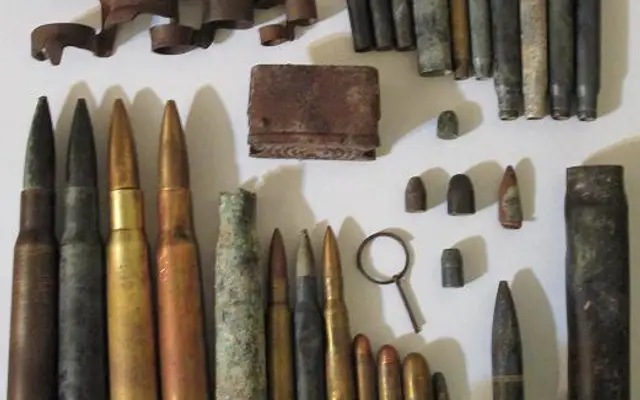
For metal detectorists, the topic is sensitive and warrants some clarifications. In Italy, areas that were the scene of military operations in 1943-1945 still yield materials of various kinds. Alongside fragments, cartridge cases and pieces of equipment, unexploded ordnance may surface. A grenade-launching accessory, even if inert in itself, is a sign that dangerous munitions may be nearby. The rule is always the same: do not move or handle what looks like an explosive device, mark the position and notify the competent authorities.
The legal framework must also be recalled. Metal detecting in Italy is regulated by law and requires compliance with rules on cultural heritage and access to land. Finds of historical interest must be reported. For war materials, moreover, specific regulations apply to the discovery of weapons and ammunition. The content of a short video does not replace checking these rules before going out in the field.
The value of the footage, then, lies above all in drawing attention to a little-known piece of American armament in Italy. Anyone wishing to learn more should start from the Italy Hunters channel, look for any information in the video description, and compare it with historical documentation and with military museums in the area. Only in this way can the type of accessory, its provenance and its context of use be established with certainty.
Pending more complete data, the video should be treated for what it is: a visual report of an object that recalls a specific year of the war in Italy, 1944, and a well-known historical weapon, the Springfield M1903. Any other reconstruction requires further sources, which are not currently available.