A British amateur metal detectorist has unearthed a gold clasp around 3,000 years old, used to fasten clothing in the Late Bronze Age (between 1000 and 800 BC). According to Live Science, which cites a British Museum press release, the find was made in Staffordshire, a county in central England, and has been described as "remarkable."
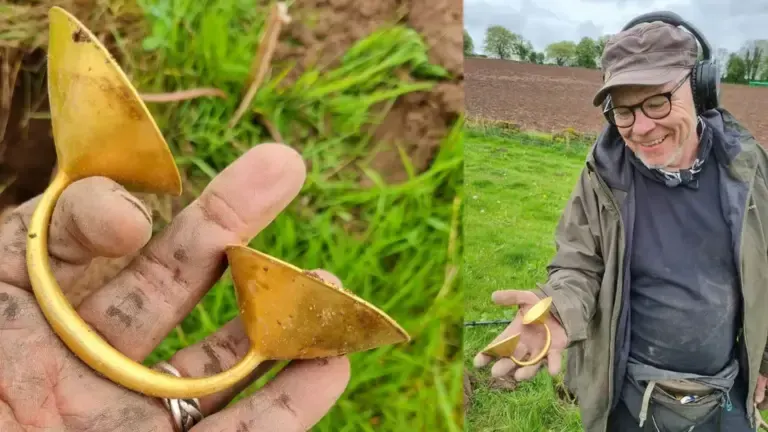
The discoverer is Jonathan Needham, who was on a routine outing with his metal detector when he spotted the object. Speaking to BBC News, he described the group's reaction: "Straight away people said it was 3,000-year-old gold, and at that point we could celebrate. We were over the moon about what we had found."
Needham did what the law requires. He reported the find to the Derby Museum, as required by the Treasure Act 1996, the British law that obliges people to declare significant archaeological finds. This is a fundamental step for anyone who searches with a metal detector: the report allows scholars to examine the object and document its place of origin.
Museum experts have determined that the piece, described as "beautifully preserved," is most likely of Irish manufacture. According to the press release, it therefore represents a "cultural link between Ireland and Britain" during the Bronze Age, confirming the contacts and exchanges between the two areas at that time.
From a technical standpoint, the clasp is made of hammered gold. It has a central element, referred to as the "bow" or "handle," which connects two skilfully crafted conical terminals. According to the British Museum, it was used to fasten a garment, a skirt or a cloak worn by "an important person," which suggests an object of high value and social prestige.
Several scratch marks are visible on the surface, probably caused by wear from use. The object measures about 12.7 centimetres (5 inches), according to data from the Portable Antiquities Scheme, the programme born from the collaboration between the British Museum and National Museum Wales that records archaeological finds made by members of the public.
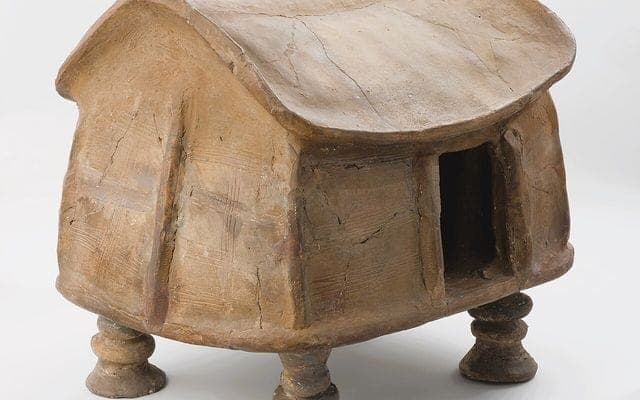
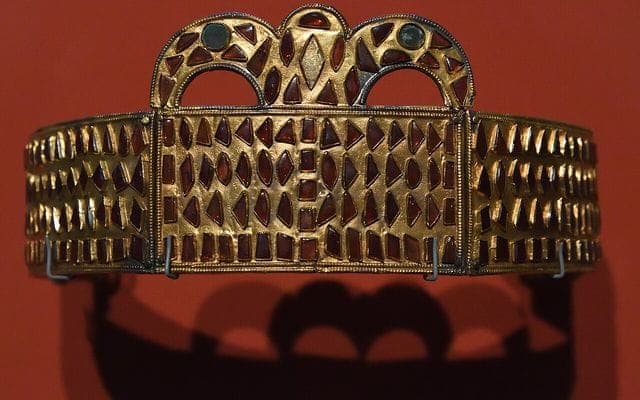
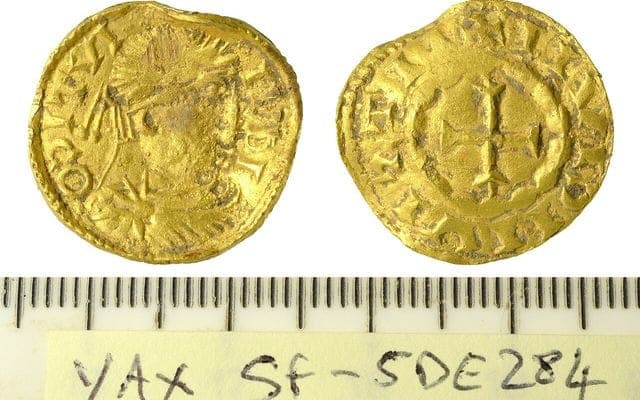
The clasp is one of seven examples known so far in England and Wales, but scholars consider it the "best-preserved of the British examples." The British Museum has included it among the most important archaeological discoveries in the United Kingdom for 2022. The same review also features a carved bone rosary bead and a hoard of Iron Age gold coins hidden inside a hollow flint container.
The London museum has stated that it intends to acquire the find for its permanent collection. The case shows how collaboration between detecting enthusiasts and institutions can lead to the protection and promotion of historically important remains, making them accessible to the public.