A metal detectorist spotted a Roman-era tomb while searching a field in a village in the United Kingdom, located between London and Cambridge. According to Live Science, in an article by Laura Geggel, the man contacted local archaeologists, and together they uncovered the contents of the burial, dating to around 200 AD.
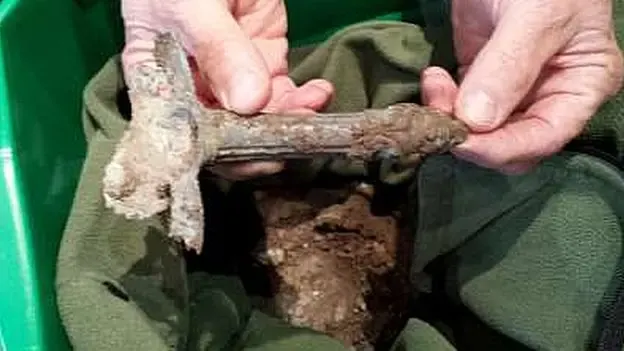
The grave goods included mosaic glass dishes, bronze jugs and hobnails from Roman footwear, likely placed to help the deceased on their journey to the afterlife. The first jugs were found thanks to the metal detector's search coil. One of them had a damaged body.
Among the finds, a silver coin stands out, found inside a wooden box and bearing the effigy of Emperor Trajan, who ruled Rome from 98 to 117 AD, about a century before the burial. According to Keith Fitzpatrick-Matthews, head of archaeology and outreach at North Hertfordshire District Council, it is not clear why the coin was in the tomb. It may have ended up there by accident.
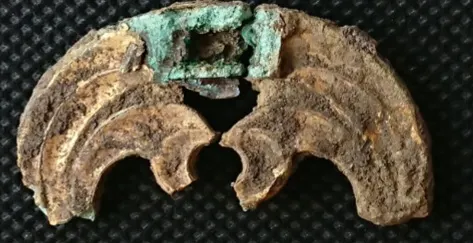
The glass dishes are particularly significant. One, found in fragments, might look modern but dates to around 200 AD and was probably produced in Alexandria, Egypt, or in western Europe. Archaeologists also found a second broken dish with a similar motif. “As far as we can tell, these are the only two dishes of this type found in Britannia,” Fitzpatrick-Matthews said.
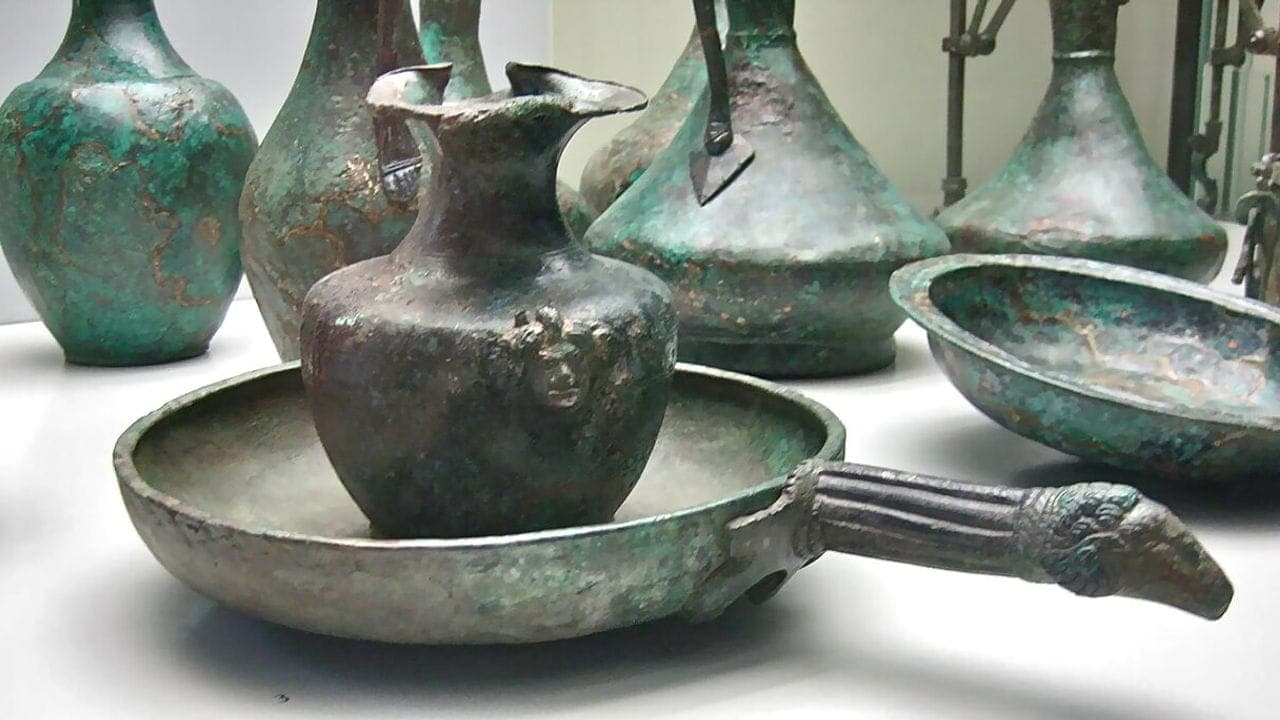
The grave goods also included a bronze jug with an ornate handle and a bronze patera, the ritual dish used to pour wine or blood as an offering to the gods. The Latin term patera means, precisely, “small dish.” Traces of a small building, perhaps a temple or shrine, and of a villa also emerged near the tomb. For this reason, the deceased is believed to have been a wealthy person, and the objects were, in Fitzpatrick-Matthews’ words, the “second-century equivalent of flashy jewellery.”
The find also includes a square bottle with the letters “IAS” on its base. It is not known who made it or what the letters mean, but a similar bottle, recovered from a Roman fort in Scotland, also dates to around 200 AD.
The case shows how collaboration between metal detectorists and archaeologists can turn a tip-off into a significant discovery. Promptly contacting the competent authorities, rather than excavating a burial independently, made it possible to document the context and recover a rare set of grave goods, including two glass dishes that are, so far, unique in Britain.