A simple mushroom-picking outing turned into an archaeological discovery. According to Stilearte, which reports the news issued by the Soprintendenza, a man walking through a forest with his wife noticed, amid a patch of exposed sand, a vessel that did not look recent at all. It was a funerary urn containing cremated remains.
The urn was accompanied by a fragment of the large ceramic vessel that covered it and by a small bowl used as a lid. Specialists date it to around the 4th century BC and associate it with the so-called Klosz grave culture (kultura grobów kloszowych in Polish), one of the funerary traditions documented in ancient Mazowsze.
Shortly afterwards, a second object came to light: a silver denarius of Emperor Commodus, minted between AD 181 and 192. The coin measures just 17 millimetres. The obverse shows the emperor's laureate profile, while the reverse depicts Roma seated with a Victory, Nike, in her hand.
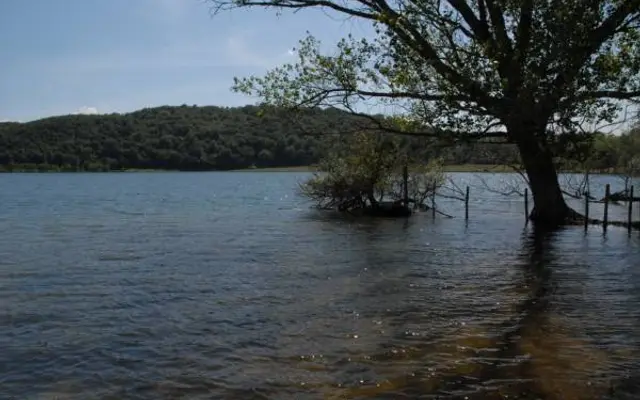
The find site lies in eastern Mazowsze, in the Liwiec valley, about 70 kilometres from Warsaw. The area was frequented in different periods: in the Middle Ages, close to the river, a castle was built that today houses a museum. That fortification, however, belongs to a completely different history, linked to the borders of the Duchy of Masovia and its relations with Lithuania.
What stands out above all is the chronological gap between the two objects: almost four centuries. The urn belongs to a community that lived when Rome was still an emerging Mediterranean power and the Empire had yet to be born. The denarius, by contrast, dates to the 2nd century AD, when Rome controlled an immense territory and its coinage circulated well beyond the provinces it governed directly. Two historical moments thus overlap in the same landscape, today a sandy forest, which in the past was probably not far from a settlement.
The first story is read in the urn: in the Iron Age someone cremated a deceased person, gathered the bone remains and placed them in a vessel. The second is contained in the small silver disc, a coin produced within the Roman economic system that many centuries later reached a region beyond the Empire's borders. As the same source points out, the long stretch of history separating the two events cannot yet be reconstructed on the basis of this find alone.
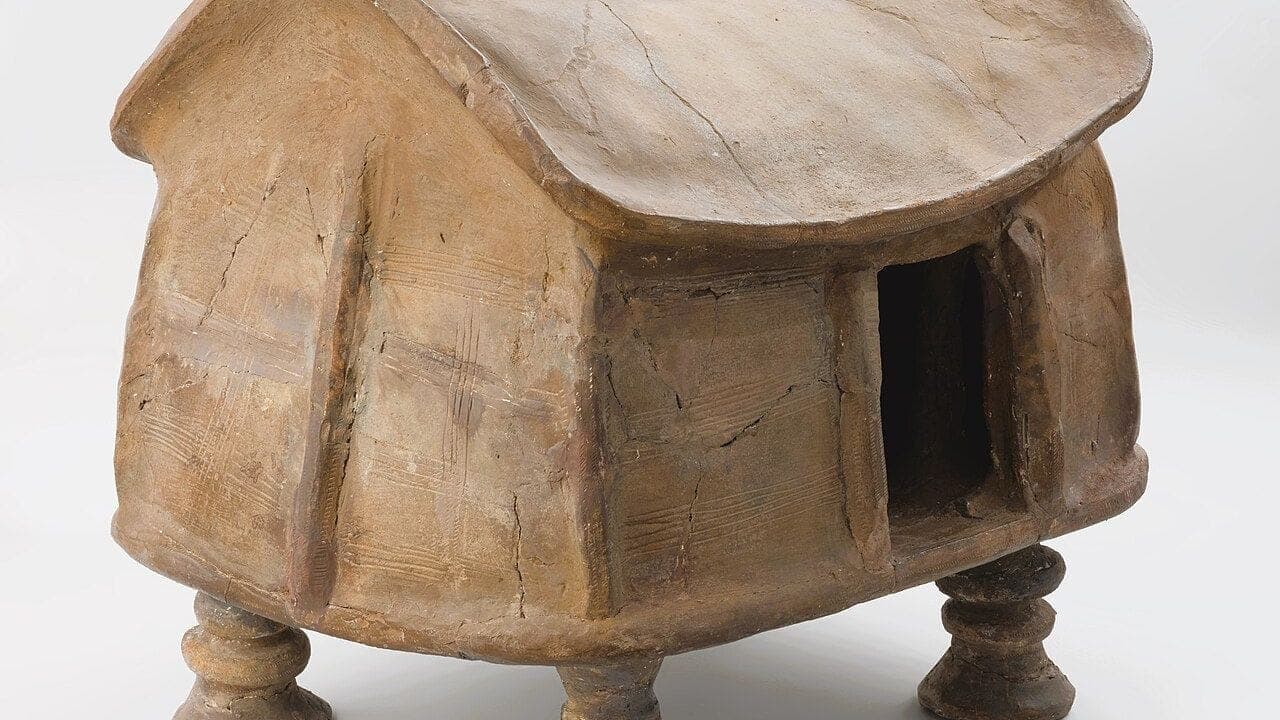
The Klosz grave culture is well documented in the areas of Mazowsze and Podlachia. The name derives from the structure of some burials: the urn containing the burnt bones was protected by a much larger ceramic vessel, the so-called klosz, placed over the deposit, sometimes together with a bowl. Cemeteries thus show complexes in which different vessels performed specific functions within the funerary rite.
Cremation is one of the most distinctive features of these practices. The body was subjected to fire, and the remains gathered after the pyre were placed in the urn. Pottery thus went beyond a practical function and became an integral part of the tomb: the large klosz protected the deposit and gave it an immediately recognisable form.
For those who conduct field research, the case is a reminder of how much the soil can yield evidence from very different periods at the same spot. When a find is discovered in situ, it remains essential to report it to the competent authorities, as happened on this occasion, because only its context allows archaeologists to truly interpret what has been found.