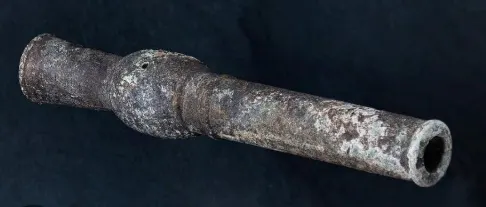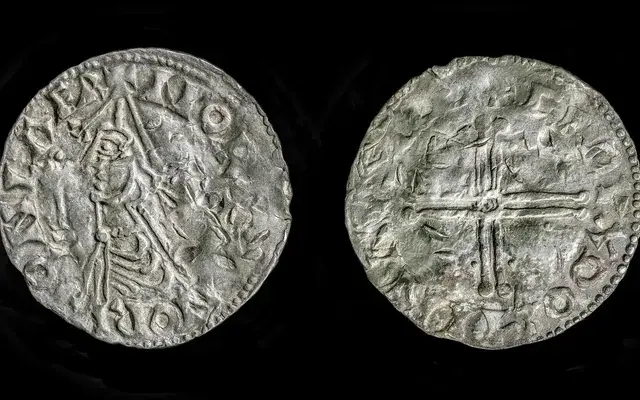
They were searching for traces of a Polish army unit during the September 1939 campaign, but they found something much older. According to Stilearte, during the campaign in eastern Poland, amateur researchers unearthed artifacts dating back about 2,500 years. The concentration of finds allowed specialists to identify an archaeological area that was previously unknown.
The protagonists are members of the Association for the Memory of the 1st Infantry Regiment of the Border Protection Corps, a group dedicated to searching for evidence of the Second World War. They operated with regular authorization from the regional monument conservator of Lublin. The explored area lies around Wierzbica, in the municipality of Lubycza Królewska, not far from the border with Ukraine.
Instead of ammunition or equipment from soldiers of 1939, the soil yielded bronze arrowheads, bracelets, ornaments and other artifacts. Among the most significant finds are four triangular-section bronze arrowheads, a type associated with the weaponry of the Scythians, nomadic peoples of the Eurasian steppes. The largest measures about four centimeters, while the others are smaller and have different construction features. Traces of the casting process are still visible on one of the specimens.
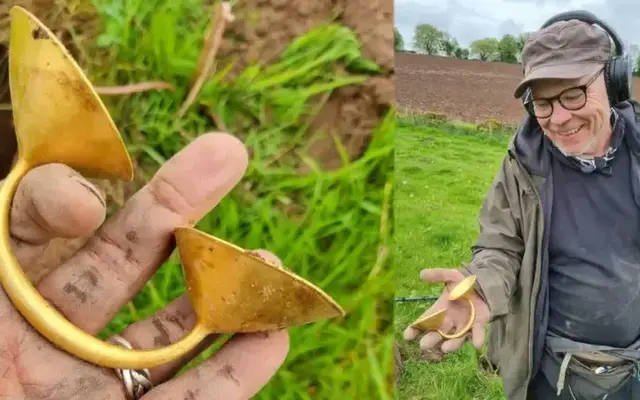
The material is not limited to weapons. A bracelet made of very thin bronze sheet was also recovered, about one centimeter wide and less than half a millimeter thick. Its surface is decorated with small impressed dots forming triangles oriented alternately upward and downward. The jewel is semicircular and ends in two ends folded outward.
Alongside it came fragments of other bracelets made of twisted bronze wire, a metal ring, a possible pin for fastening garments and several nail-shaped ornaments, probably worn near the temples. These are small and partly fragmentary objects, but they are useful for understanding metalworking techniques and the clothing of the communities that inhabited the region between the Late Bronze Age and the beginning of the Iron Age.
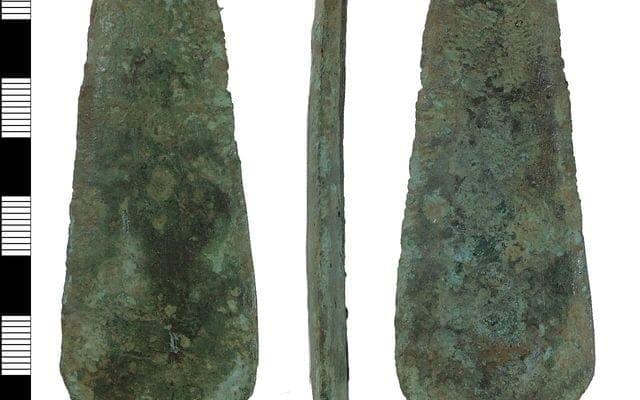
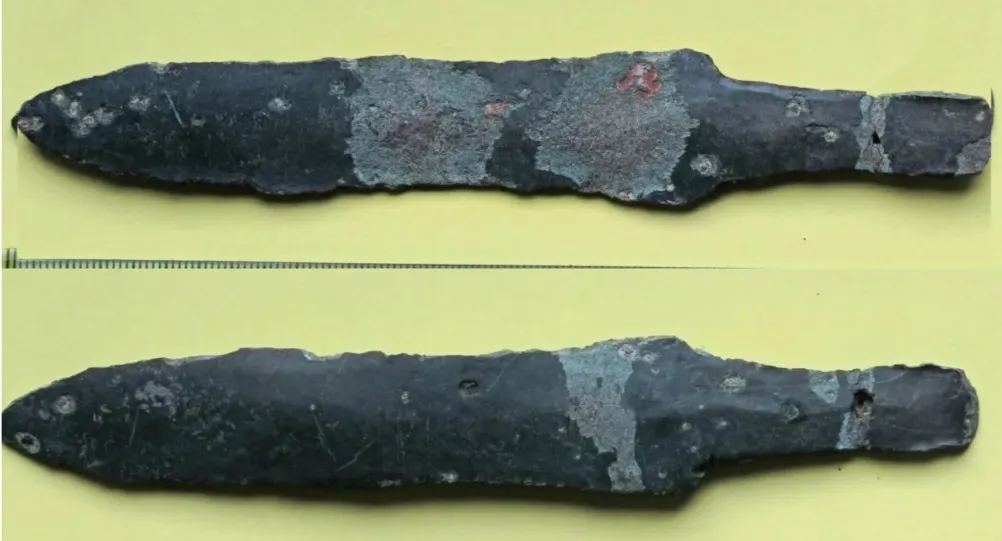
Also linked to the case is a find from the nearby locality of Kornie: a bronze dagger about 15 centimeters long and 2.4 centimeters wide at the grip. The weapon arrived in fairly poor condition, with chipped edges and a scratched, altered patina. The blade narrows progressively to a triangular point.
The preliminary dating is consistent with the final phase of the Bronze Age or the beginning of the Iron Age. Archaeologists believe it may be chronologically close to the other artifacts, although it is a separate find.
The Scythians were nomadic peoples of Iranian origin who, during the first millennium BC, occupied a vast territory, from the steppes of Central Asia to the northern regions of the Black Sea. They were renowned for their horsemanship and their use of the composite bow, a powerful weapon in the hands of skilled archers. Between the 8th and 5th centuries BC, their raids and contacts also reached Central Europe, where they interacted with local communities.
The case shows how fieldwork, when carried out with authorization and in collaboration with specialists, can produce unexpected discoveries. The fact that the finds were reported and studied made it possible to recognize a new archaeological context. Further investigation is needed to determine whether the artifacts are truly attributable to the Scythians or to local communities that were influenced by them: the source refers to a type associated with that people, not a definitive attribution.