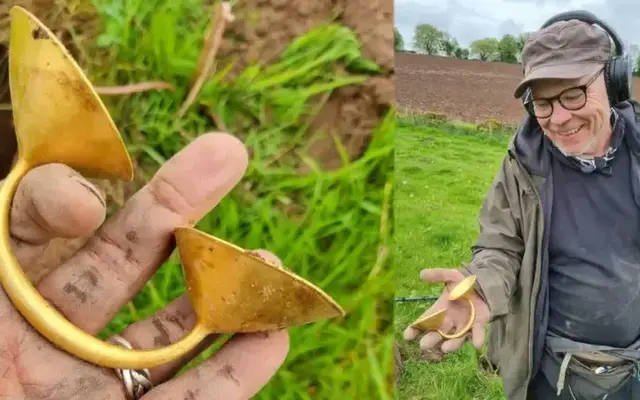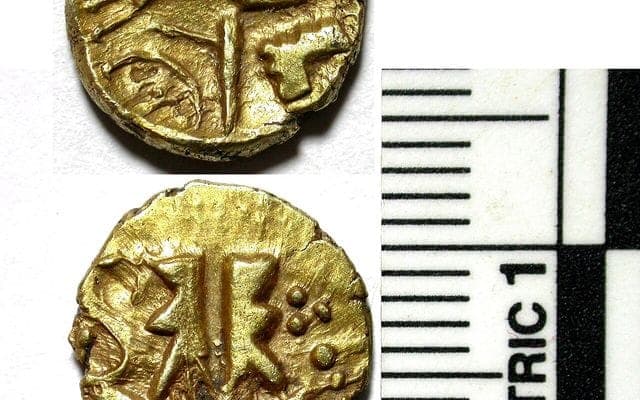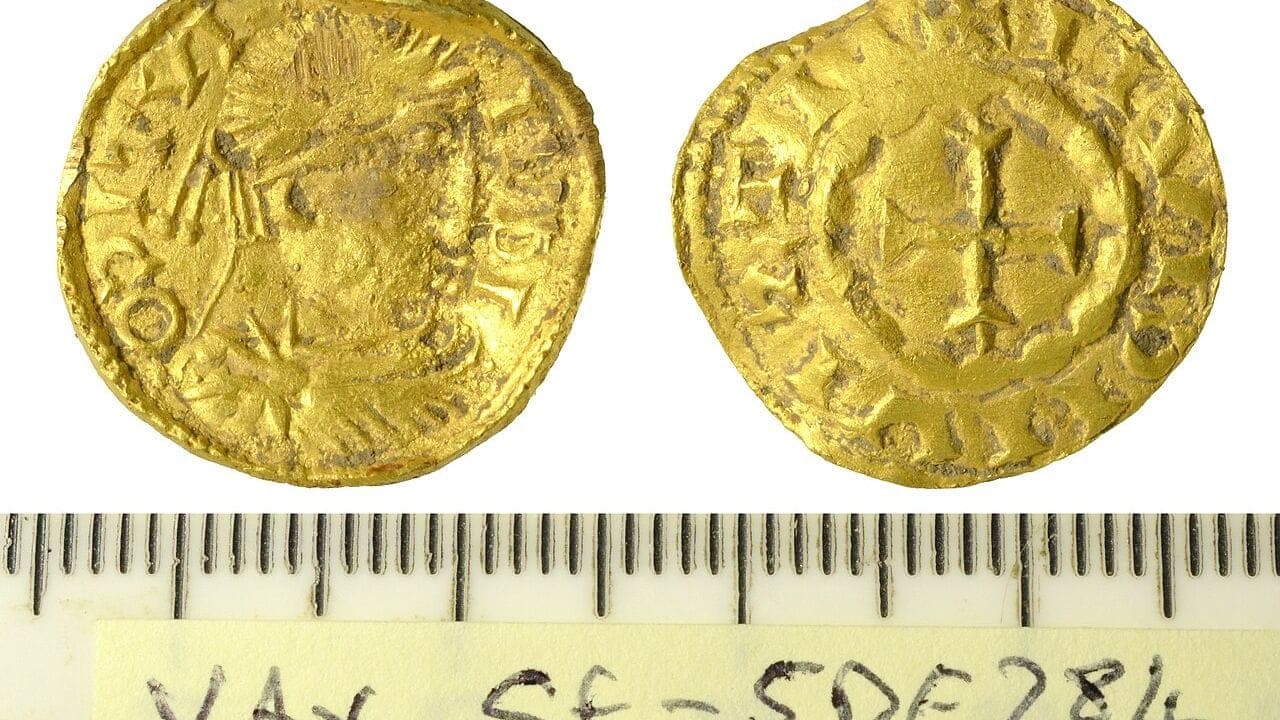
A gold coin more than a thousand years old, made as an imitation of a more famous design, may be a relic of the so-called “Great Heathen Army”, the Viking force that invaded England in 865 and led to the creation of the Viking kingdom known as the Danelaw. The news comes from Live Science, which relies on information from the Portable Antiquities Scheme. According to the Portable Antiquities Scheme, a programme run by the British Museum and Amgueddfa Cymru - Museum Wales, the find was made in 2024 by a metal detectorist in a field near Elsing, a village in Norfolk on the east coast of England. The area is among those that were first invaded by the Viking army.
The coin had been turned into a pendant or medallion, so that it could be worn around the neck on a cord. Independent numismatist Simon Coupland, quoted by BBC News, believes it most likely belonged to one of the invaders.
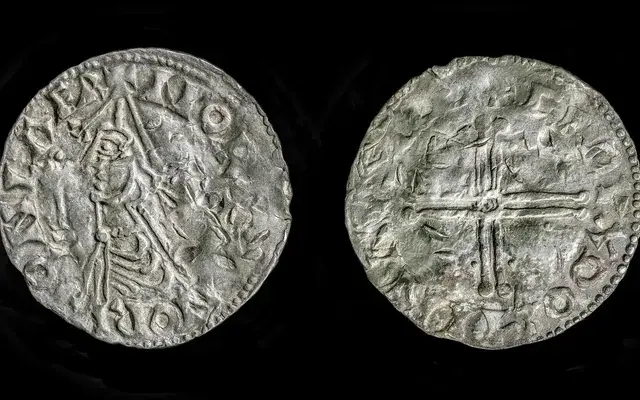
It is a solid gold imitation of the solidi minted about fifty years earlier by the Carolingian emperor Louis the Pious, son of Charlemagne. Originals were awarded to high-ranking Carolingian nobles, while the later copies, probably produced in Frisia (an area that today includes the north of the Netherlands and the western edge of Germany), circulated throughout Scandinavia as a form of “portable wealth”, Coupland explains. The scholar describes the Norfolk find as a particularly fine example compared with most known specimens.
A detail in the Portable Antiquities Scheme record helps show how it was used: the coin has two holes above the head of the depicted emperor. This suggests the side with the portrait was meant to face forward when it was worn. The reverse bears a Christian cross, a symbol that probably did not align with the beliefs of the Viking who wore it, since the conversion of the Norse peoples, beginning with the kingdom of Denmark, only started towards the end of the 10th century. For this reason, the object is thought to have been worn as an amulet.
The Great Heathen Army, as it was named by Christian English chroniclers, began its invasion in 865 under the Danish leaders Ivar the Boneless, Halfdan and Ubba, all three of whom claimed to be sons of the legendary Viking king and hero Ragnar Lothbrok, protagonist of the Norse sagas. Scholars debate the army's size: estimates range from as few as a thousand warriors to more than five thousand, with reinforcements arriving from Scandinavia as the fighting went on.
The find is now under official investigation to determine whether it falls into the category of “treasure”, meaning items that under British law must be surrendered or sold to a museum. Norwich Castle Museum, in Norfolk, has already expressed interest in acquiring it. For metal detectorists, the story is an example of how reporting a find to the official recording system allows a single object to be placed in its historical context. A small coin, pierced and worn around the neck, becomes a tangible record of an age of invasions, exchanges between kingdoms and beliefs in transition.