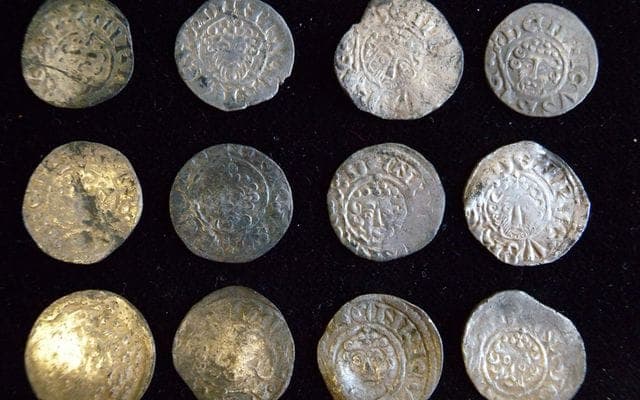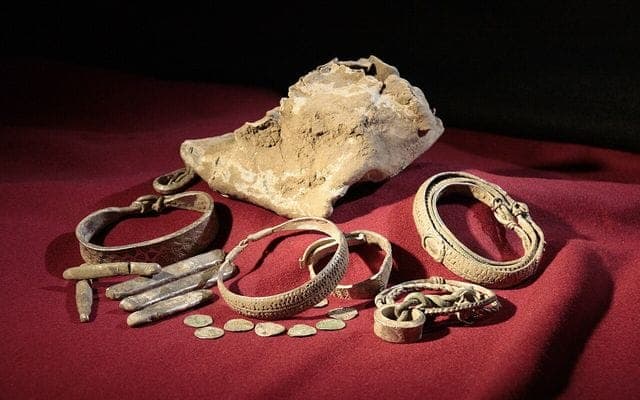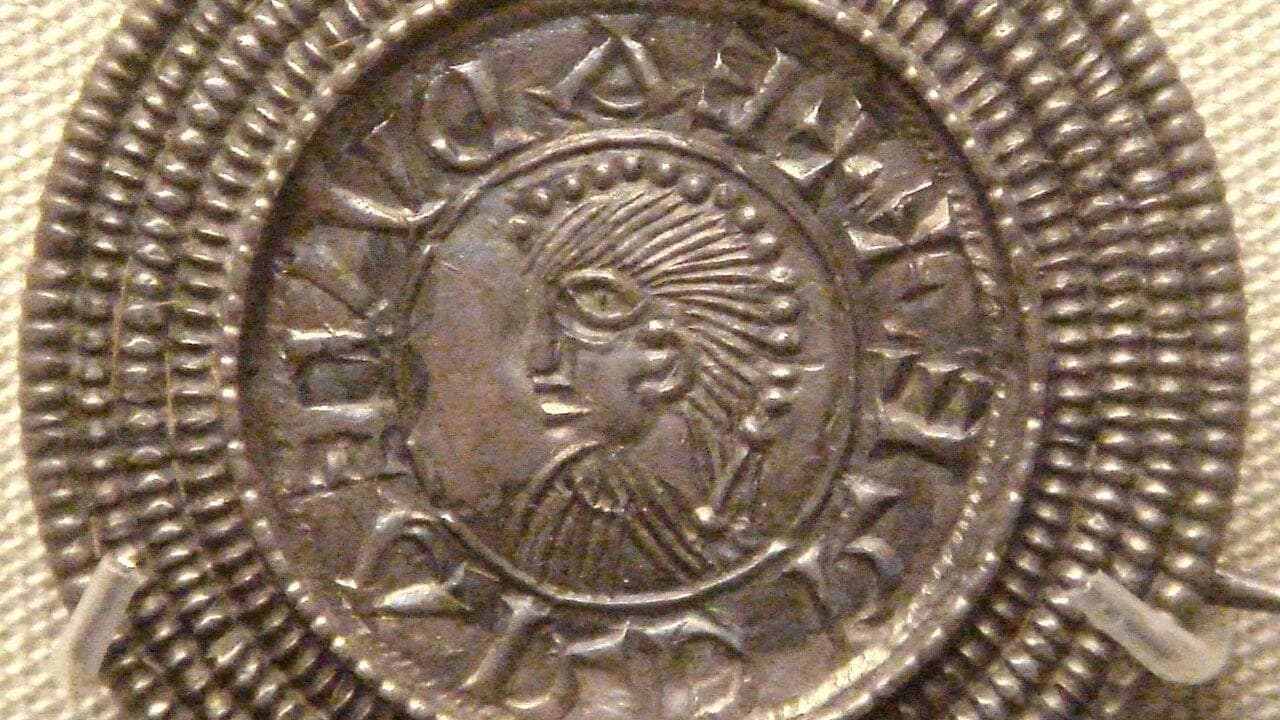
A group of medieval coins recovered in Rome may be the first physical evidence of an English quarter that once stood near the Vatican. According to Smithsonian Magazine, researchers working in the walled garden of Palazzo della Rovere found 19 silver pennies and a halfpenny, minted in East Anglia, Kent, London and the West Midlands.
The coins date to the 10th century and bear the names of the kings Edward the Elder, Athelstan and Eadred, all descendants of Alfred the Great. Fourteen specimens were found grouped in two clusters, while the others were scattered nearby. In the same palace, in 2023, archaeologists announced the discovery of the remains of an ancient building, which they believe may be the theatre of Emperor Nero, built in the 1st century.
Rory Naismith, historian at the University of Cambridge, who helped interpret the numismatic material, commented in a statement: "The coins are not beautiful, but they have a lot to say." He added that more Anglo-Saxon coins from this period have now been found in Rome than papal coins. Although it may sound strange, he said, this indicates the arrival from England of a very large amount of money.
In a chapter of the volume Rome and the Others (300-1000): Foreigners in the City Between Conflicts and Integration, Naismith and his co-authors argue that the hoard is material evidence of the Schola Saxonum, the English enclave of Rome already known to historians from references in surviving medieval texts. Founded in the 8th century, the Schola was a point of reference for English pilgrims travelling to Rome. It stood within the fortified district between the Vatican and the Tiber known as the Leonine City, although its exact size remains unknown.
Traces of leather, bone and metalworking have also emerged at the site, a clue suggesting the stable presence of hundreds of full-time residents. Naismith, quoted by New Scientist, compared the quarter to areas of large modern cities that host a specific community, such as the Chinatowns of London, Melbourne or San Francisco.
The discovery confirms the geography hypothesized for the Schola Saxonum and suggests its inhabitants enjoyed a degree of economic autonomy, including the privilege of using their own currency abroad. According to the researchers, the halfpenny is particularly significant: a denomination this small is typically associated with everyday transactions in marketplaces. Moreover, no evidence of melted silver has been found, which would have indicated the conversion of travellers' money into local currency.
As the authors write in Rome and the Others, cited by The Times of London, finding Anglo-Saxon coins in such quantities, at a site where they must have been used and lost over a long period, is surprising and raises questions about the status of English currency in 10th-century Rome.
Other foreigners, including Lombards, Franks and Frisians, made pilgrimages to Rome and founded institutions near the Vatican, but they do not appear to have received the same privileges as the English. Francesca Tinti, historian at the University of the Basque Country who collaborated with Naismith, explained that the English in Rome were quite unique: the journey was extremely dangerous and many died along the way, but once they arrived they enjoyed a special status. It was already known that they could bury their dead in this area and now, apparently, they were also allowed to use their own money.
For those who work with the metal detector, the case is an example of how modest finds, read in context and within a documented excavation, can rewrite pages of urban, economic and social history.