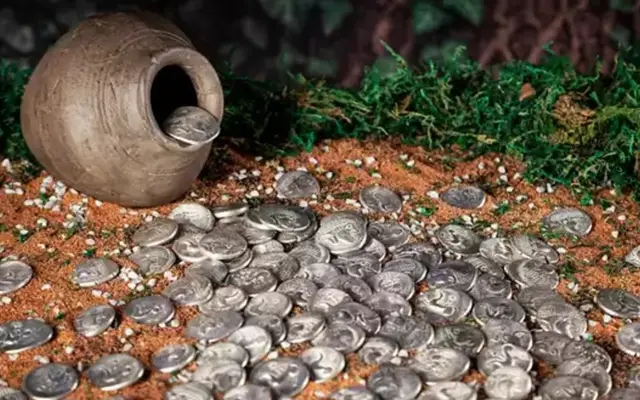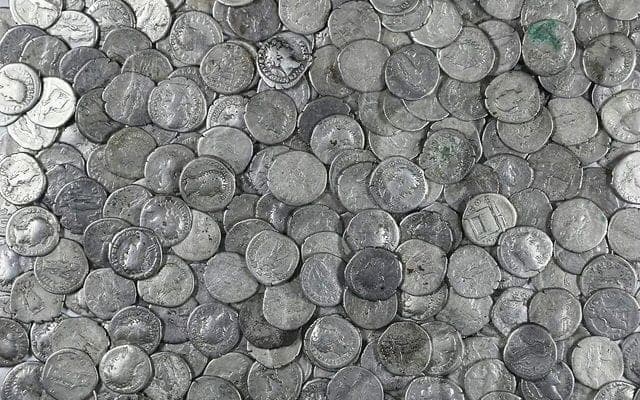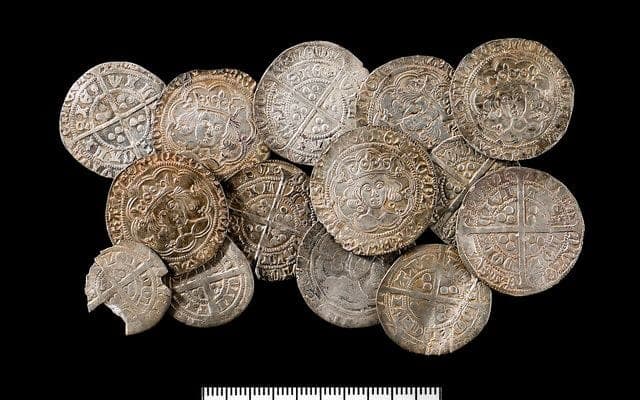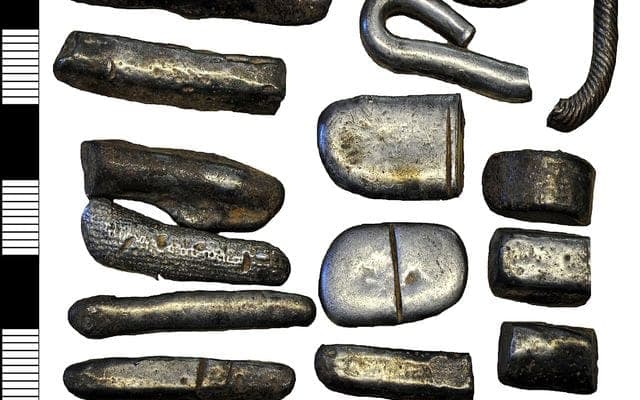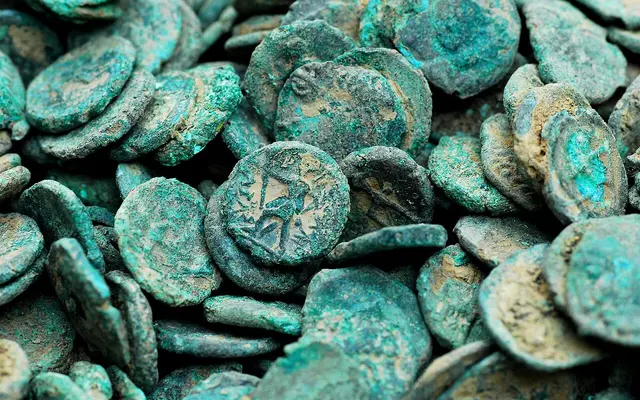
A hoard of about 2,600 medieval silver coins has been unearthed in Kolomna, a city about 114 kilometers southeast of Moscow. According to Live Science, which cites a statement from the Institute of Archaeology of the Russian Academy of Sciences dated 26 August, the coins were found inside an elegant ceramic vessel. The container had been buried in a pit in the area that today corresponds to the historic center of Kolomna. Between the 14th and 15th centuries, the city was the second most important in the region, which gives the find particular weight for those studying the monetary history of the period.
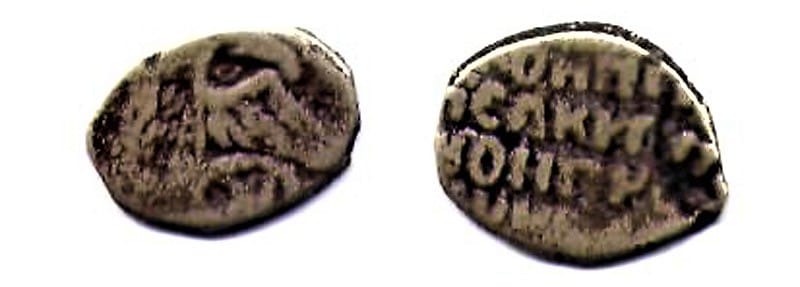
Most of the coins belong to the denga type, a silver issue introduced at the end of the 14th century by the Grand Duchy of Moscow, a late medieval Russian monarchy. Each denga was worth half a kopek, and a ruble contained one hundred. The hoard is dominated by specimens minted in Kolomna under Vasily I, who reigned from 1389 to 1425, and under Vasily II, who sat on the throne from 1425 to 1462. Both were grand dukes of Moscow, in a period when the city and its territory formed an independent principality.
Among the most interesting pieces stands an extremely rare denga bearing a bird in flight, produced in the final years of Vasily I's reign. Of great significance for numismatists and researchers is the fact that over 350 coins belong to previously unknown variants minted in Kolomna, which specialists are now analyzing. A systematic study of these dies could provide new information on the organization and production techniques of the local mint in the 15th century.
As for the owner, archaeologists' assessments point to a wealthy person of high rank, such as a senior government official or a highly successful merchant. It is not clear, however, why the treasure was hidden underground.
An important clue comes from dating the coins: the most recent were minted in the second half of the 1420s. This led experts to hypothesize that the owner may have fallen victim to the plague epidemic that struck the Russian principalities between 1424 and 1427. For now, this remains a hypothesis: if the owner died without being able to recover their money, the hoard would have remained forgotten until today.
For metal detecting enthusiasts, the Kolomna case is an example of how coin hoards remain among the most valuable sources for reconstructing local economy and history. An intact context, with coins still gathered in their original container, makes it possible to date the moment of concealment precisely and to study the circulation of money in a well-defined historical period. Sources do not specify how the hoard was located or with what tools, so it is not possible to say whether a metal detector was involved in the discovery.
Cataloguing and studying the unpublished variants is now the next step, and it may expand knowledge of early 15th-century Muscovite coinage. The Institute of Archaeology's statement, relayed by Live Science, is for now the main source of information on the find, pending any more detailed scientific publications.