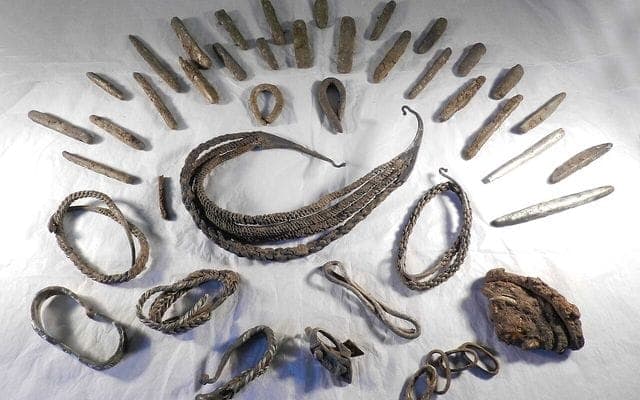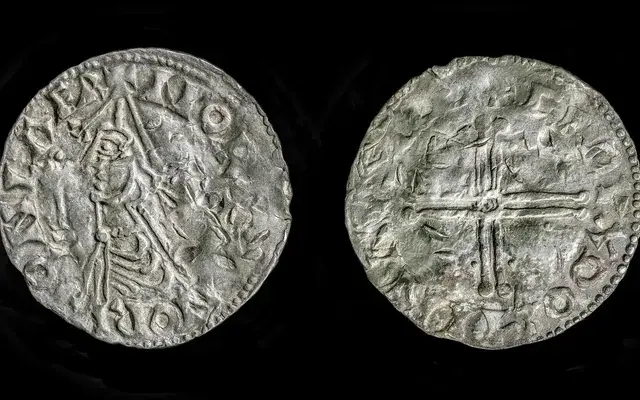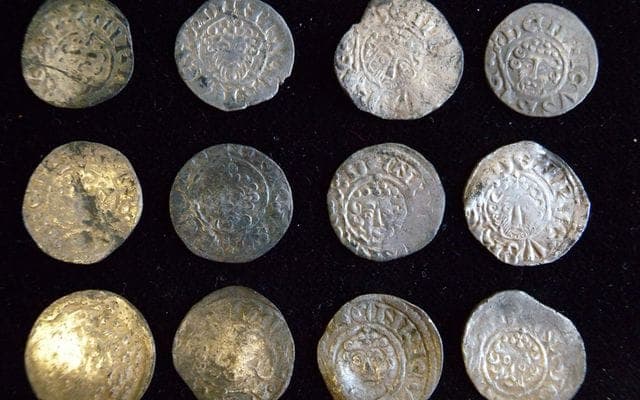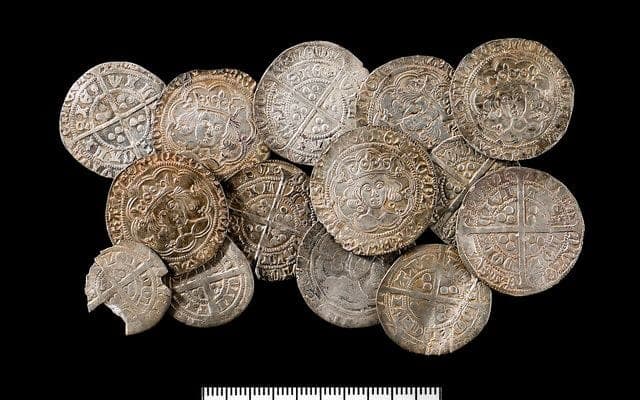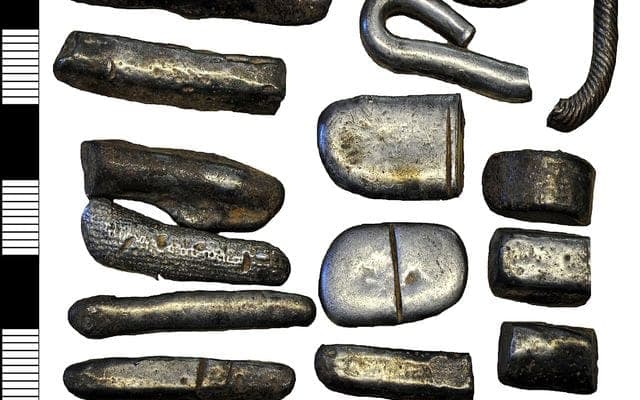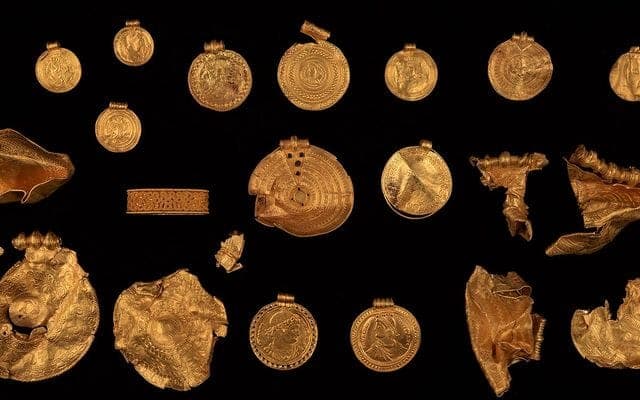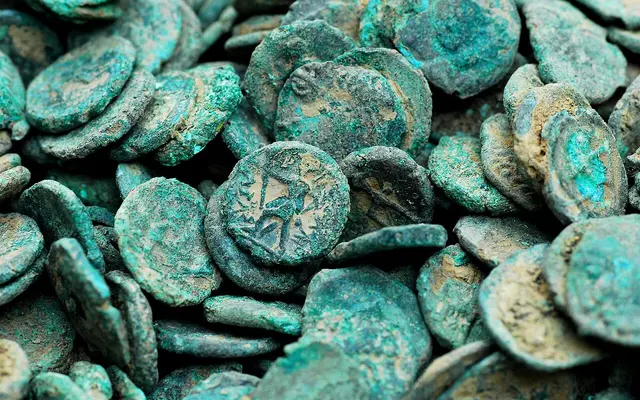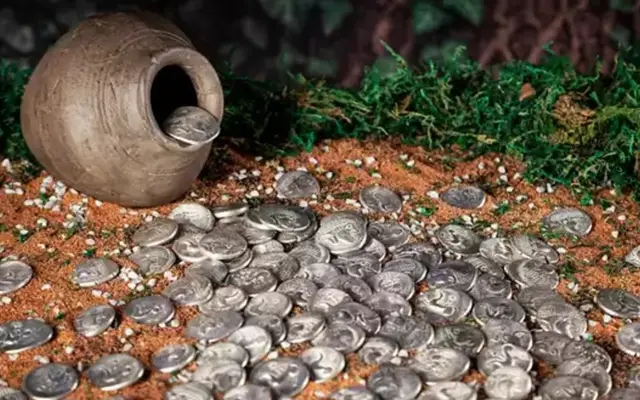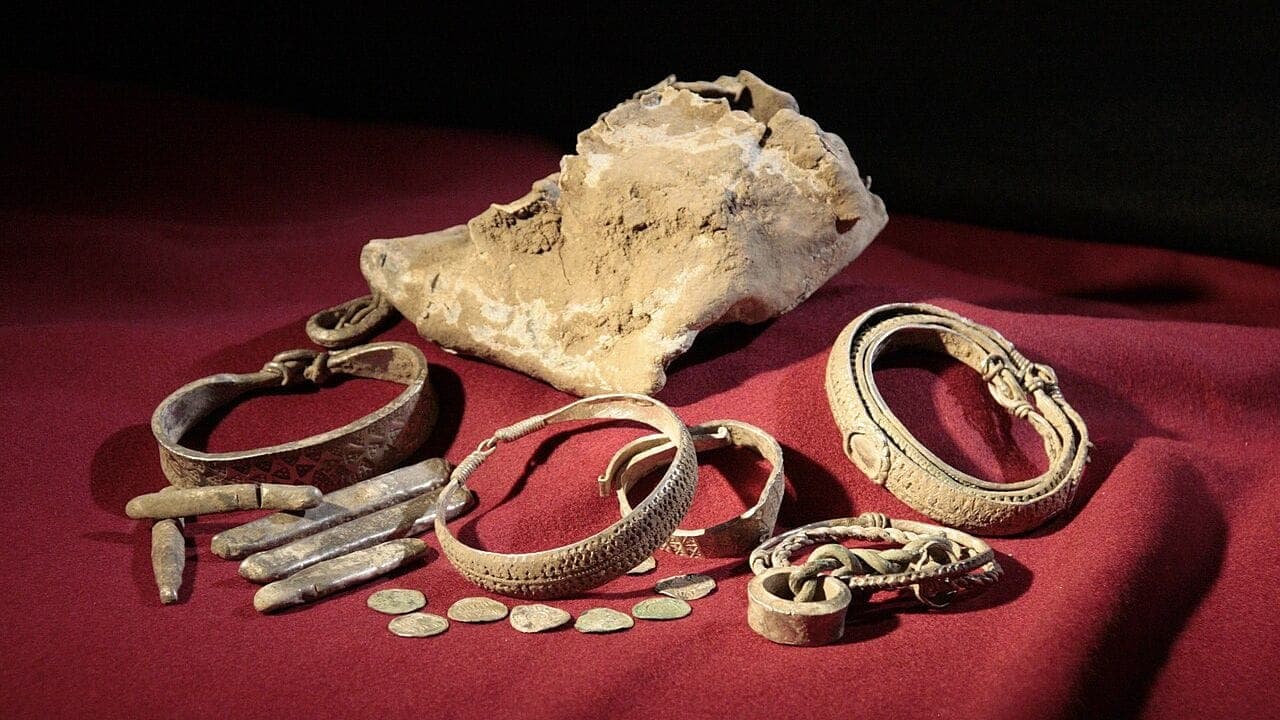
An agricultural field in Jutland, Denmark, has yielded two Viking-era silver hoards. According to Live Science, the find comprises around 300 silver pieces, including some fifty coins and cut-up jewelry fragments, which are offering new insights into the kingdom and religious ambitions of the powerful King Harald Bluetooth.
The discovery dates back to late last year. The materials were identified by a local archaeological group inspecting a farm northeast of the city of Hobro, near Fyrkat, the circular fortress built by Harald Bluetooth around 980 AD. The first finds were located with a metal detector.
Some media reported that the treasure was discovered by a young girl. Torben Trier Christiansen, the archaeologist involved in the find and curator at the Museums of North Jutland, told Live Science that the first pieces were actually found by an adult woman with a metal detector, adding that she is nonetheless very flattered by the attention she has received.
Excavations showed that the valuables had originally been buried in two separate hoards, about 30 meters apart, probably beneath two buildings that no longer exist. Later, agricultural machinery scattered the materials across the soil. According to Trier, whoever hid them deliberately split the treasure so as not to lose all of it should one of the two caches be lost.
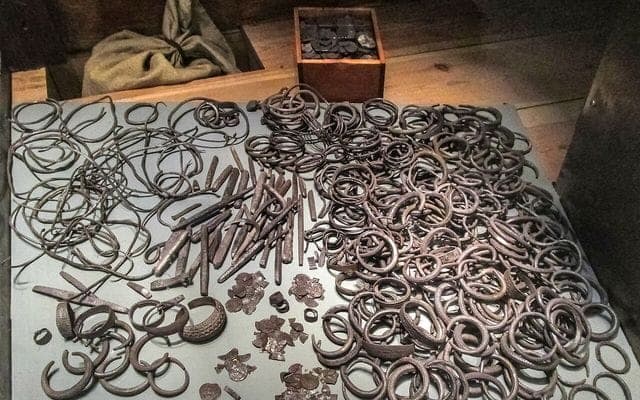
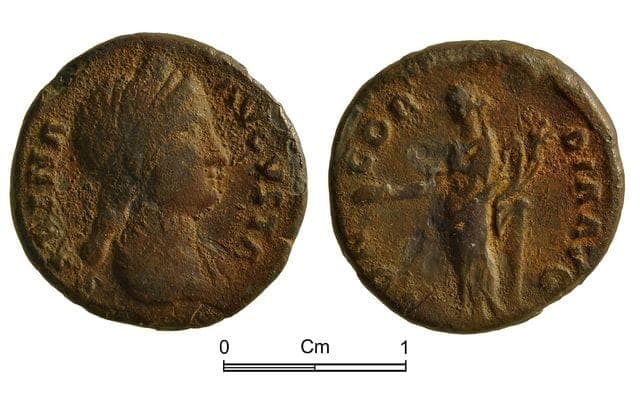
Most of the pieces are hacksilber, so-called cut silver: silver jewelry and objects chopped into pieces to be traded by weight. The few coins present come from Arab and Germanic regions, as well as from Denmark itself. An interesting detail for those who spend time in the fields with a detector: in a context like this, value lay not in the object's form but in the metal, and even small fragments can be clues to a larger deposit.
For archaeologists, the Danish coins are particularly significant because they include so-called cross coins, minted in the 970s and 980s during Harald's reign. The king had converted from Norse paganism to Christianity, and spreading the new faith was part of his project to unify Denmark's warring tribes. As Trier explained, putting crosses on coins was part of the king's strategy: he paid local aristocrats with these issues to set a precedent during a transitional phase in which many remained tied to the old gods.
Both hoards also contain parts of a large silver brooch, which would have been worn by a king or a nobleman and which, according to the archaeologist, was probably seized during a Viking raid. This type of brooch was not used in Harald Bluetooth's lands, which is why it was cut into several fragments and turned into silver to be traded by weight.
The discovery adds to other recent Viking-era finds made with metal detectors in Northern Europe, cited by Live Science itself, such as the large Viking-age deposit uncovered in Finland. The Hobro case confirms how much joint work between enthusiasts, local groups and museums can yield valuable historical information, provided finds are reported and documented properly. Here, moreover, the disturbance caused by farming has made identifying and recording the pieces all the more important.