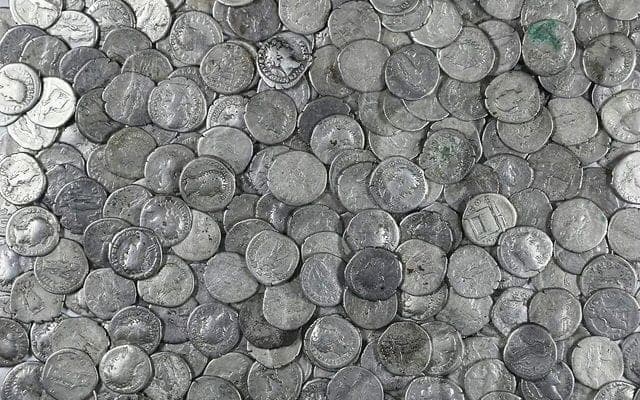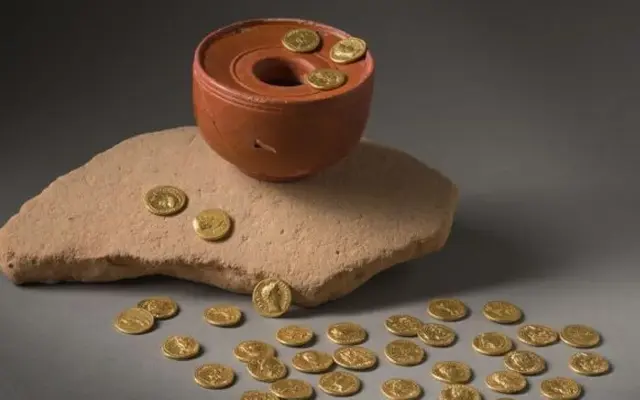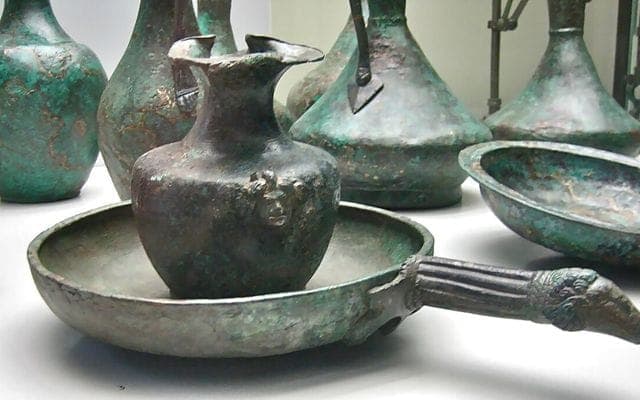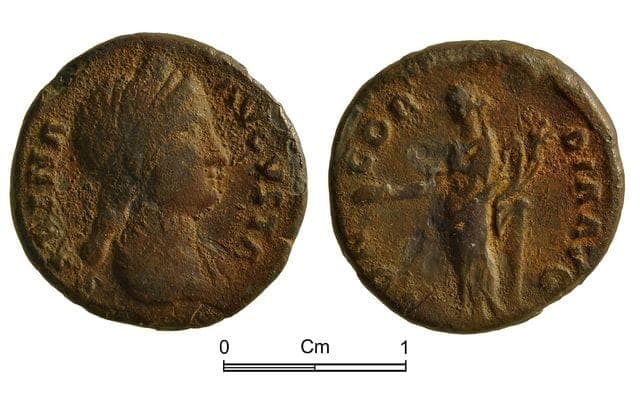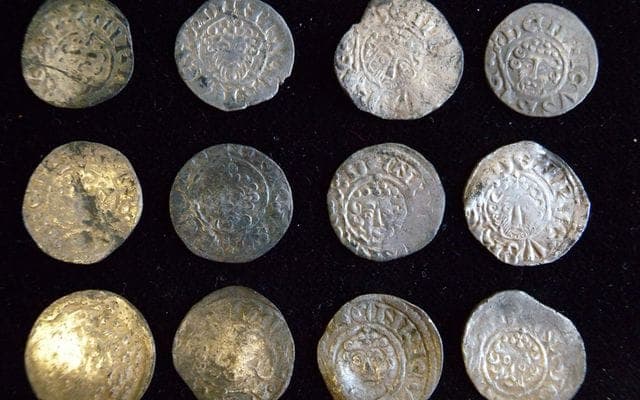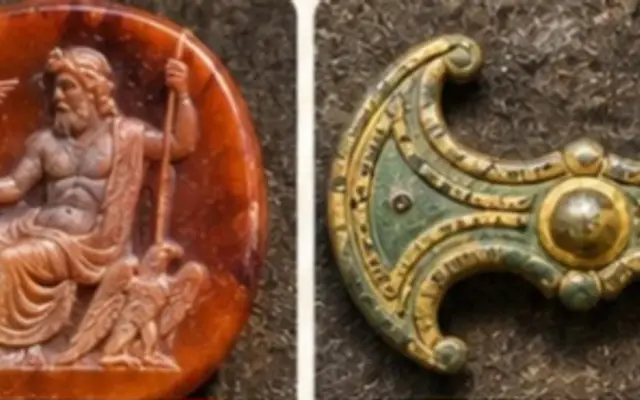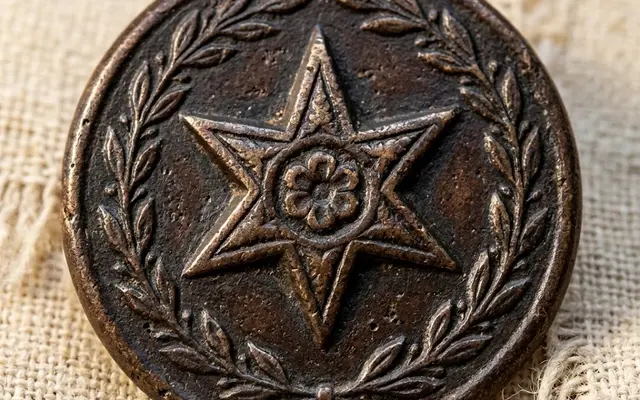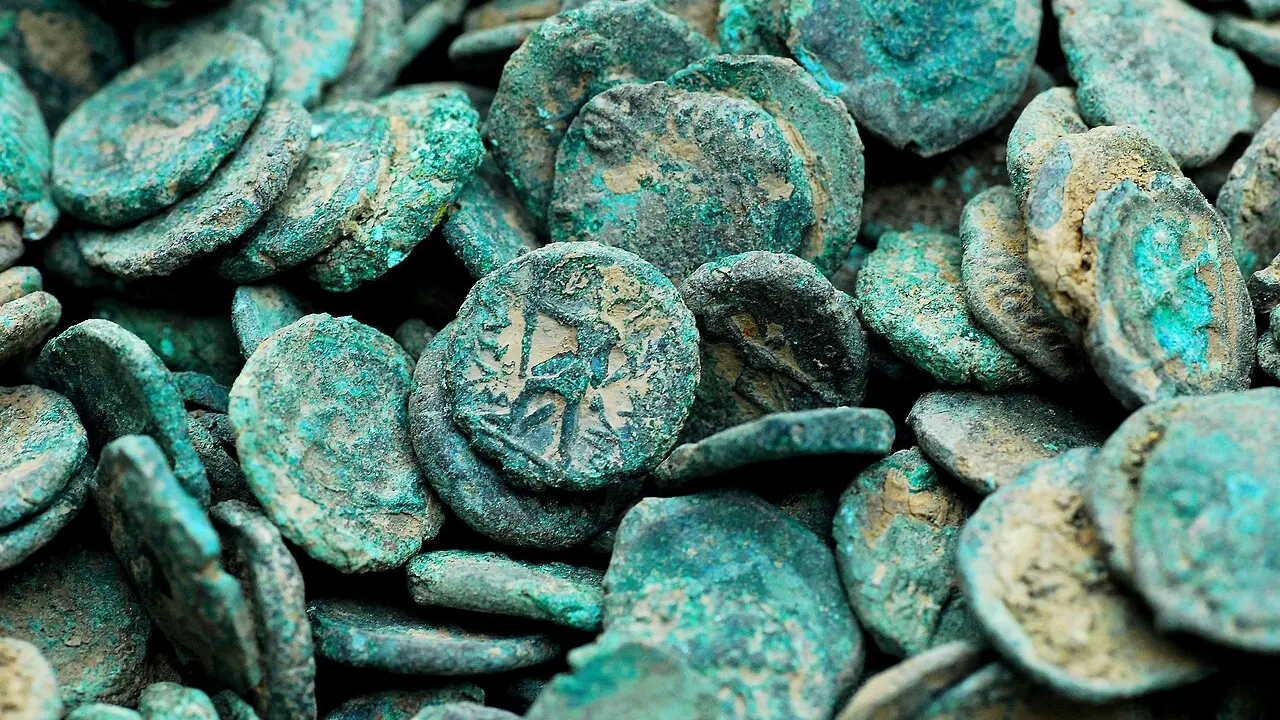
For nearly two thousand years they lay hidden in the ground. Now 737 Roman coins have come back to light in Hungary's Somogy County, in the southwest of the country. According to Stilearte, the material comes from three different sites, all in the area near the Drava River.
The source describes the territory as an area crossed by the roads, trade and people of the Roman Empire. The find is presented as more than just a collection of coins: it is material evidence of the Roman presence in this part of Central Europe. The overall number, 737 specimens, makes the picture particularly interesting, because it allows us to examine monetary circulation over a fairly broad span of time.
The working title accompanying the news refers to a chronological range running from Antoninus Pius to Constantine, and to the presence of a coin linked to the deification of an emperor. The text of the source available to us, however, stops at the introduction. For this reason, it is not possible here to specify the composition of the individual groups, the denominations, the mints, the dates of discovery or the way the coins were recovered. Readers who want to go deeper will find the full report on the Stilearte website.
From the point of view of those who practise metal detecting, and of anyone interested in archaeology in general, finds of this kind underline the importance of context. A single isolated coin tells us little. A group of hundreds of specimens from well-identified sites, by contrast, allows us to reason about how money circulated, which periods are best represented, and how that territory was integrated into the commercial and military networks of the empire. The location near a watercourse such as the Drava, traditionally a natural route of movement, is consistent with the idea of an area of passage and exchange, as the source itself points out.
The Hungarian case also offers a lesson in method. When ancient coins are recovered, recording the exact position, the depth and the association with other materials is what turns an object into a historical datum. For this reason, in many countries, reporting to the competent authorities and cooperating with archaeologists and museums remain the decisive step in any discovery, regardless of the tool used to locate it. In this specific case, details on how the discovery was made are not included in the part of the article we were able to consult, and we do not intend to speculate about them.
The essential facts therefore remain: 737 Roman coins, three sites, Somogy County, the Drava River. This is enough information to understand that it is a numerically significant recovery and a geographically well-defined one. Subsequent studies, which normally include cleaning, identification and cataloguing, will establish which emperors and periods are represented and what they reveal about the local economy. We will follow developments as soon as further details verifiable from official sources and the specialist press become available.