A hoard of gold and silver coins about six hundred years old has been recovered by two metal detectorists in the Scottish Borders, not far from the border with England. According to Live Science, which cites a statement from the Crown Office and Procurator Fiscal Service, the detectorists described it as a “find of a lifetime.”
The hoard was discovered by Keith Young and Lisa Stephenson, who were searching with a metal detector near the village of Cappercleuch. Initially, 30 coins, English and Scottish, minted during the 15th century, were unearthed. “This hoard is the find of a lifetime,” Stephenson said in the statement.
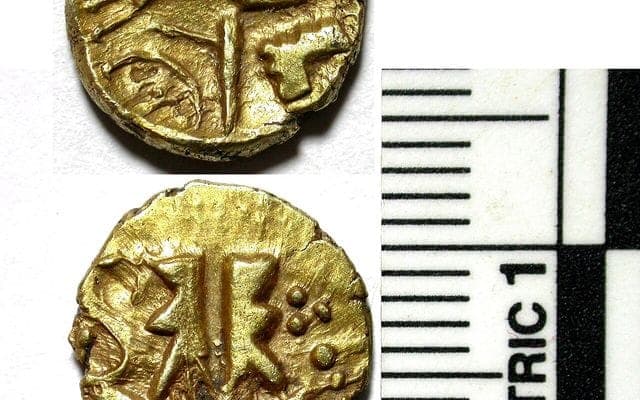
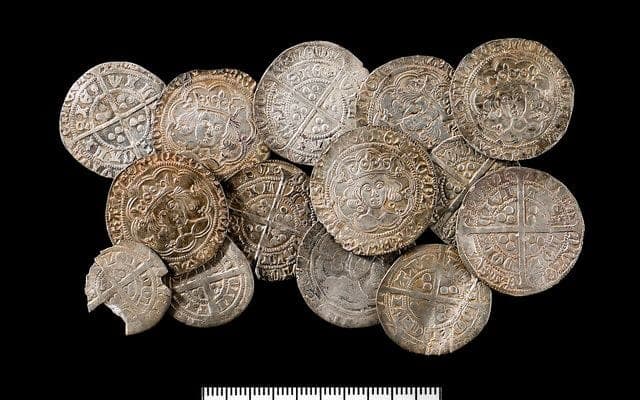
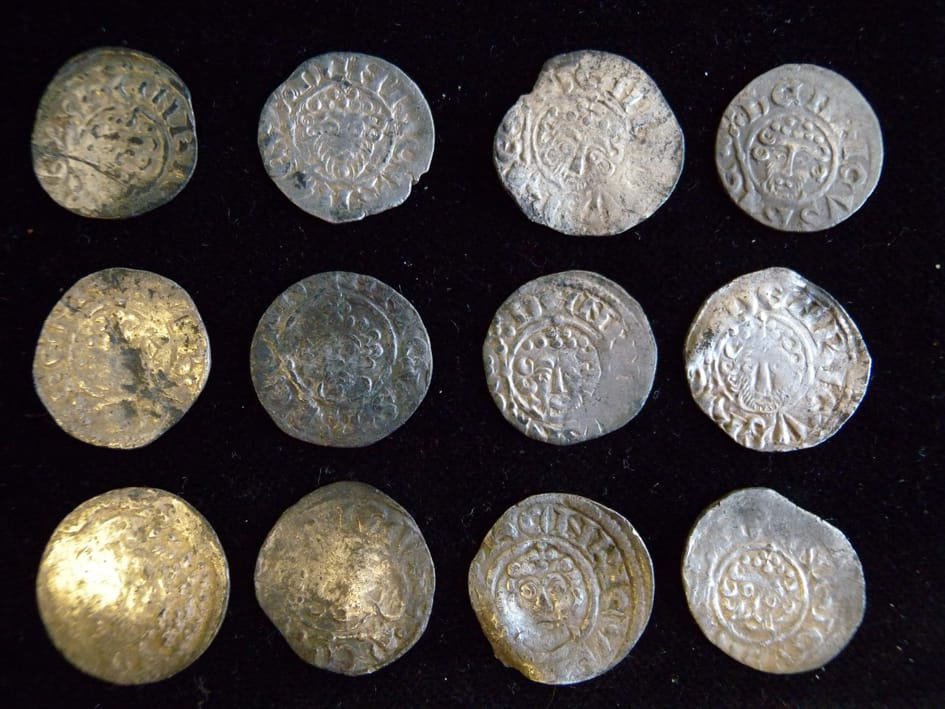
The core consists of issues from several rulers. Among the English coins are silver groats minted under Henry V, who reigned from 1413 to 1422, and under Edward IV, on the throne from around 1461 to 1483. The Scottish coins, by contrast, are gold: demies and half demies struck by James I of Scotland, who reigned from 1406 to 1437, and by James II, who ruled from 1437 to 1460. The coins bear the effigy of the monarch in office at the time of minting. Among the images circulated is also a silver groat bearing the portrait of Henry VI.
To help make sense of the denominations, Live Science notes that the groat was a large silver coin introduced in England by Edward I in 1279 and worth four pence. The Scottish gold demy takes its name from the French “demi,” meaning “half,” because it was worth about half a noble, an English gold coin, and was normally valued at nine shillings in Scottish money. The half demy was its smaller version, worth about 4.5 shillings.
The two detectorists reported the find to the Scottish Treasure Trove Unit, the body responsible for investigating archaeological finds made in Scotland. Initial analysis by the unit’s archaeologists suggests the coins may have been left at the site between the early and mid-1460s.
The site was then excavated by archaeologists from the Treasure Trove Unit together with National Museums Scotland, in the presence of the finders. The dig recovered five more coins from the immediate vicinity, for a total of 35 pieces. The circumstances of the find were documented together with the discoverers.
Antony Lee, who heads the Treasure Trove Unit, highlighted the significance of the context: “Hoards containing a mix of English and Scottish coins are not unusual, but we don’t see many hoards from this period in Scotland, so it is a fascinating find.” Lee also praised the conduct of the two discoverers: “Keith and Lisa acted promptly and correctly in reporting it to us.”
The case clearly shows why prompt reporting is essential. Because the detectorists stopped and alerted the authorities, archaeologists were able to intervene on site, excavate in a controlled way, and recover five additional coins, while also documenting the position and context of the deposit. That context cannot be reconstructed once the coins are removed from the ground. A hoard of this kind, with coins from two different kingdoms, also offers scholars a snapshot of monetary circulation between Scotland and England in the mid-15th century.
For metal detecting enthusiasts, the story is a reminder that major finds often come from patient searches in rural areas, and that the historical value of a deposit depends largely on the information recorded at the time of recovery.