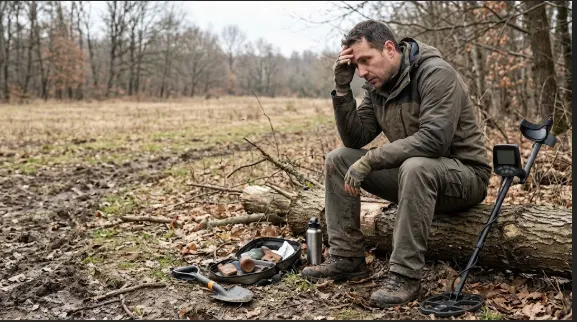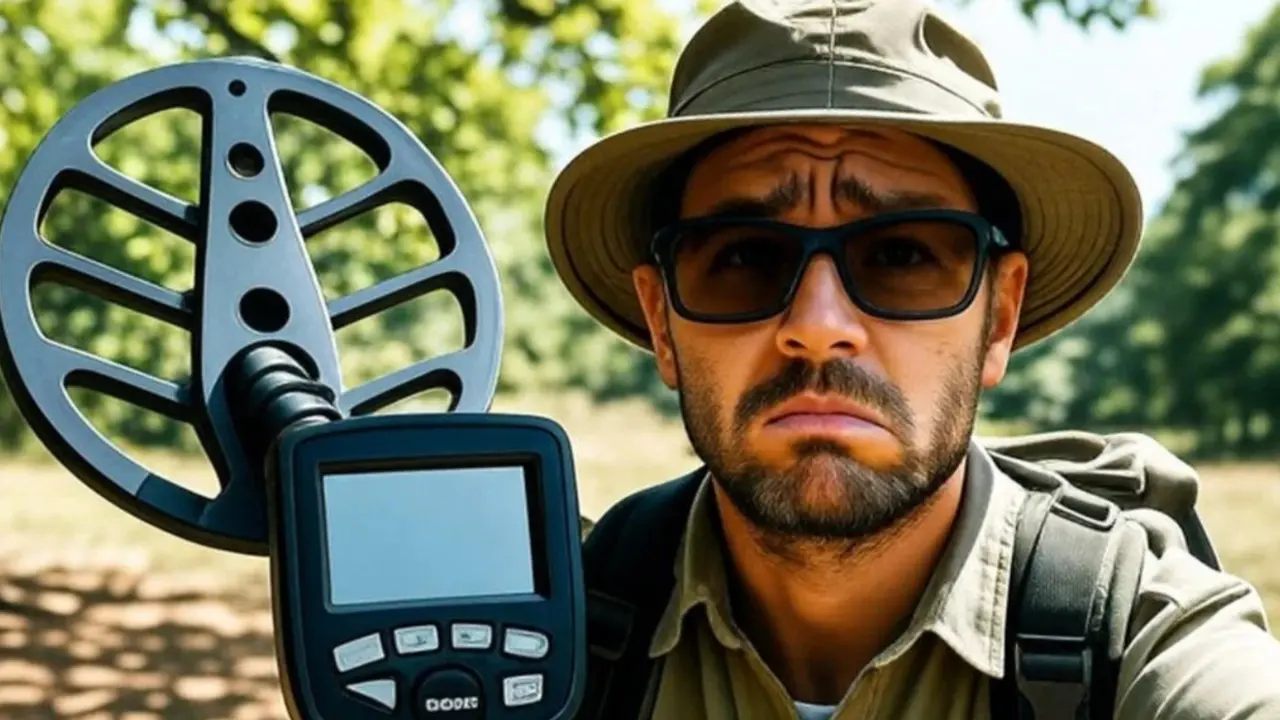
Metal detecting promises excitement and mystery, but the first months can be frustrating. According to many long-time detectorists, about 80% of beginners give up after a few outings, convinced they are finding too little. The US blog Metal Detecting Life argues that the cause is rarely bad luck: it is usually small mistakes, easy to correct, that limit results. In this piece we summarize them, with some considerations on method.
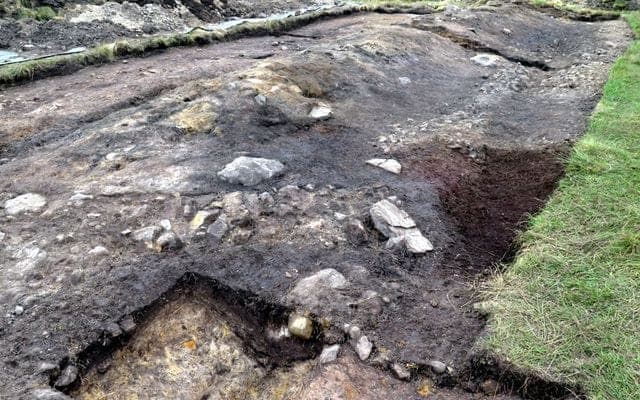
The first mistake concerns choosing the site. Many newcomers head to the nearest empty field hoping for luck. That can work, but the best finds come from places where people gathered in the past. The example cited is a comparison between two hours in a modern park chosen at random and two hours along a path that led to an old pier, walked by people a century ago: the second site, according to the author, almost always wins. Historical research thus becomes an integral part of the activity. Historical maps, municipal archives and even simple online searches on vanished fairs or demolished schools can point to promising areas. A few notions of local history are enough to turn the detector into a kind of time machine.
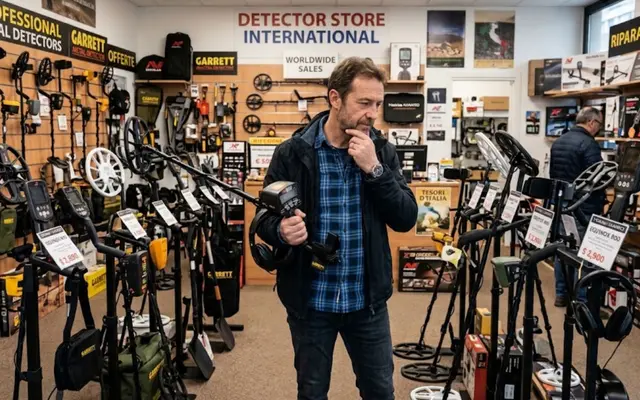
The second mistake lies in using the device straight out of the box. A metal detector is not ready for success on day one. With sensitivity set too low, deep targets are missed, while discrimination set too high excludes objects that could have value. The author compares adjustment to tuning a guitar: when the parameters are right, every signal rings clearly, otherwise there is only noise and confusion. Spending five extra minutes on ground balance and sensitivity can make the difference between silence and the tone of a silver piece. It is therefore advisable to treat fine-tuning as a separate step, to be repeated when ground conditions change.
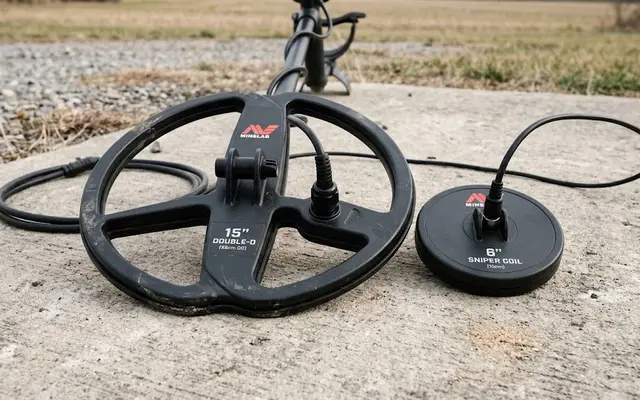
The third mistake is the way the coil is moved. It should stay just above the ground and sweep with a slow, controlled swing, overlapping each pass with the previous one to cover the whole area. Sweeping quickly is like reading a sentence at a run and losing half the words. Even a couple of extra centimeters of distance reduce depth and accuracy. The image the author proposes is that of painting the grass with the coil: soft strokes, constant speed and full coverage allow you to locate targets that people in a hurry leave behind.
Then there is the habit of digging at the first beep. Experience teaches you to take a pause: listen to the tone, check the VDI value shown on the display, and confirm the target's position with pinpointing, that is, the precise location of the signal. This brief verification saves time and effort, because it reduces useless holes and helps you understand what lies under the coil before you reach for the spade. The detector's display, like that of the Garrett AT Pro mentioned in the article, serves precisely to keep the settings in use and the signal information under control.
Finally, there is the psychological factor, perhaps the most important. The author recounts that his first find was a bottle cap and the next one a quarter-dollar coin, experienced with enthusiasm as a treasure and as the first step toward paying back the cost of the device. Finding his first rings, however, took years of practice and refining his techniques. The message is that skill is built over time and that giving up too soon is one of the main causes of failure, together with wrong settings, poor search technique and unproductive sites.
In short, beginners can improve a great deal with a few corrections: study the history of places before going out, carefully adjust sensitivity, discrimination and ground balance, move the coil calmly and close to the ground, verify each signal before digging, and give yourself time to learn. These are simple habits, but they let you enjoy every outing and come home with a real story to tell.