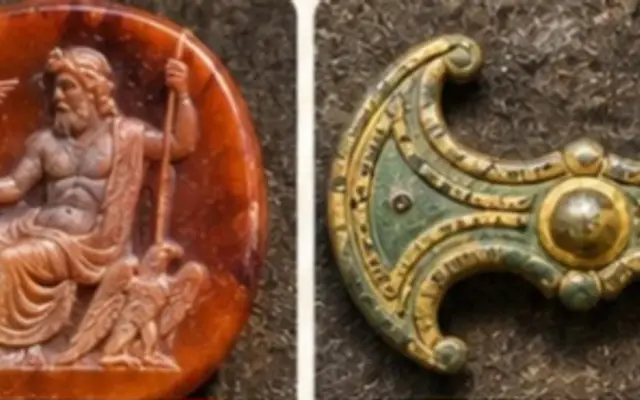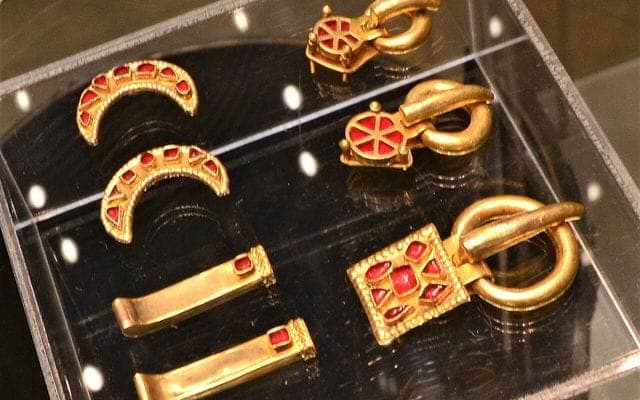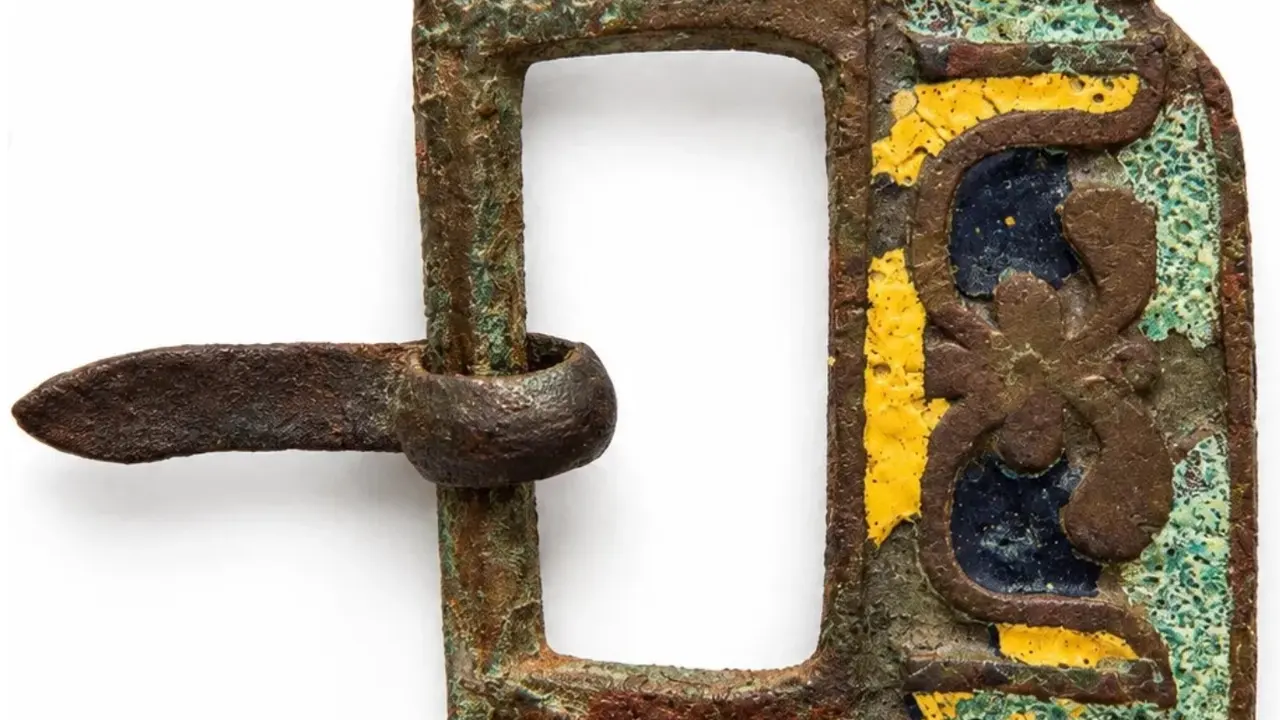
A Roman-era belt buckle, about 1,800 years old, has been discovered in a forest in Ukraine. According to Live Science, in its archaeology section, the object stands out for its bright colors. It may have belonged to a nomadic warrior on horseback. The find is linked to the ancient conflict between Romans and Dacians.
The news headline refers to a colorful buckle and a possible owner from a nomadic, horse-riding world. The source therefore highlights two aspects: the object's decorative appearance and its connection to a warrior figure who lived on horseback. In archaeology, belt accessories are often important indicators. They help clarify the status of the person who wore them, cultural contacts, and the circulation of designs and materials among different populations.
The reference to Romans and Dacians places the find in a specific historical context. The buckle is Roman-era, but it was found in a wooded area of Ukraine, far from the places commonly associated with imperial Rome. For this reason, the object is read as a trace of the tensions and exchanges along the frontiers of that period. According to Live Science, the buckle suggests precisely the echo of that clash.
The available material does not provide all the details that an enthusiastic reader would want. The exact location, the circumstances of the discovery, the type of metal, and the decorative technique are not explicitly stated. It is also not specified who conducted the research. For this reason, we limit ourselves to reporting what is confirmed, without adding unverifiable hypotheses. The idea of a nomadic warrior on horseback remains an interpretation, cautiously expressed with the verb 'could'.
For metal detectorists, however, the news offers a useful point of reference. Personal metal objects, such as buckles, are among the finds that most often emerge from wooded terrain. Often, though, their scientific value depends on the context of discovery. The exact spot, the depth, and the associated elements allow scholars to date the object and link it to an event or a human group. An artifact without documentation loses much of this information.
It is always worth remembering that in Italy, metal detecting is subject to precise rules. Every find of archaeological interest must be reported to the competent authorities, and searches require the permits provided by law. Other countries also have specific regulations, which anyone involved in fieldwork must know and respect.
The case of the Ukrainian buckle shows how much a single small object can reveal. In this case, it speaks of war, mobility, contacts between different worlds, and the identity of the person who wore such a striking ornament. When further data from the study of the find become available, it will be possible to better assess how far the nomadic horseback warrior hypothesis is supported. The subject is the relationship between Romans and Dacians, which remains one of the most studied chapters in the ancient history of Eastern Europe.