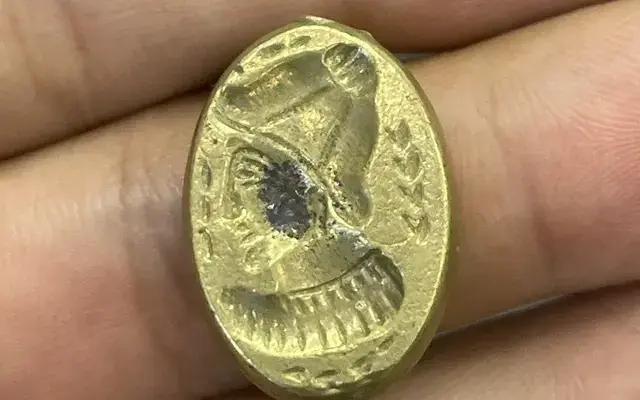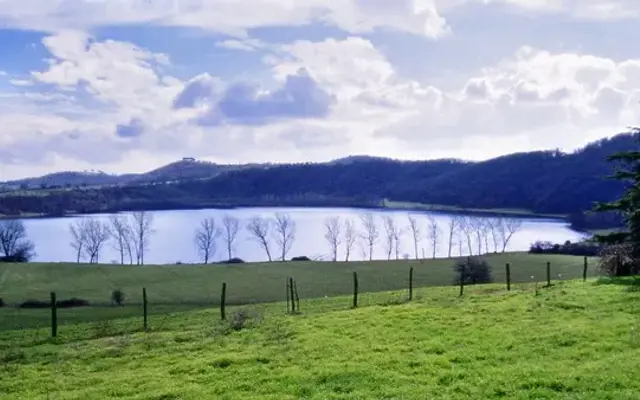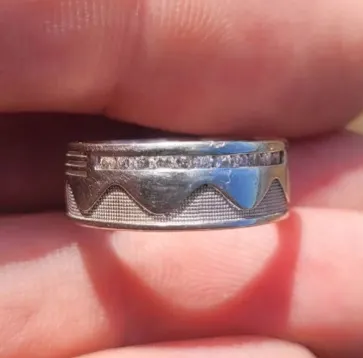
According to Focus Speed, a wedding ring lost in the water at Bon Echo Provincial Park in Ontario (Canada) was recovered after a search planned in detail. The story is a reminder that behind a clean signal in the headphones there can sometimes be something far more important than the target.
It all began on July 4 at noon, when Focus Speed's California office received an urgent phone call from Sina and Samaneh, a couple looking for an experienced detectorist in Canada. While swimming in the lake, Samaneh had lost her ring. The two were disheartened and did not know whether metal detecting was allowed in the park, or whether a specialist in ring recovery could help them.
Focus Speed contacted Ottawa Ring Recovery, run by detectorists Laurie Gagne and Eric Danis, who are listed in the company's directory. Speaking with Samaneh, it quickly became clear that this was not just a valuable piece of jewelry. She herself explained that the ring represents one of her deepest reference points: a young immigrant building a life in Ottawa while studying, with almost 15 years of history, sacrifices and commitment shared with her husband Sina. Anyone who has returned a wedding ring knows that its real value is rarely measured by the weight of the gold.
The first obstacle, however, was not the water, the depth or the size of the area, but the permit. At Bon Echo Provincial Park, metal detecting is restricted because the area contains protected historical, archaeological and natural resources. Even though the target was a personal item lost only recently, Ottawa Ring Recovery did not enter the park to start searching: it called the park office and asked whether a supervised recovery could be authorized.
The superintendent was not available, but his deputy would be present the following day. Samaneh also sent an email describing the story of the ring and what it meant to her. After assessing the situation and the proposed search method, park officials granted a single supervised search, with disturbance kept to an absolute minimum. The operation was scheduled for Tuesday morning, between 8:00 and 9:00, before the beach filled with bathers.
This episode offers a lesson for the entire community: a recovery with strong personal meaning does not justify disregarding local regulations or land management rules. Asking for permission requires patience, but it protects access to the areas and the trust of those who manage them, to the benefit of all detectorists.
Once authorization was granted, Laurie and Eric gathered as much information as possible, because for those who recover rings, the quality of the interview with the person who lost the item often determines the size of the area to be searched. Samaneh estimated the water depth at about 140 centimeters: she is about 157 centimeters tall, and the water reached close to her shoulders. A friend had counted the buoys and believed the ring had fallen between the tenth and the sixteenth, a detail described as very valuable for narrowing the search zone. Samaneh also provided photographs and videos of the beach.
With these elements, a search area defined in a grid and detectorists experienced in underwater searches, the recovery ended with an unmistakable signal and the ring was returned to its owner. As Focus Speed points out, sometimes you recover a story; other times you allow a person to keep their own.