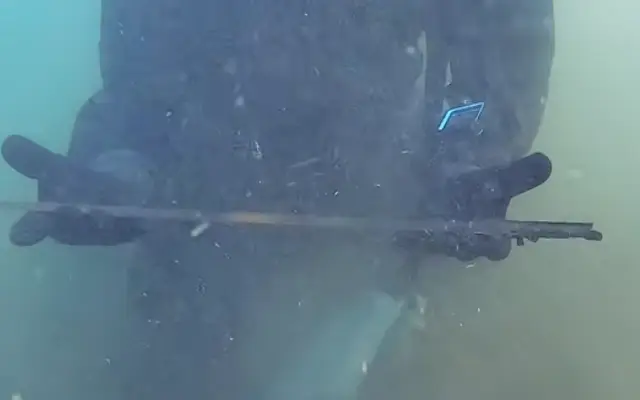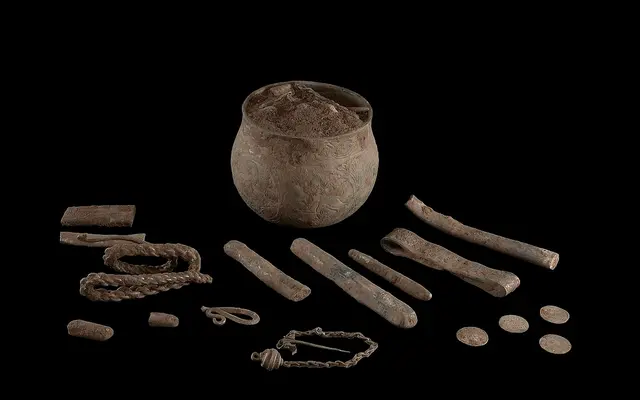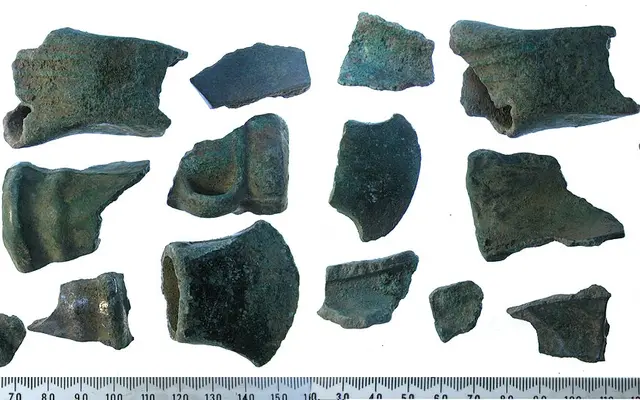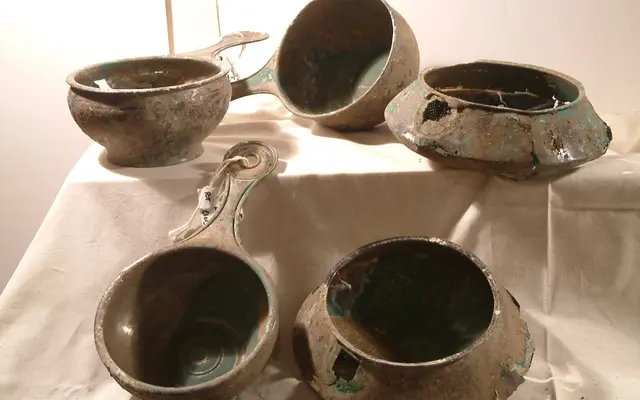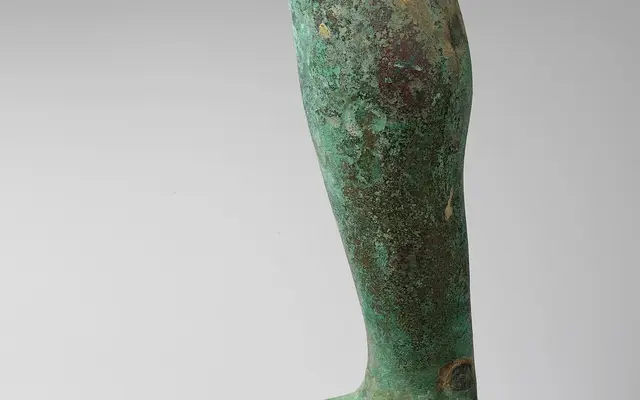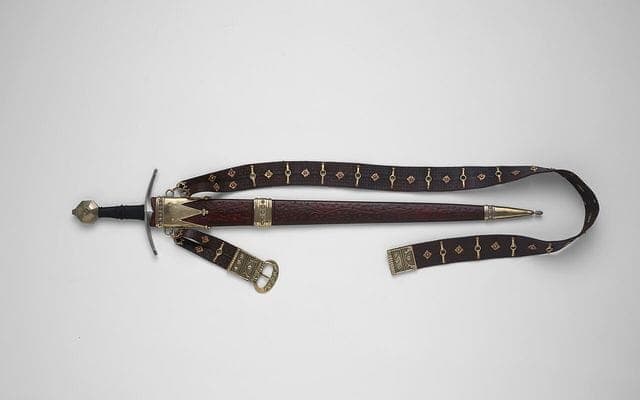
A Bronze Age sword, still sharp after roughly 3,300 years, is among the finds recovered from an Italian lake of volcanic origin. According to Live Science, in its archaeology section, archaeologists have identified in the basin, a crater lake, several ancient weapons, vessels that remained intact and a bronze razor.
The news is striking above all for the state of preservation. A blade that still holds its edge after more than three millennia is a rare case, and it shows how much the environment in which an object lies can affect the survival of metal artifacts. The sources consulted do not give the name of the lake, the exact date of the discovery or the dimensions of the objects. For this reason, while awaiting further details from the scholars involved, we cannot add information that has not been published.
The picture that emerges from the report is nonetheless one of a complex context. Alongside the sword there are other weapons, whole vessels and a personal item such as the bronze razor. It is a combination of military materials and objects of everyday or ritual use, which archaeologists will have to interpret as a whole before proposing a complete reading of the site.
A volcanic lake has its own characteristics. The waters of a crater are enclosed in a well-defined basin, and the sediments that settle on the bottom can seal objects that fell or were deposited in the water, protecting them from oxygen and tampering. This is a principle well known in underwater and lake archaeology, but in this specific case it will be up to further investigation to determine how the deposits formed and why those objects ended up exactly there. The source does not comment on this.
For those who practice metal detecting, the story offers some food for thought. The find is the result of the work of archaeologists, who were able to document the context and position of the artifacts: information as valuable as the object itself. A sword, a vessel or a razor removed from its context loses much of its historical value. That is why it is important to remember that in Italy archaeological property belongs to the State and that any find of cultural interest must be reported to the competent authorities, rather than being collected or moved.
What analyses will be carried out on the materials remains to be seen. Studies of the composition of the bronze alloy, of the manufacturing technique and of the dating of the vessels would make it possible to place the artifacts in time and space with greater precision. For now, the certain fact, as reported by Live Science, is the presence of a sword still sharp after about 3,300 years and a group of objects that testify to the lake's ancient human presence.
We will follow developments and update the article as soon as new information becomes available on the location, dating and interpretation of the finds by the scholars.