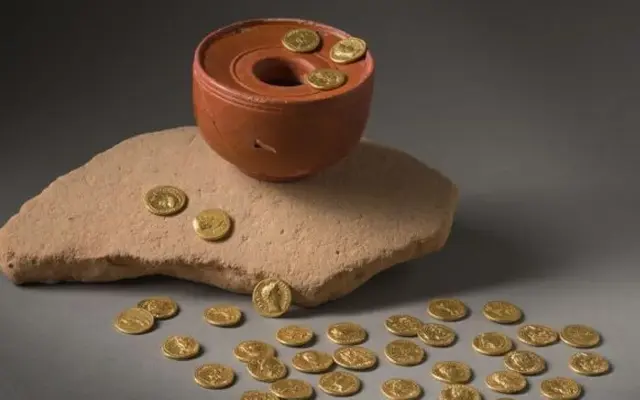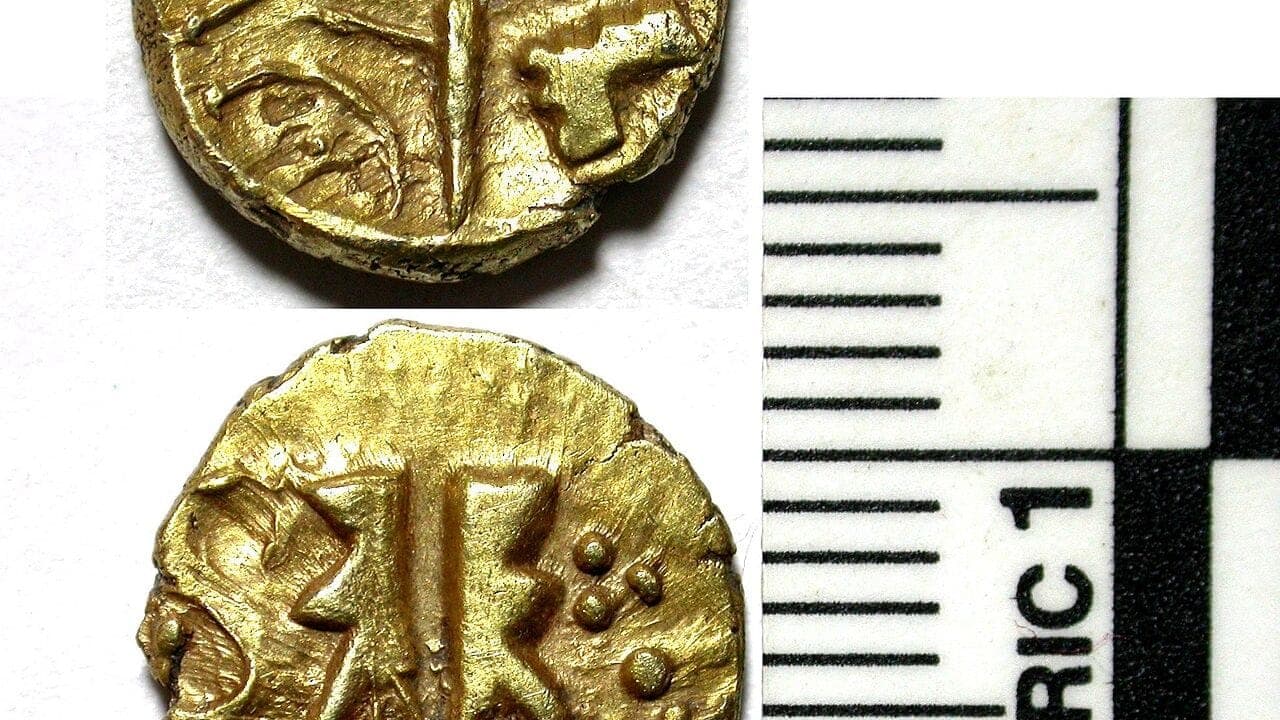
According to History Hit, a hoard of more than 900 gold coins has come to light in the quiet village of Great Baddow, near Chelmsford, in Essex. Known as the Great Baddow Hoard, it is presented as the largest collection of Iron Age gold coins ever discovered in Britain. In terms of its sheer number of coins, the find therefore has no precedent in the British record for this period.
The historical portal describes the discovery as a true “cold case” that remained buried for more than 2,000 years. According to the source, the coins were deliberately placed in the ground during the Late Iron Age. This detail is far from marginal: describing the deposit as intentional rules out simple accidental loss and places the find in the category of hoards, that is, groups of objects hidden or deliberately offered to the earth at a specific moment in the past.
For metal detectorists, or anyone who simply follows archaeology with interest, the case of Great Baddow is a reminder of how significant even the most ordinary contexts can be. A village on the outskirts of Chelmsford is not where one would expect to find a national record, yet it is precisely there that a gold treasure has resurfaced after more than two millennia. The news confirms that the British subsoil can still hold major surprises, even in inhabited areas that have long been known.
The material is the other striking element. Unlike other metals, gold does not significantly oxidise over the centuries, and History Hit indeed describes the coins as “shiny” more than 2,000 years later. This characteristic, well known to those who search with a metal detector, makes gold coins easy to recognise once recovered, but it says nothing about how they were located: the text available does not provide information on who discovered the hoard or how it was recovered.
It is important to clarify the limits of the information currently available. The source consulted, in its accessible portion, does not give the exact date of the find, the identity of the finders, the total weight or estimated value of the coins, or the population or area of issue to which they belong. No data is provided on the depth at which they were found, the container used, if any, or the archaeological investigations carried out at the site. For this reason, we limit ourselves to reporting what has actually been stated, without offering speculation.
What clearly emerges is the overall picture: a hoard of more than 900 gold coins, intentionally buried in the Late Iron Age, discovered at Great Baddow and considered the largest of its kind in Britain. If confirmed by subsequent studies, this result will give specialists an exceptional documentary basis for understanding the practices of accumulating, concealing and depositing wealth in that era.
We now await further details from the scholars and institutions involved, who may clarify the origin of the coins, the context of their burial and the meaning of an act carried out more than two thousand years ago. We will report updates as soon as more complete sources become available.