A metallic signal, picked up just as the day's search seemed to be over, led to the discovery of a group of Roman artifacts that had lain underground for about 1,500 years. According to Stilearte, the find was made at Schaalby, in Schleswig-Holstein, in the district of Schleswig-Flensburg. The site is not far from the town of Schleswig or from the Schlei, the inlet that reaches into the Baltic coast.
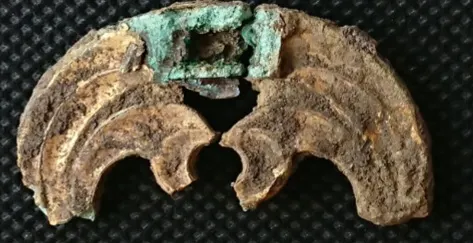
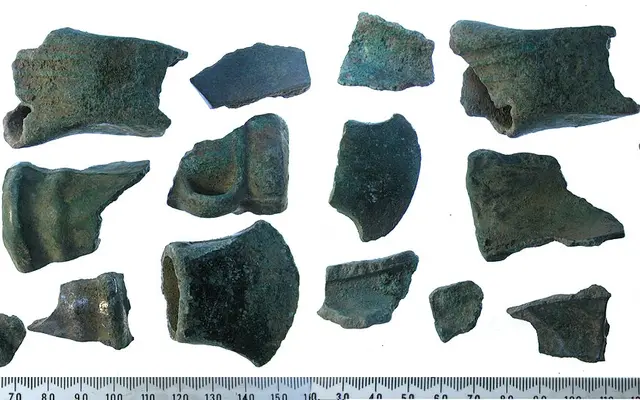
The discovery dates back to autumn 2025. A Danish team conducting metal detector searches, in collaboration with German archaeological authorities, identified fragments of large bronze vessels. The first find is attributed to Martin Kjær, a participant in the Veteraner i Arkæologien project at Aarhus University. The initial signal led to fragments of a vessel with distinctive handles.
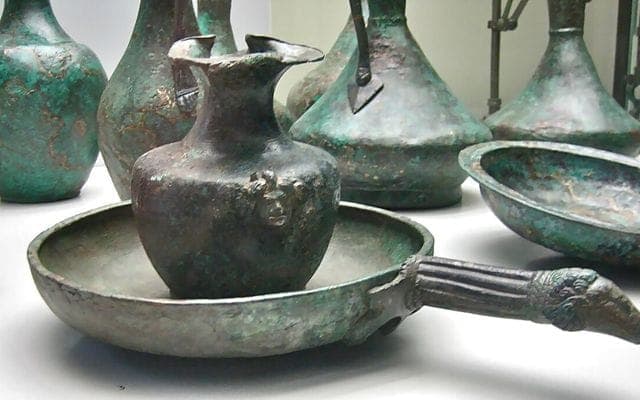
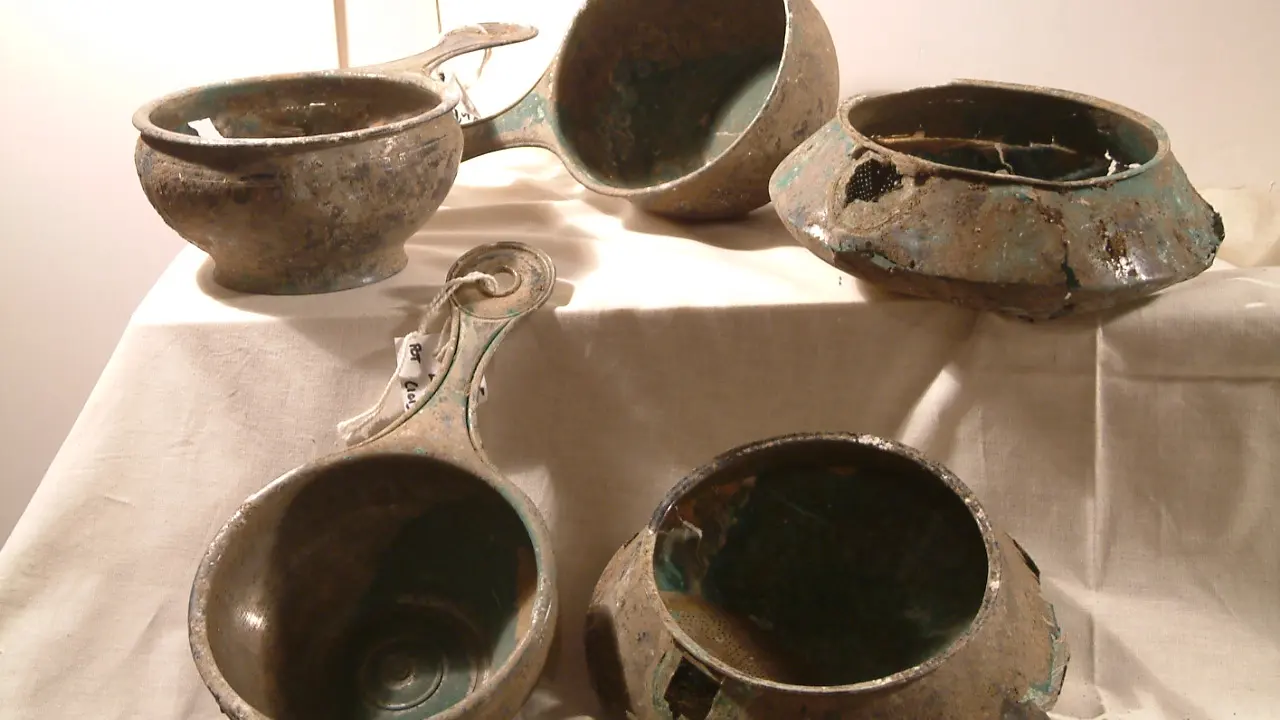
The first survey suggested two or three cauldrons. Then diagnostic imaging came into play: the CT scan showed that inside the largest containers were two more vessels, for a total of five objects nested one inside another. The finds include cauldrons, bowls and a rare bronze strainer. Some of the pieces had already been repaired in antiquity.
The discovery was presented by the Archäologisches Landesamt Schleswig-Holstein, the regional authority responsible for archaeological heritage protection and research. The University of Aarhus and specialists from the Archaeological Museum at Schloss Gottorf are also involved in the work.
Subsequent evidence made it possible to identify the type as Vestlandkessel. These are cauldrons produced within the Roman provinces, found mainly in the northern regions of Europe. They are not simple kitchen utensils made of common metal. They belong to a tradition produced within the economic and cultural sphere of the Empire, which later circulated beyond its political borders.
The dating proposed by the German archaeological authority places the vessels between the 3rd and 5th centuries AD, that is, between the late Imperial period and the Migration Period. The first communication from the University of Aarhus, by contrast, indicated a chronology around AD 500. Later studies and the subsequent presentation adopted a wider range. The reason is that the group has not been dated precisely to a single moment: its chronological placement rests on typological comparisons and archaeological assessments.
The geographic context adds to the interest of the find. Schaalby lies a few kilometers from Schleswig, near the Schlei and the area of the Danevirke, the large system of defensive earthworks that crosses Jutland. Hedeby, one of the major trading centers of northern Europe in the Viking Age, is also nearby. These places are known above all for the early Middle Ages and the Viking period. The Schaalby deposit shows, however, that the region was part of exchange networks much older than the trading era of Hedeby, active centuries earlier.
Questions remain about the nature of the deposit. Scholars have yet to determine whether it was an offering, a grave good or an intentional deposit of some other kind. For now, the CT scan has already revealed what a hasty excavation might have concealed. It made it possible to learn the actual contents of the group before opening it, and to plan its study and recovery with care.
For those who practice metal detecting, the case is a reminder of how important collaboration with archaeological authorities is. A signal received at the end of the day, handled methodically and with the support of diagnostic tools, turned the presumed presence of two or three cauldrons into a deposit of five vessels of great scientific interest.