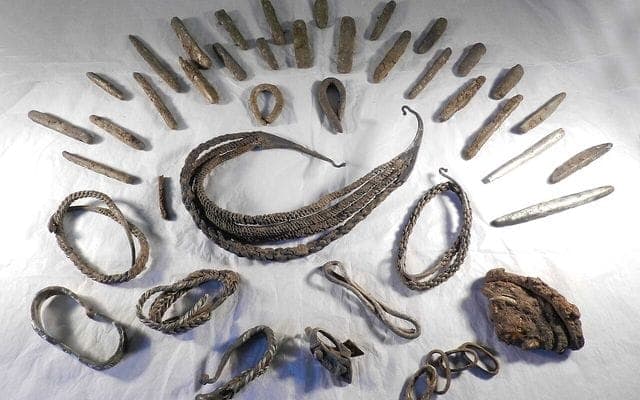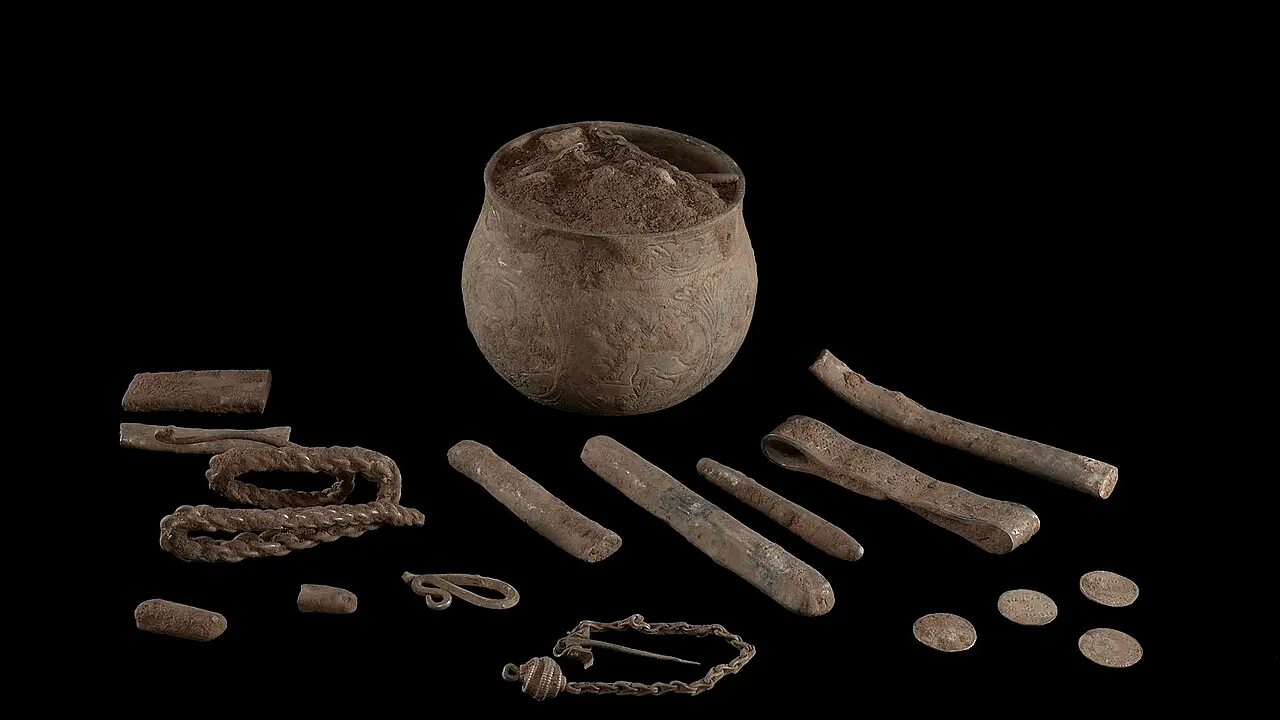
A sword decorated with silver, three bronze brooches, an axe and the tools used to weigh precious metals: these are the finds that emerged from a field on the Isle of Man and that, according to Stilearte, may be linked to a possible double Viking burial dating to around 900 AD. The discovery offers new evidence on the life of the first Scandinavian communities that settled on the island. The discovery dates to February 2026 and was made by two metal detecting enthusiasts, Daniel Crowe and Rhett Britton. The material was handed over to experts at Manx National Heritage, the body that protects the local cultural heritage. After investigations and specialist examinations, the entire group of finds was declared Treasure by the Coroner for Inquests, given its exceptional historical and archaeological importance.
Among the most interesting objects are two oval bronze brooches, decorated with interlaced animal motifs typical of Viking art. Ornaments of this kind were generally worn by women to fasten their clothing. Their presence alongside a sword, usually associated with the male sphere, has led archaeologists to hypothesise a burial of two individuals, perhaps a man and a woman. Certainty, however, is lacking. The original context was disturbed at an unknown point in the last thousand years, and the objects were no longer in their original position. It cannot therefore be ruled out that they come from two separate graves dating to the same period.
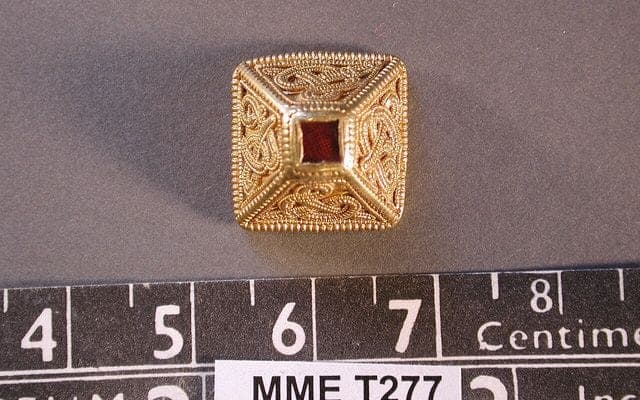
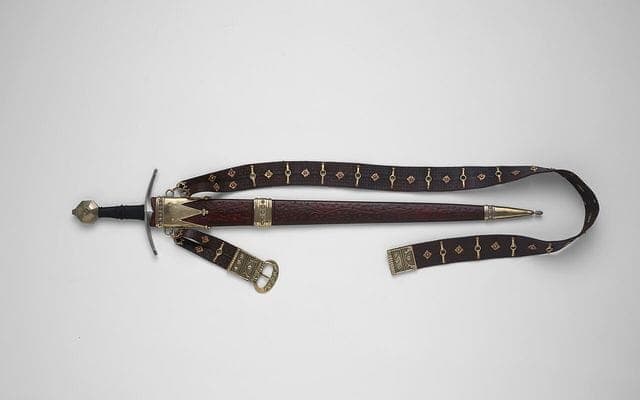
The two brooches may be of particular value for local history: according to Manx National Heritage, they could be about fifty years older than another similar pair already known, and would represent the oldest evidence so far identified of a female Viking-age burial on the island. A third brooch was recovered with them, originally gilt, with spiral decoration and a central glass element: it is the first example of this type found on the Isle of Man. The most spectacular piece is probably the sword, the thirteenth Viking sword identified on the island. About two-thirds of it survives, but radiographic analysis has revealed decorative details otherwise invisible: on the hilt there are fine silver inlays and twisted wires of the same metal. Only two other Viking swords found on the island have decoration of comparable quality.
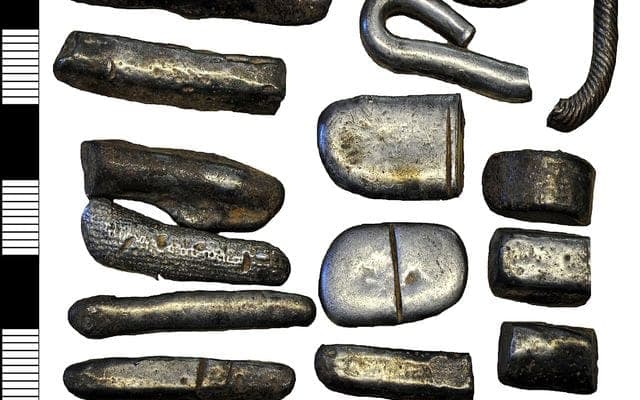
The blade appears to have been deliberately broken, perhaps as part of a funerary ritual, although some of the damage may result from the long time spent in the ground. The assemblage tells a story that goes beyond the image of the Vikings as warriors and sailors. Decorated lead weights and fragments of bronze scales were also recovered, tools used to weigh precious metals and coins in commercial transactions. The weights belong to a type never previously documented on the island. Another unusual object is a bronze ladle, perhaps used at feasts or ceremonies, also of a type previously unknown in the local archaeological heritage.
The whole offers a glimpse into Viking society around the 10th century, when Scandinavian communities were consolidating their presence on the Isle of Man, a strategic position at the heart of the Irish Sea and a hub between the British and Irish coasts. The text of the source available to us breaks off while recalling the role of the two finders in preserving the finds, citing Daniel Crowe's decision not to clean the objects. It nevertheless remains an example of how prompt reporting to the competent authorities allows the context and scientific value of exceptional finds to be preserved.