Two Late Bronze Age discoveries from Bavaria show how metal objects were produced and accumulated three thousand years ago. According to a report by Stilearte on 12 November 2026, the first case concerns Großeibstadt, in Lower Franconia. The second concerns Grabenstätt, in the Chiemgau.
The official announcement of 11 November 2026 comes from the Bavarian State Office for the Protection of Monuments (Bayerisches Landesamt für Denkmalpflege, BLfD). It was presented together with the Archäologische Staatssammlung, the State Archaeological Collection in Munich. According to the source, the two cases were also chosen to illustrate the effects of the new system for protecting archaeological finds, introduced in Bavaria in 2023.
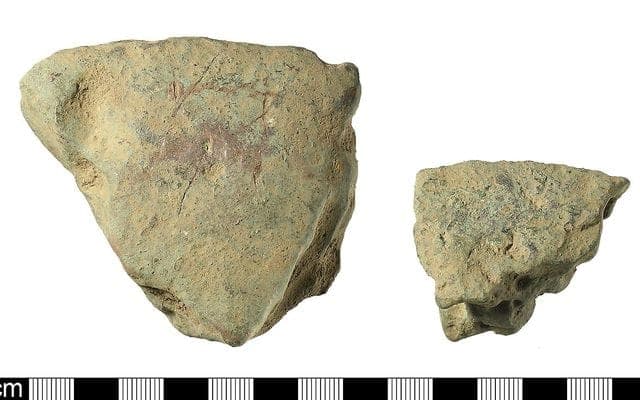
At Großeibstadt, archaeologists recovered a stone mould for casting a sword. One complete half has survived, carved into sandstone, designed to produce a bronze sword with a tanged hilt. The find is considered unique in Bavarian archaeology. Alongside it came to light a second stone mould, used to make an ornamental pendant.
The find dates to summer 2025. It was made during an archaeological excavation at a lowland settlement belonging to the Urnfield culture. The context is the Late Bronze Age, which in this area roughly spans 1300 to 800 BC. The two moulds and the other structures identified in the excavation allowed BLfD specialists to recognise the presence of a bronze craftsman active at the settlement around three thousand years ago.
The value of the mould lies in what a finished sword cannot tell. A weapon found in a grave or a hoard may have travelled hundreds of kilometres. It may have been given, traded, seized or inherited. A mould, by contrast, indicates where an essential stage of production took place. Production stops being merely a hypothesis drawn from the circulation of objects and becomes a material presence in the settlement landscape.
Casting bronze required precise knowledge of materials and temperatures. Copper and tin were needed, along with control of fire and the ability to prepare a mould in which molten metal could solidify into the desired shape. The sandstone also had to be worked carefully, since the internal negative had to reproduce the object faithfully.
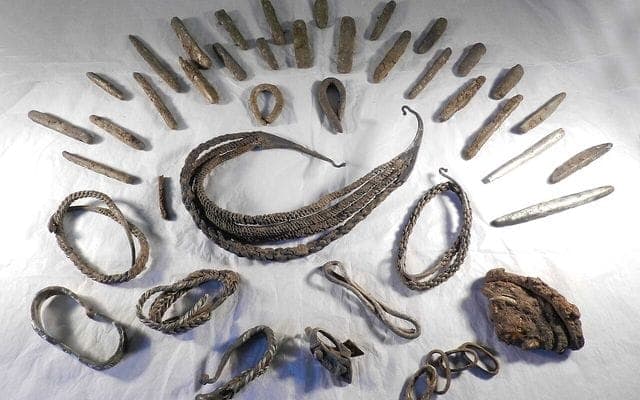
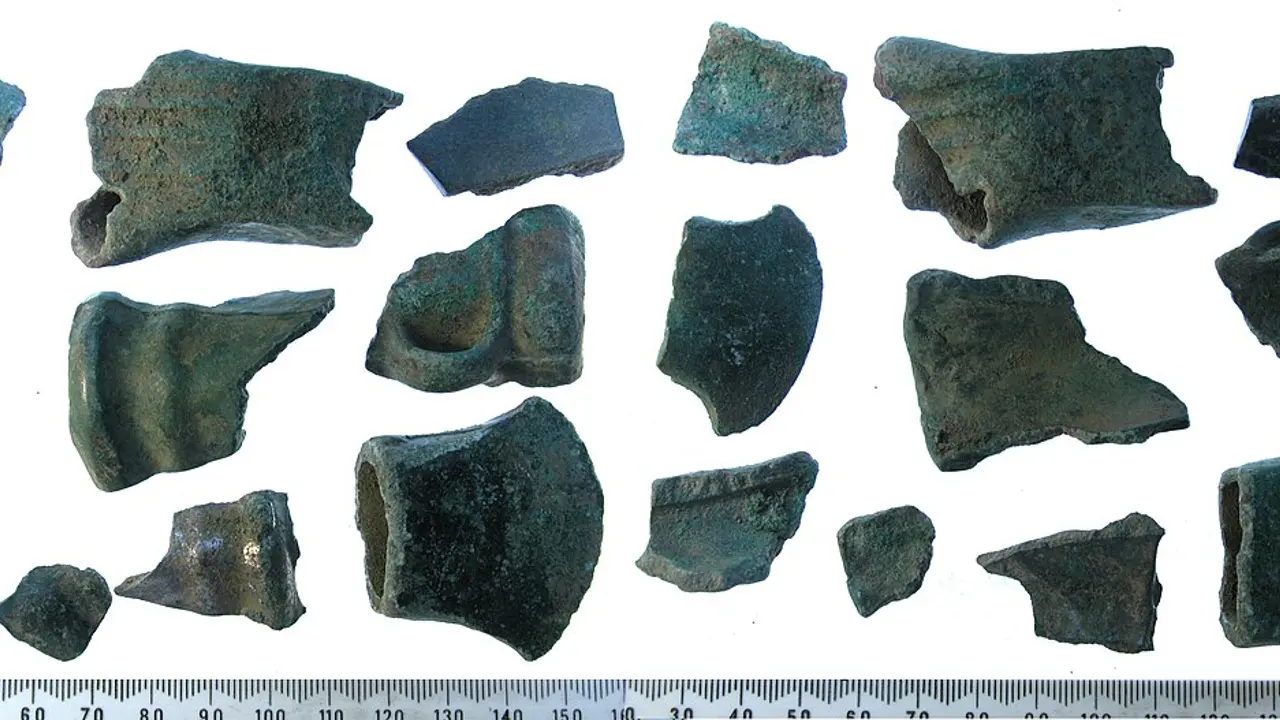
The second case is at Grabenstätt, in the Chiemgau. Here a metal detectorist helped reconstruct a Late Bronze Age bronze hoard. According to Stilearte, the ornaments were scattered over a wide area. They had probably been displaced by earlier ground works and were fragmented. For metal detectorists, it is an example of how reporting finds and collaborating with heritage bodies can help recover the context of a dispersed hoard.
Read together, the two cases reveal a system of production, circulation and accumulation of wealth in a Europe where bronze was a strategic material. Craftsmen held specialised technical skills, and ornaments could carry meanings that went beyond aesthetics.
Finally, the source indicates that the affair also involves Bavaria's new 2023 legislation, which changes the relationship between detectorists, landowners and archaeological heritage. The available text does not report its details. To learn the rules in full, it is therefore necessary to consult the official BLfD announcements.