Two Roman Cavalry Swords Found by a Metal Detectorist
In the North Cotswolds, England, two spatae dating back about 1,800 years emerged with remains of their wooden scabbards during a research rally.
September 21, 2023
ShareLink copied!
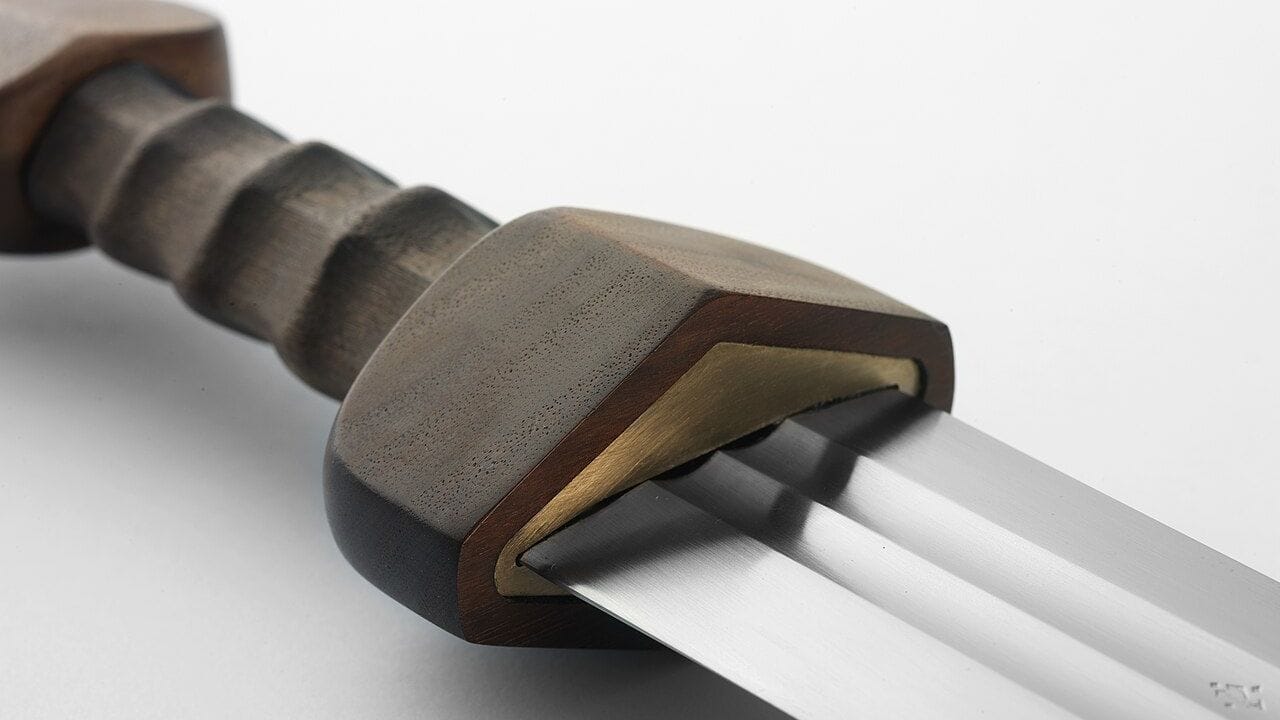
Albion Europe ApS — CC BY 2.0, via Wikimedia Commons
A metal detectorist has unearthed two Roman swords, about 1,800 years old, still protected by remains of their wooden scabbards, in the North Cotswolds, England. According to Live Science, which cites BBC News, the finder is Glenn Manning, who made the discovery in March while taking part in a metal detecting rally.
Archaeologists have identified the weapons as spatae, swords with long, straight-edged blades. Between the 1st and 3rd centuries AD, this type of weapon was commonly issued to cavalry officers of the Roman Empire. The spatha gave mounted soldiers a longer blade than the gladius, which was instead often used by infantry.
Based on their style, the two swords have been dated to the late 2nd century AD. Simon James, professor of archaeology at the University of Leicester, explained in the official press release that the weapons could have been used by both cavalry soldiers and civilians. He is the one who analysed the finds.
The significance of the discovery also lies in its rarity: according to the press release, the two swords are two of only four Roman swords found in this region. Emma Stuart, director of the Corinium Museum, said in a YouTube video that the weapons bear witness to the presence of the Roman army in the north of the Cotswold district, describing a find of great importance.
The context is also unusual. James said he knows of no other cases in Roman Britain in which more than one sword was deposited in similar circumstances. The closest comparison that comes to mind is that of two similar swords found in Canterbury together with their owners, who were buried face down in a pit inside the city walls: a clandestine burial, almost certainly the sign of a double murder. Nothing, for now, indicates that the Cotswolds case has a similar explanation.
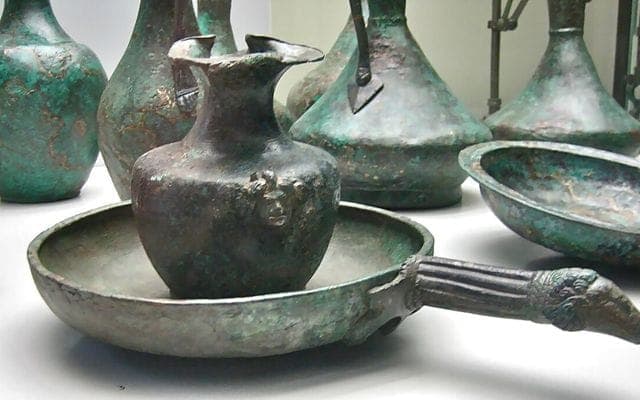
Near the swords, Manning also recovered a broken copper-alloy bowl, an element that could prove useful in clarifying the context of the deposit.
The main question remains open. As Stuart observed, the mystery is understanding why the swords were buried in the north of the Cotswolds and what they were doing there. To find answers, archaeologists could return to the site for new excavations before the end of the year.
The swords will soon undergo X-ray analysis, which may reveal details about their construction and the condition of the materials. According to BBC News, the Corinium Museum plans to put them on public display next year.
For the metal detecting community, the case is a reminder of how important prompt reporting and collaboration with archaeologists are: the scientific value of a find depends largely on the context in which it is discovered, and the presence of a bowl beside the weapons could help interpret the deposit. Organised rallies, like the one where this find was made, remain an opportunity for amateur research to make a concrete contribution to our knowledge of the past.
ADV
The AI assistant for metal detecting
Custom programs, restricted-area checks, ground recognition and much more.Try it free →Get the app