Anyone starting out in metal detecting soon runs into a label that weighs heavily on the choice of machine: single-frequency or multi-frequency. The operating frequency refers to the electromagnetic waves the coil emits to detect and respond to metal targets in the ground. Each frequency interacts differently with different metals and different types of soil. For this reason, the useful question is not which technology is best in absolute terms, but which one suits the places where it will be used. A single-frequency detector works, as the British retailer LP Metal Detecting points out, on a single frequency, typically between 5 and 20 kHz. It is a solution that performs well on medium-to-large metal objects, such as coins and jewelry. Its limits show with small or very deep targets and in identifying the type of metal. Then there is the issue of mineralization: mineralized ground can generate false signals, and a single-frequency machine is affected by this more than others.
According to LP Metal Detecting, the criterion to start from is the terrain. Those who mainly search on the beach should look toward multi-frequency. Wet sand has a high level of mineralization, due to the salt in seawater. In these conditions a single-frequency machine tends to become "chippy," that is, unstable and full of false signals. A multi-frequency detector, by contrast, stabilizes very well in that environment. Those who frequent the waterline and the sea would do well to also consider the detector's complete waterproofing, a feature the shop considers almost a given for this use. Among the models LP Metal Detecting recommends for this scenario are two names. The first is the Nokta Legend, presented as the brand's first simultaneous multi-frequency detector. It is described as multipurpose, with good depth and effective discrimination at sites rich in metal waste, as well as silent and stable operation both on the beach and while diving. The second is a model from the Minelab Equinox series, which operates on several frequencies simultaneously. The shop offers it for coins, relic hunting and beach use, thanks to better target identification and discrimination.
The picture changes if the search is mainly inland. In this case, according to LP Metal Detecting, single-frequency remains a more than valid choice. These devices handle most environments well and are by far the most affordable option. Performance remains very good, which is why they are a sensible entry point to the hobby. As an example, the shop cites the Nokta Simplex range, which offers three models at different price levels. The Simplex Ultra, the top of the family, is presented as having features and adjustments typical of higher-end detectors at a fraction of the cost. There is also an intermediate category that may muddy the waters further: selectable-frequency detectors. Here the user manually chooses among several operating frequencies, adapting the machine to the context. Generally speaking, lower frequencies are often preferable for larger and deeper targets. Higher ones are more sensitive to small objects and can be advantageous in mineralized ground. It is a real versatility, but it requires knowing what you are looking for and where, because choosing the frequency is up to the person using the machine.
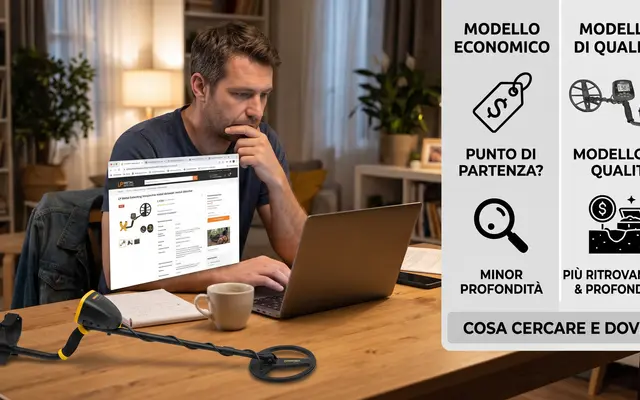
To get oriented, you can reason by scenario. If the beach, wet sand or water make up most of your outings, multi-frequency is the recommended route. If you mostly search dry inland terrain and the budget is limited, a good single-frequency detector lets you start without excessive compromise. If you want to experiment and are willing to adjust the settings manually, selectable frequency offers an interesting compromise. It should also be kept in mind that this category has a limit stated by the source: a fully multi-frequency machine still holds an advantage in most situations. The price difference, however, remains a concrete factor, especially for those taking their first steps. Before buying, it is therefore worth working through three questions. Where will I search most often? How important is waterproofing to me? How much am I willing to spend? The indications reported here come from a single retailer, which also sells the products it mentions. They should therefore be read as a starting point. Comparing with other users and with the manufacturers' technical specifications remains the best way to verify that the chosen machine meets your needs, and a field test is better still, if possible.