In metal detecting forums the debate is always the same: is multi-frequency worth the price, or is a good single-frequency VLF enough? Both sides have a point, but they often talk about different ground. The answer depends on what lies beneath the coil, and neither camp can see that. To find your way, it helps to start with how the two technologies work.
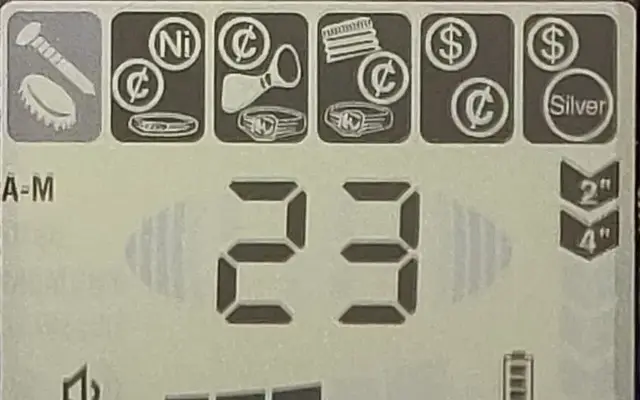
A VLF (Very Low Frequency) detector transmits a single continuous sine wave at a fixed frequency into the ground and listens for the slightest distortion a metal object causes in that field. The receiver circuit measures the phase shift of the return signal: from this value the machine estimates the target's conductivity and derives the discrimination number shown on the display. It is a simple design, economical in power consumption and refined over roughly fifty years, which is why VLFs can be lightweight, inexpensive and yet very effective.
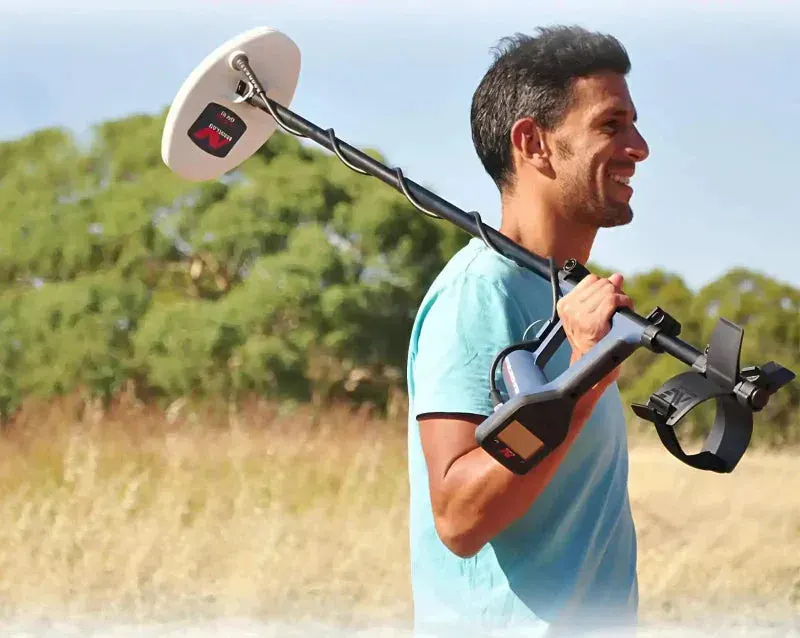
A single frequency means one set of strengths and limitations, and according to the source this is not a flaw but a field choice. Some machines ease the constraint cleverly: the Minelab X-TERRA PRO, for example, lets you switch between 5, 8, 10 and 15 kHz, one at a time, with the press of a button. This gives a degree of adaptability without the cost of simultaneous processing. But even a VLF with selectable frequency runs into two problems that have reshaped the entire sector.
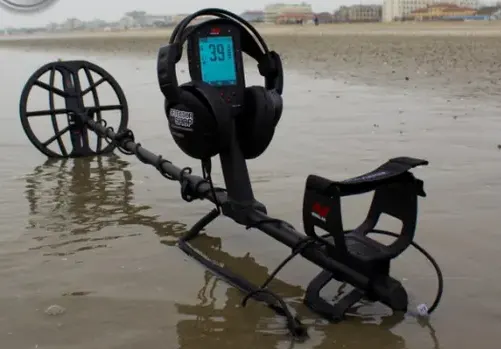
The first is wet salty sand. Seawater is conductive, so for a single-frequency detector the entire wet beach behaves like one huge, blurred target: the machine chatters, drifts and forces you to reduce sensitivity until you lose real targets along with the noise. For generations of beach hunters, the wet band, often the most productive, has remained largely off limits.
The second problem is high mineralization. Iron oxides in the soil distort the return signal, reducing useful depth and making target identification increasingly uncertain as targets lie deeper. A coin that reads perfectly at about ten centimetres can become an unstable value at seventeen, and you end up leaving in the ground signals that would be dug without hesitation in quiet soil. The source notes that hunters on Florida beaches and on Virginia's red clays described the same frustration from opposite angles: multi-frequency is the engineering answer to both.
Simultaneous multi-frequency detectors transmit and process several frequencies at the same moment, then let software compare the different return streams. In practice the machine listens to the ground as a low-frequency device would and as a high-frequency device would, and uses the differences between the responses to separate soil from target. Salt reacts to the various frequencies differently from a gold ring, and iron mineralization behaves differently from a silver denarius at depth. A single frequency cannot tell them apart; several frequencies compared in real time can, and this comparison is the heart of the technology.
According to Serious Detecting, the concrete advantages are three. The first is stability of identification at depth: a coin at about twenty centimetres, which a single frequency gives as an uncertain value, obtains a tighter and more reliable number when several frequencies agree, and this changes what you decide to dig. The second is immunity to salt, that is, the ability to work on wet sand. The source's account breaks off before developing the third point, which is therefore not covered here.
The picture that emerges from the guide, based on the experience of people who sell and use both types every day, is fairly clear. Those who search seawater beaches or highly mineralized ground, or who want a single machine for very varied sites, gain a real benefit from multi-frequency. Those who mostly hunt inland ground with few problems, want the fastest learning curve, or keep an eye on the budget give up much less with a good single-frequency VLF than spec sheets suggest.
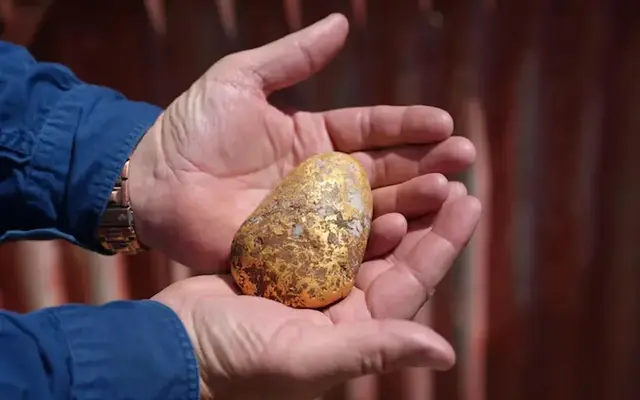
There is also a third case: those who target small gold nuggets specifically. For them, the source argues, a dedicated high-frequency machine beats both general-purpose options. In short, the choice is not between a better and a worse technology, but between tools designed for different conditions. Before spending, it is therefore worth asking where you will actually search: the nature of the ground matters more than any number on a spec sheet.