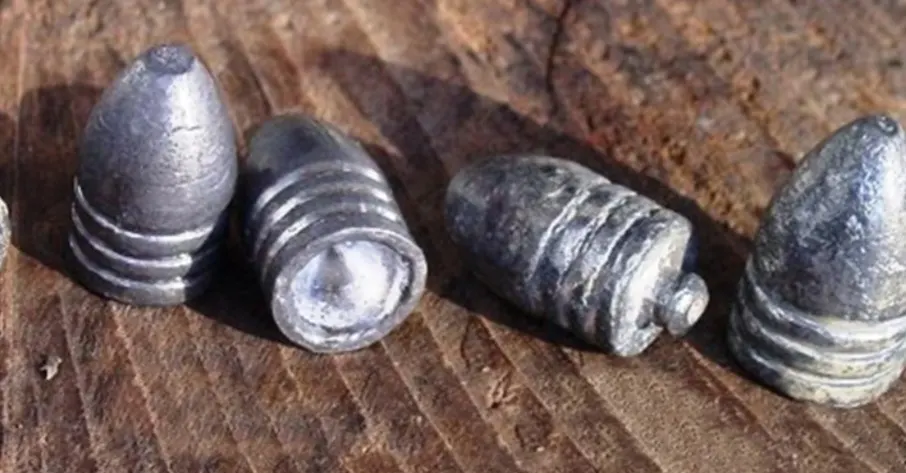
The short answer is yes: lead is detected by any metal detector. As an electrical conductor it is modest, well below copper and silver, but its conductivity is more than enough for the coil to pick it up without difficulty. Entire segments of the hobby depend on this metal. According to Serious Detecting, American Civil War relic hunters dig up lead bullets by the bagful, while beachcombers pick up fishing sinkers on every outing.
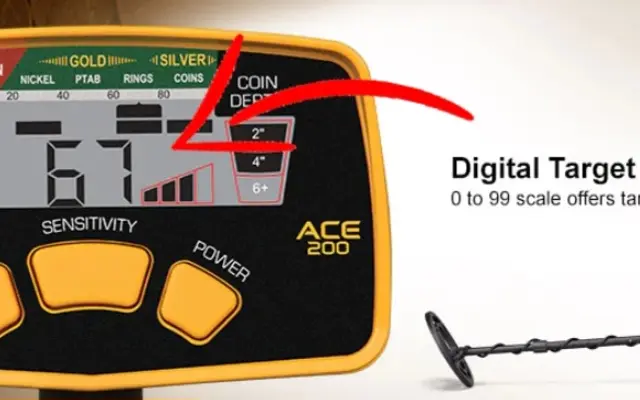
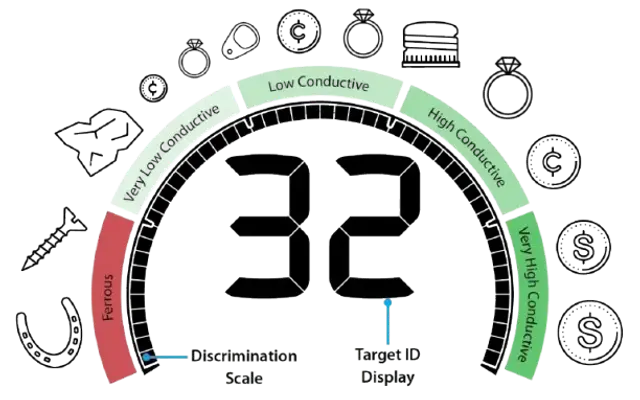
To understand how lead appears on the instrument, it helps to start with Target ID. Lead falls in the low-to-medium conductivity range, an area that partly overlaps with foil, small gold nuggets, gold jewelry and can pull tabs. So there is no single, recognizable value you can count on every time. A practical rule does apply, however: a large piece tends to read higher than a small fragment, because the mass of metal under the coil increases the response.
Then there is the question of sound. Experienced field hunters describe the lead signal as smooth, a "mellow" tone, in contrast with the crisp, bright ring of copper. This is a subjective assessment, reported by the older hunters themselves, and it should be taken as a clue rather than proof. A target's signal also depends on depth, orientation, ground mineralization and the machine being used, and only digging confirms what the find actually is.
This overlap has an important consequence for gold hunters. Since lead occupies the same Target ID area as small nuggets and gold rings, it cannot be eliminated through discrimination without losing gold as well. If you notch out lead, you also notch out gold rings. Gold hunters must accept digging a few extra pieces of lead as the price of not leaving anything behind in the ground.
On the historical side, bullets are among the easiest relics to date in the hobby. The source offers a concrete example: a minié ball with three rings points to the American Civil War, while a round ball suggests an earlier era. In other words, the shape already tells part of the story before any archival research begins. Lead also keeps well underground. It develops a light white oxide crust, but the signal remains strong for centuries, which is why an old bullet gives as clean a response as a recent one.
For those targeting historical relics, Serious Detecting's advice is to use a machine with stable mid-tone separation, which helps tell lead apart from other targets in the nearby range, and to carry a sturdy digging tool. It is worth noting that this advice comes from an equipment retailer, so the choice of model should always be weighed against your own needs and the experiences of other users.
The issue is not limited to the ground. A piece of lead large enough to matter will also set off a walk-through gate or a hand wand, like those used at security checkpoints. These devices read the metal's conductivity regardless of its density or toxicity, so the detector does not care whether lead is heavy or harmful; it only matters that it conducts. X-rays, on the other hand, pick it up even faster, because lead is notoriously radiopaque, meaning it absorbs a great deal of radiation.
A common confusion concerns magnetism. Lead is not attracted to a magnet, and magnetism is not what makes it detectable: the metal detector works on the electromagnetic field and the target's electrical conductivity. A small magnet can therefore help rule out certain ferrous metals in a pile of finds, but it gives no response on lead.
Finally, a few rules of common sense. After handling dug lead, wash your hands and keep the finds away from children. Pieces with no historical value, such as old sinkers or shotgun pellets, are best put in the rubbish bag and carried out rather than reburied. According to the source, removing old lead and pellets from the ground is a small environmental benefit on every outing.
In short: lead is reliably detected, has a mellow signal and a medium-low Target ID that overlaps with foil, pull tabs and small gold, and for this reason it cannot be excluded without losing gold. It is among the most common targets, from bullets to sinkers and weights, and it should be handled with the appropriate precautions.